

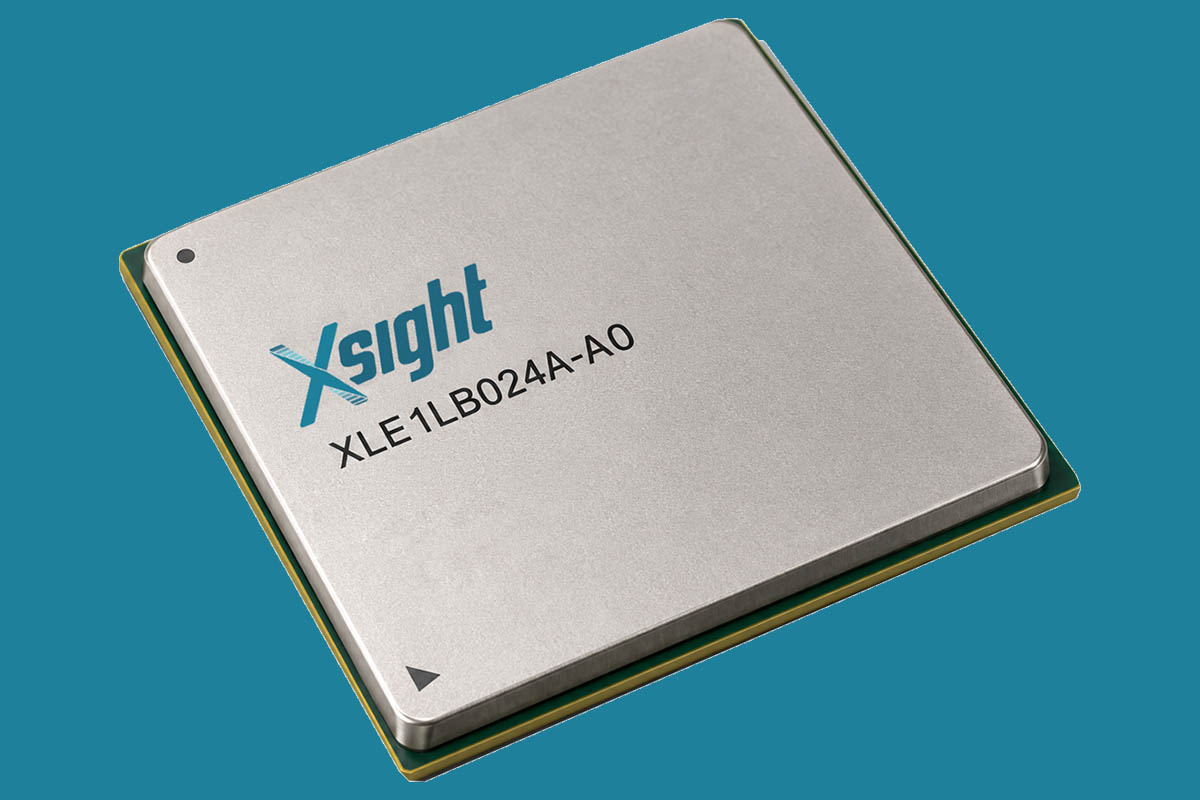
Xsight Labs has an interesting announcement today. The new Xsight Labs E1L DPU is designed to be a lower-power DPU, bringing 8-22 Arm Neoverse N2 cores into a power envelope that is low enough to put into a network switch or other low-power footprints.
Xsight Labs E1L DPU for Lower-Power 200Gbps DPUs
Xsight told us that the E1L DPU is designed to be a lower-power alternative to the 64-core E1 DPU that we have featured on STH several times now. Here are the key specs:
- 8, 16, or 22 Arm Neoverse N2 cores
- Up to 200Gbps over 4x SerDes lanes
- Up to 2x DDR5-5200 interfaces with inline encryption
- Line-rate AES-GCM for IPsec offload
- 20x PCIe Gen5 lanes across 6x dual-mode controllers with SR-IOV support
- Configurable 25 W, 30 W and 40 W TDP (typical draw 15 W, 18 W and 25 W)
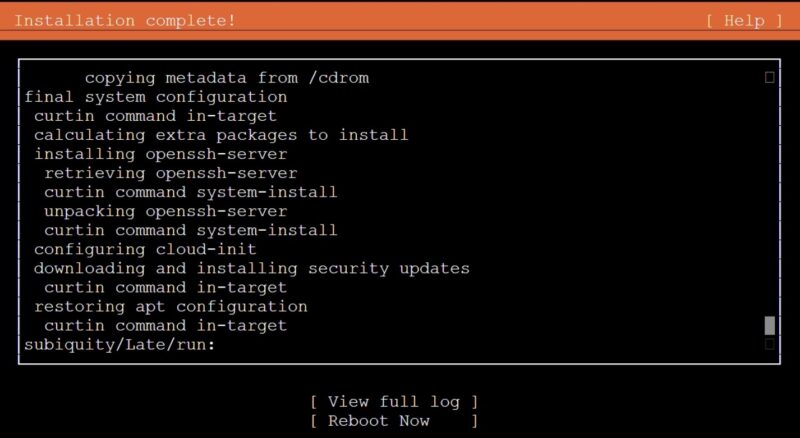
Xsight’s idea is basically the anti-AMD Pensando. While AMD says running network offloads via Linux and DPDK on a sea of Arm cores is the wrong approach, and instead focuses on P4 programmable engines, Xsight focuses on running on Arm cores. The Neoverse N2 cores on the E1 DPU are so vanilla in their implementation that we featured Installing Out-of-the-Box Ubuntu LTS on Xsight Labs E1 64-Core Arm 800G DPU.
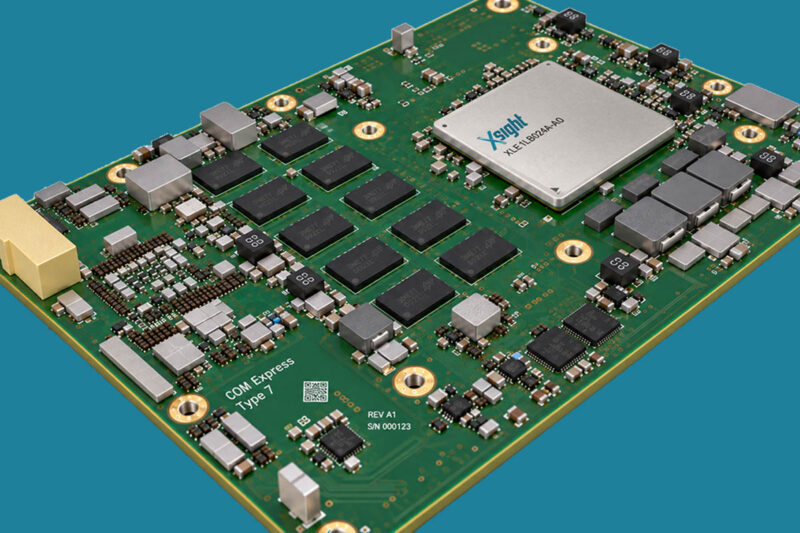
The new DPU is designed to run on a COM Express Type 7 module. When I heard this, the first thought I had was, “That works in network switches.” The E1L is also an interesting design for storage servers, both NVMe and disk. The storage path is perhaps exciting because, typing that, I realize you could theoretically attach E1.L SSDs to the PCIe lanes of the E1L DPU and have the entire system be built around E1L/E1.L.
The Arm Neoverse N2 cores are actually pretty slick. Just to give you some idea of how they fare compared to some other options on the STH AgentSTH V7 workloads, we charted a few interesting data points:
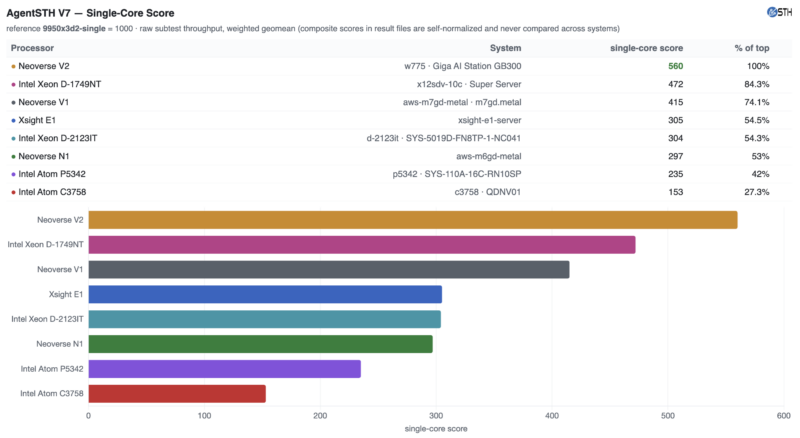
We are using a single-core score here just because the E1 DPU has 64 cores and we wanted to give some sense of relative performance. Just given memory constraints, we have not been able to get a BlueField-2 DPU running AgentSTH V7, but a BlueField-4 is based on the Neoverse V2 core that we found on the Grace CPU in the above (likely higher clocks in the GB300 CPU above), and here is the BlueField-2 DPU on Geekbench 5:
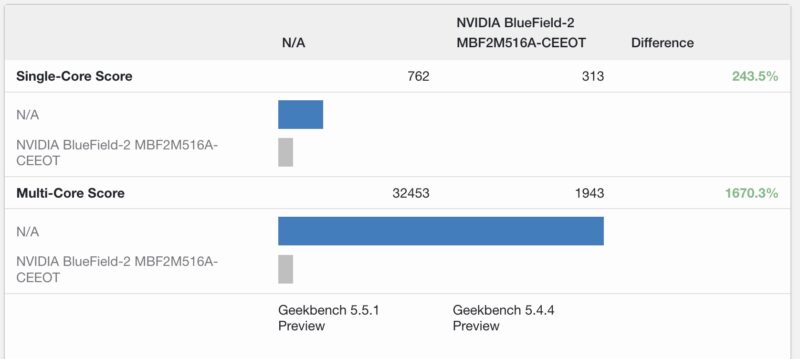
The big multi-core delta is also because the E1 has 64 cores and a newer architecture. Still, an 8-22 core part is very capable for applications like storage, switch control planes, and virtualization hosts.
Final Words
Xsight Labs is just different. While a lot of the industry is chasing 800Gbps and higher speeds, the company is taking its 800Gbps design and scaling it to 200Gbps. More importantly, it is scaling the design to a lower power level, which will allow it to go into many more applications where power is a bigger concern than hitting 800Gbps. Also, from an architecture scaling standpoint, since the company uses Neoverse N2 Arm cores with DPDK and other standard Linux features, it means an acceleration path should scale easily down from something running at 800Gbps on the 64-core E1 to the lower-core-count E1L.
, plenty of PCIe Gen5 and 200Gbps networking into a lower power form factor)