
At OCP 2026, we saw something that looked absolutely awesome. Walking by the HPE booth, we saw an AMD Helios tray set up and open on the show floor. It stopped me in my tracks, so I thought folks would like to see it.
This is the AMD Helios HPE Juniper QFX5252 Switch Tray at OCP 2026
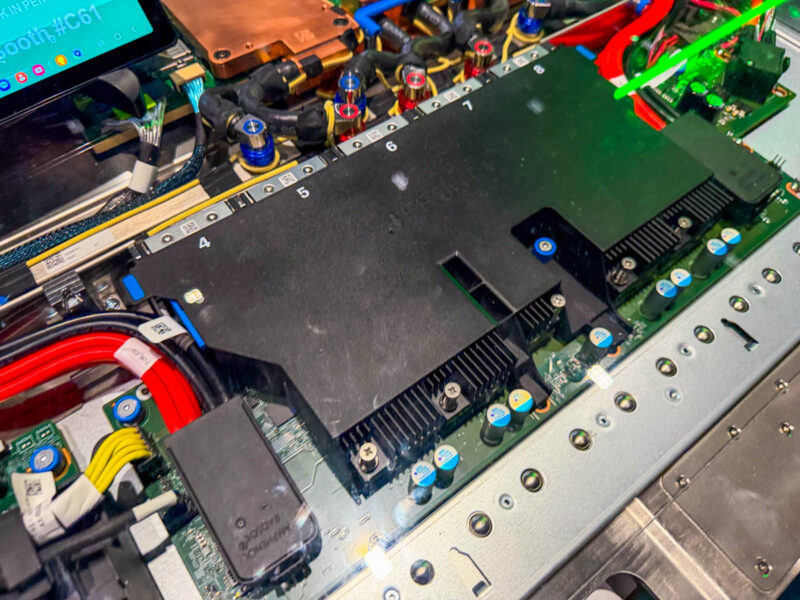
Oftentimes, when we open up huge switches, we see a lot of internal PCB. This is totally different since it is a double-wide tray with side-by-side switches and lots of copper.
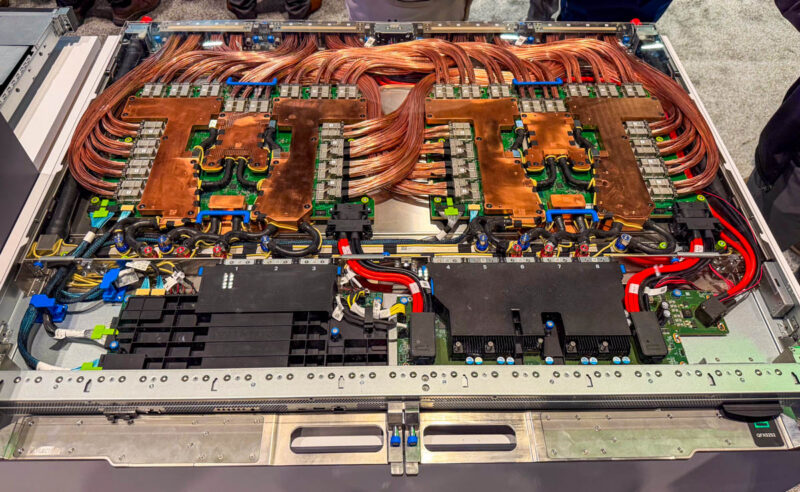
You can see the HPE QFX5252 label on the front latch, which is huge. Because there is so much connectivity on the back, and the back panel is long and needs to blind mate, the insertion force required for a switch tray like this into the Helios rack is significant. As a result, these levers are very long.
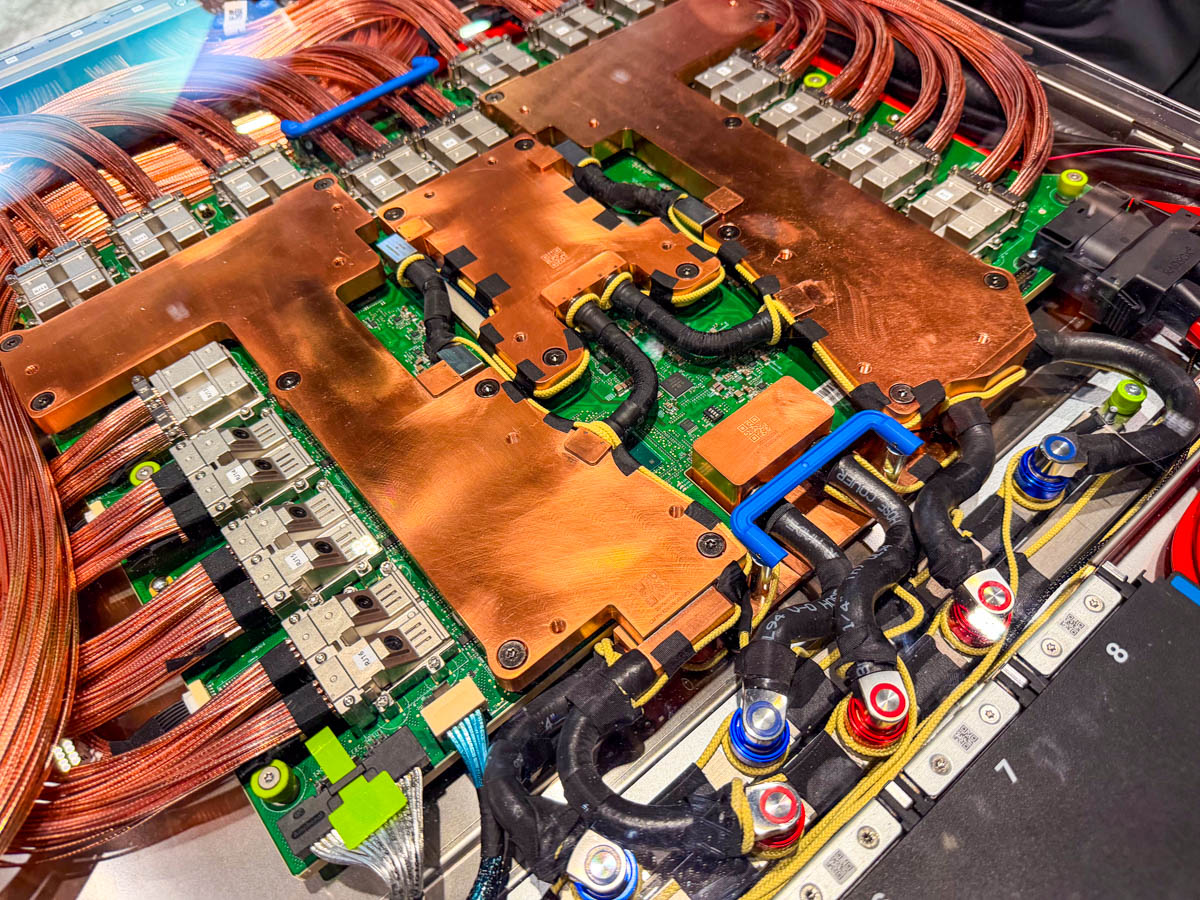
Since this is two big switch chips in a 1OU tray, it needs to be liquid cooled. You can see the internal liquid cooling manifolds distributing liquid to the various blocks.
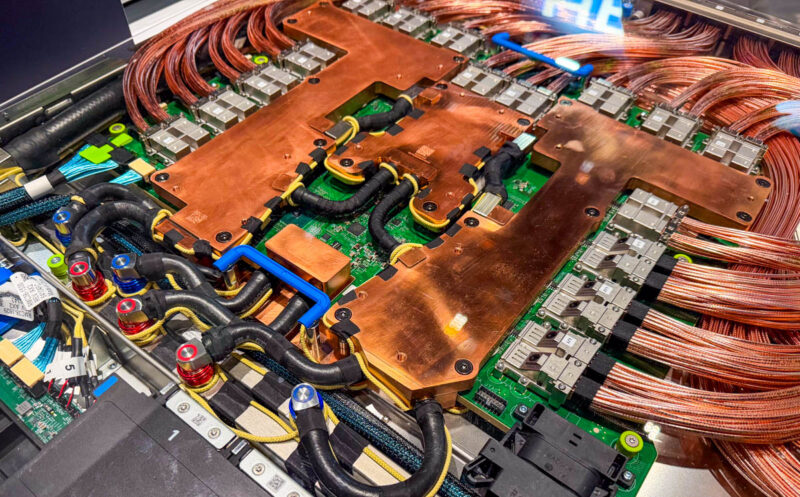
There are two switch chips inside, which are Broadcom Tomahawk 6 102.6T switches. At first, you might wonder why these are not Broadcom Tomahawk Ultra chips, since that might make sense for a scale-up architecture. The current generation Tomahawk Ultra is a 112G PAM4 SerDes switch (so 512 lanes of PAM4-112G.) That is not enough for Helios which is using 224G PAM4 SerDes. As a result, these need to be Tomahawk 6.
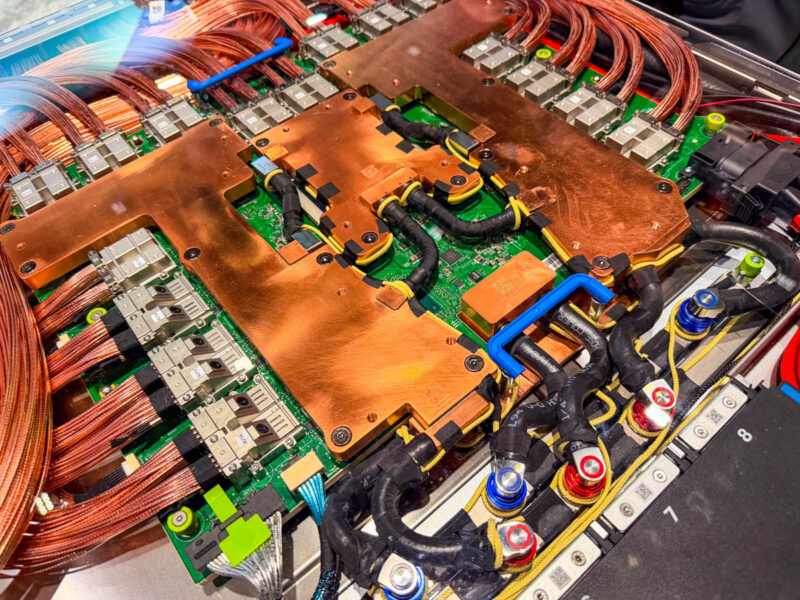
Now, the next part is very different. AMD and HPE-Juniper are not just slinging Tomahawk 6 on some PCBs and calling it a day. You will notice that the cabled connections to the rear high-density fabric connectors for the Helios rack cable cartridges are quite far from the Tomahawk 6 switch chips. Some of them in particular are very far from the switch chips. The liquid cooling blocks between those cable connectors and the switch chip are apparently retimers. AMD is big on retimers while NVIDIA has worked to remove them.
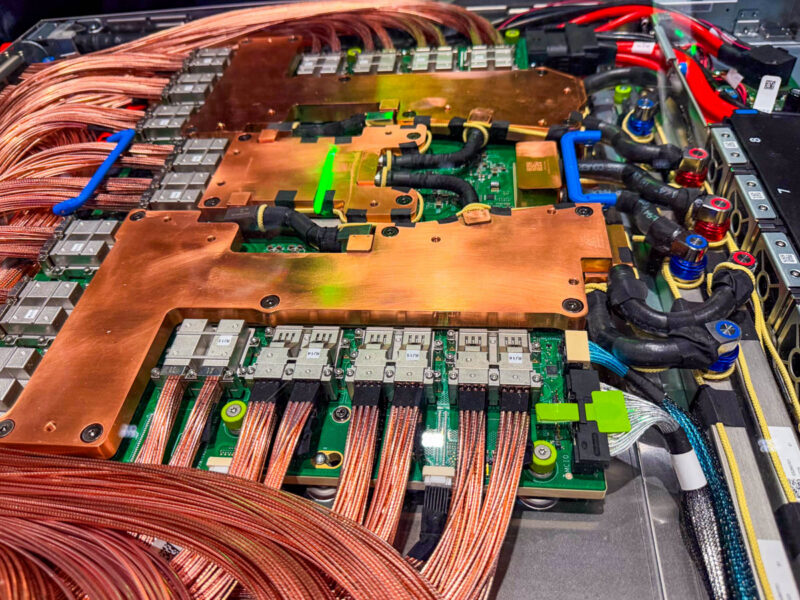
Aside from the switches and retimers, let us talk about the cables.
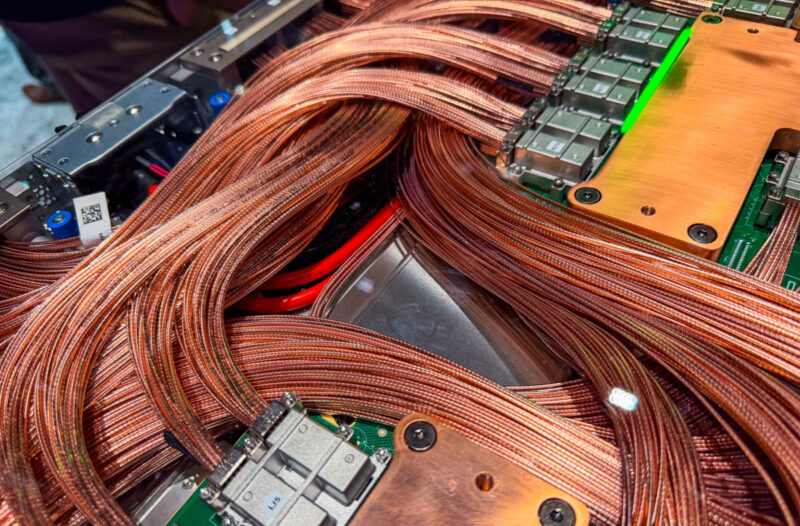
When we say copper inside a rack, and why we will eventually go to co-packaged optics, this is a great illustration. In the QFX5252, retimers extend reach so we can reliably scale up within the rack. Then we need an enormous array of copper cables. CPO would simplify this design. I will probably use these photos when explaining the “why” for CPO in the future.
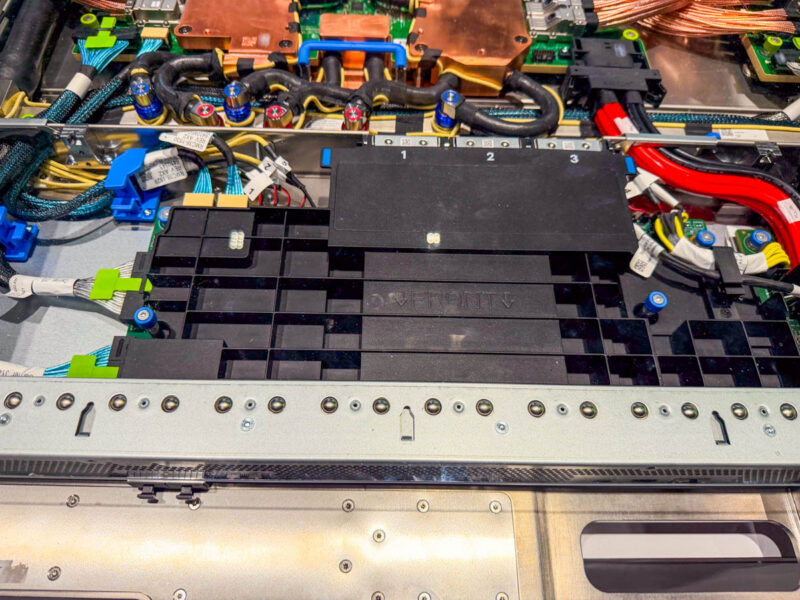
You can see the fans and airflow guides over heatsinks for some other components. Unlike NVIDIA’s push to move fans out of the AI rack, AMD Helios still uses fans and air cooling for some other bits in the tray.
Overall, very cool.
Final Words
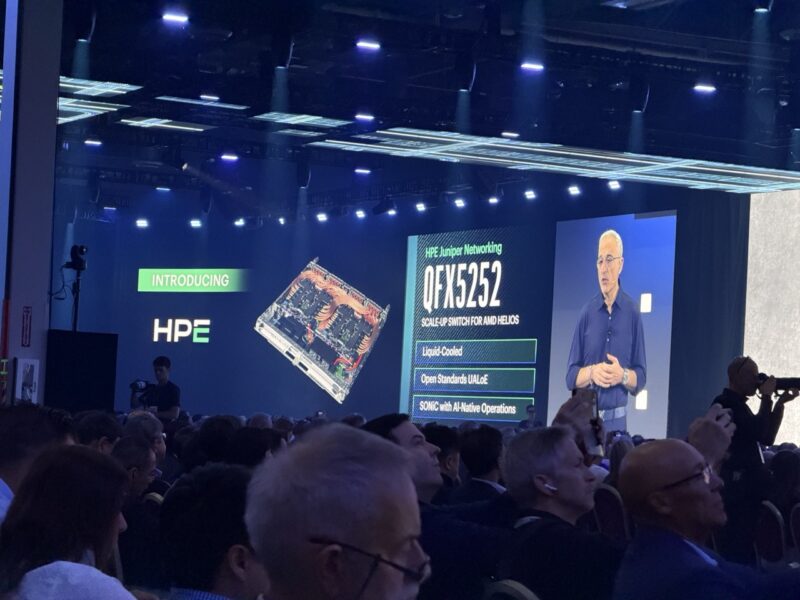
We previously covered the QFX5252 at HPE Discover 2026, but seeing the switch tray assembled and on the show floor was really cool. A lot is going on here, and it is very different from the normal rackmount switches we see. One of the biggest differences, of course, is that it is designed to scale up within a rack instead of out of front-panel connectors.
Of course, if you are into networking, check out our Inside the Secretive AWS Networking Lab tour that we were finally able to publish yesterday.
As a fun aside, I was at HPE’s booth looking at this switch tray when Pradeep Sindhu walked over and started looking at the switch with the HPE-Juniper team and me. For me, it was neat because the last time I saw Pradeep was when we did this Fungible DPU-based Storage Cluster Hands-on Look back in the pandemic era in 2020. It was neat having Juniper’s co-founder and former CTO look at the big switch tray while I was there.