A couple of weeks back, the Standard Performance Evaluation Corporation released a new Linux version of SPECviewperf, the consortium’s workstation graphics benchmark. Now up to version 15.0.1 and the group’s first Linux Edition release in almost half a decade, the new release gives the Linux graphics benchmark a significant facelift in both the features it offers and the workloads it tests.
Despite the long gap between Linux Edition releases, the timing of this new release could not be better. Beyond a slew of updates to the venerable Linux graphics benchmarking suite, including workload updates and a whole new GUI, the latest version of SPECviewperf adds Arm AArch64 support, marking the first time the graphics benchmark has been natively available on any Arm-based system. Consequently, the Linux version of the benchmark is treading new ground for SPECviewperf, something it rarely gets to do, giving us valuable first-look insights into how well Arm devices can handle traditional workstation graphics workloads.
We, of course, could not help ourselves and decided to take some time looking at the newest Linux benchmark and how it runs on some of our most recent Arm-based boxes. So, without further ado, let us jump right in.
SPECviewperf 15.0.1 Linux Edition Highlights
SPEC has offered a Linux version of its workstation graphics benchmark suite for nearly a decade, first releasing a Linux build in 2019 with SPECviewperf 13. Because many CAD, CAM, and 3D rendering workstation applications are OpenGL-based (or not available on Linux at all), the consortium has ported its graphics workloads to Linux to provide a counterpart to the Windows version. The net result is that the Linux version supports a smaller set of workloads overall (there is no DirectX here, for a start), but it still offers a solid look at workstation performance on Linux.
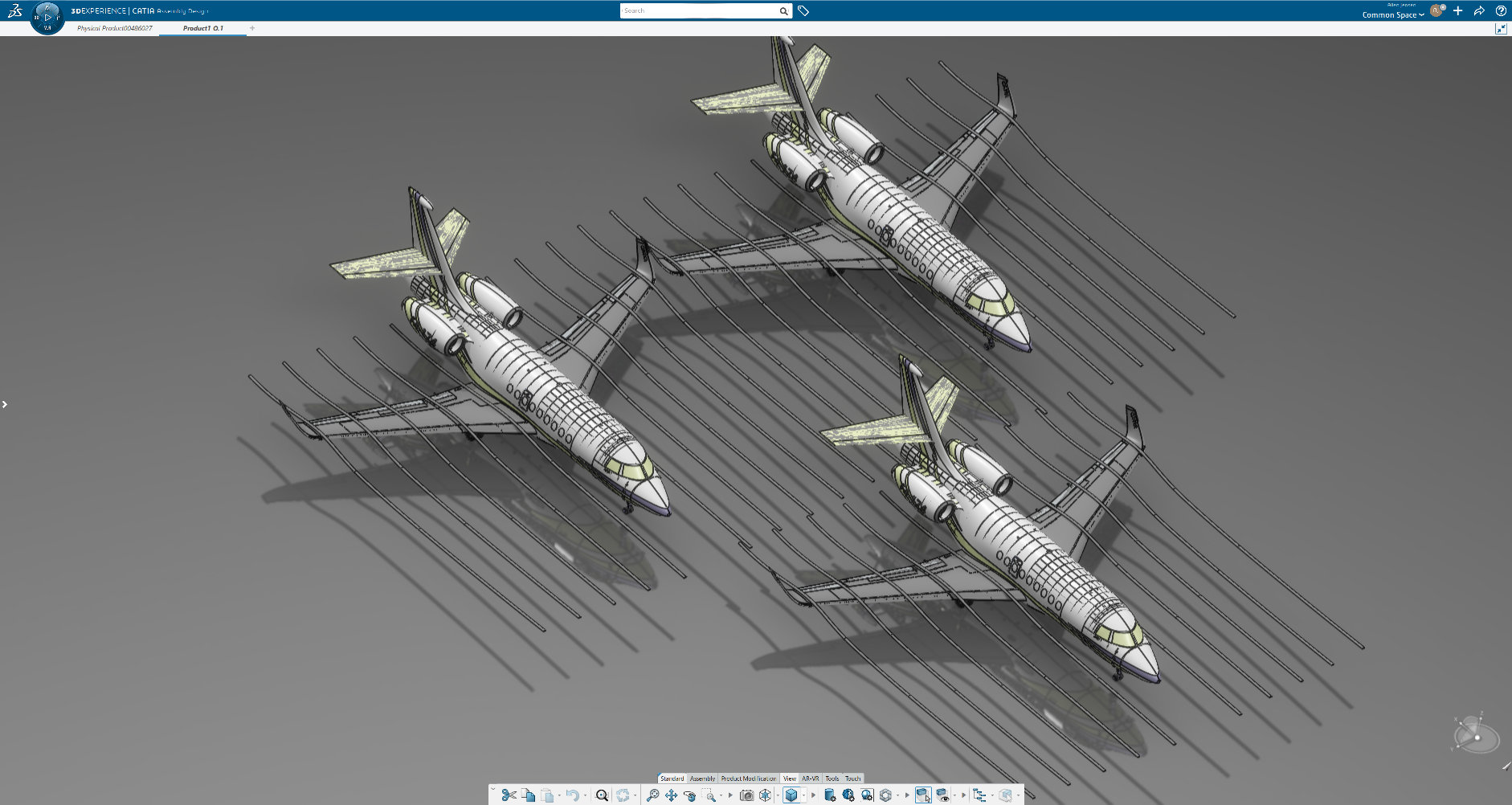
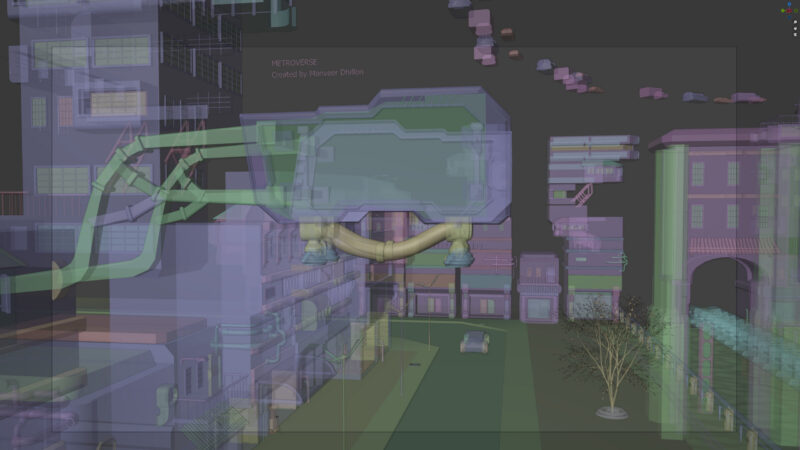
All told, the Linux Edition of SPECviewperf 15.0.1 offers 8 of the Windows suite’s 11 benchmarks, including graphics traces from Blender 3.6, 3DEXPERIENCE CATIA/CATIA V5, Creo 9, Maya 2025, Solidworks 2024, NX 2406, and visualizations from OpendTect and the Tuvok library. Compared with the previous version of the suite, 2020 3.0, the Blender workload is new, while CATIA, Creo, Maya, Solidworks, and NX workloads have all been updated, as they were in the Windows version released last year.
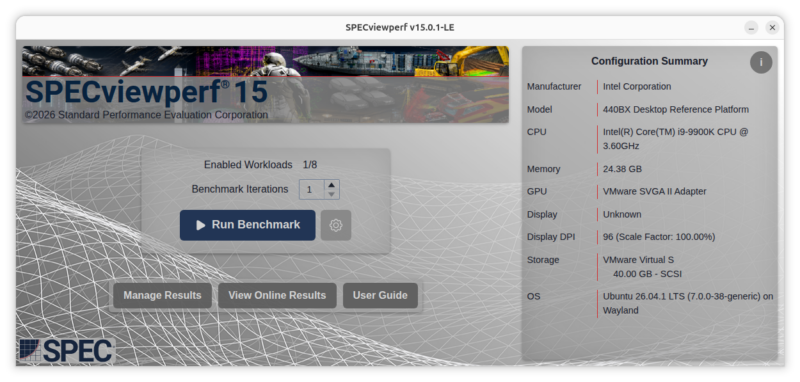
Notably, this year’s release of the benchmark suite also gets a newer GUI with more features, bringing more graphical controls and an improved setup routine to the workstation graphics benchmark.
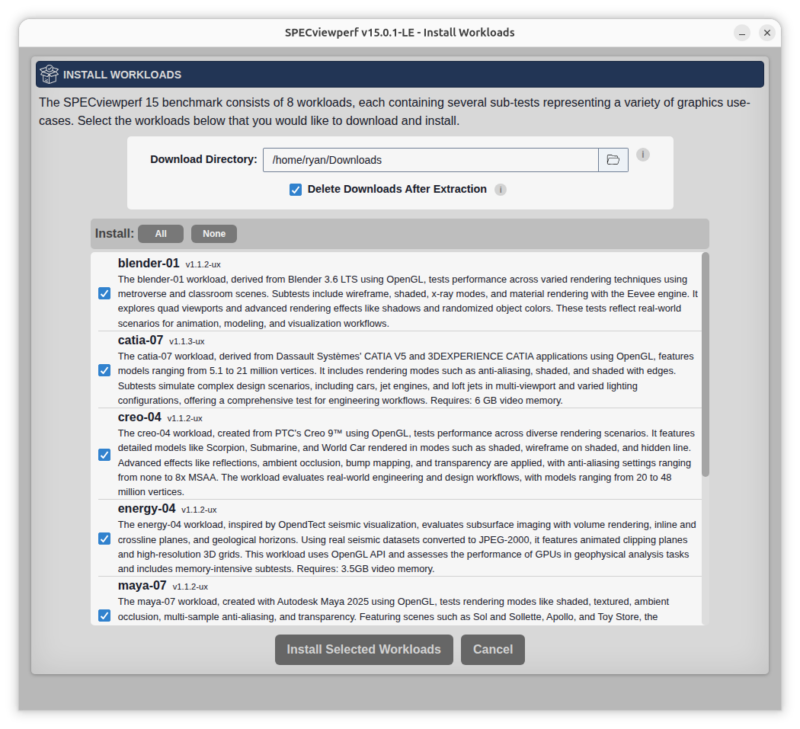
That new GUI goes hand-in-hand with the ability to download and install just a fraction of the benchmark suite’s workloads, which, when fully installed, take up nearly 100GB of space. SPEC calls this their “snap-in” architecture, which makes each workload a snap-in element of the suite rather than one monolithic suite. It also lets system vendors and other operators more easily test only the graphics workload(s) they care about.
But arguably the marquee feature is support for AArch64 systems, marking the first time SPECviewperf has been natively available for an Arm-based architecture. The fundamental concept of replying OpenGL traces remains unchanged, as SPECviewperf is a graphics benchmark rather than a full-scope application benchmark, but that playback system can now operate under AArch64 and help to expose how well the graphics hardware and associated graphics drivers perform under Linux.
Speaking of hardware and drivers, the Linux benchmark suite supports a narrower range than Windows. While the Linux version of SPECviewperf 15.0.1 can run on any system with an OpenGL 4.5-compliant GPU, in practice it supports only AMD and NVIDIA GPUs, leaving Intel as the odd one out. On the plus side, it supports integrated GPUs, which is extremely helpful for testing the companies’ recent high-performance SoCs, including AMD’s Strix Halo and NVIDIA’s GB10.
SPECviewperf 15.0.1 Linux Edition Performance
With SPEC’s latest Linux graphics benchmark in hand, we wasted no time loading it on some of our recent Linux systems to look at performance. Getting true apples-to-apples performance here is a bit difficult since few chips/systems fall into identical weight classes, but it is still an interesting look.
Specifically, we ran the benchmark on a couple of our Ryzen AI Max+ 395 (Strix Halo boxes), the Dell Pro Max with GB10 (based on the NVIDIA GB10), and, for a high-end workstation, a Threadripper 9980X system with a Radeon AI Pro R9700 installed.
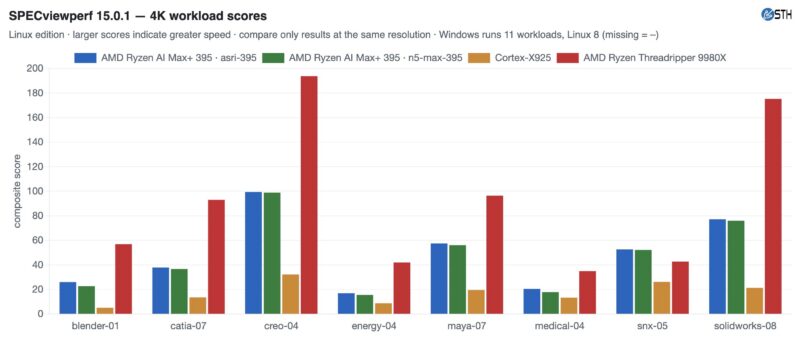
We will start things with a focus on mini-PCs. Under Linux, we find that performance is heavily in AMD’s favor here. Both Strix Halo boxes are performing far better than the GB10-based box, often by a factor of 2x or more.
Our GB10 machines are set up for AI workloads in a cluster, and are Arm-based. At the same time, we would be remiss not to consider how well (or poorly) NVIDIA’s Linux drivers are optimized here, since GB10’s graphics performance under Linux has not been a major focus until now. Take this more as a run just to validate that the Linux suite worked on the platforms, rather than being an ideal benchmark between all of them.
Still, for the moment it is a feather in AMD’s cap. Especially for ASRock Industrial’s AI BOX-A395, which remains the fastest Strix Halo box to cross our lab desks.
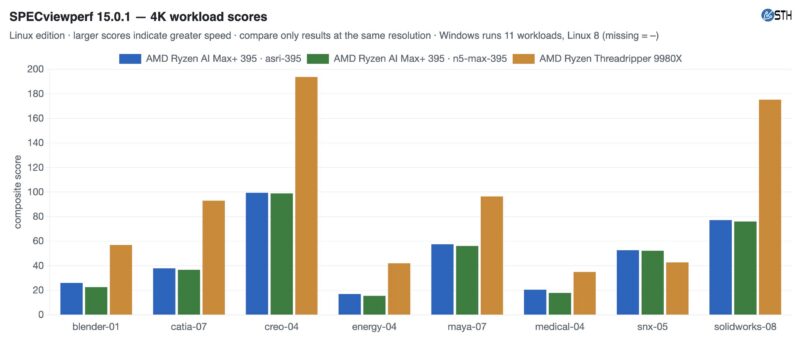
Meanwhile, to put those AMD iGPU results in context of what a more powerful discrete desktop system can do, here is a look at their performance plotted next to the results for our Threadripper + Ryzen AI Pro system. It is actually closer than you might first expect: most of the time the Strix Halo systems deliver around half of the performance of the high-end R9700 discrete video card. More surprisingly, they outperformed the discrete card in the NX 2406 workload.
So far, the focus on Strix Halo boxes such as AMD’s own Ryzen AI Halo system has been on AI development for obvious reasons, but these benchmarks also show the boxes can be reasonably performant for workstation graphics tasks, as long as the CPU doesn’t become the bottleneck first.
Final Words
Overall, the release of the Linux Edition of SPECviewperf 15.0.1 comes at an opportune time for the industry, as well as ServeTheHome. As the industry’s de facto benchmark for workstation graphics workloads, SPECviewperf carries an immense amount of weight within the industry. And by refreshing the benchmark suite to not only bring its workloads up to date with its Windows counterparts, but also adding Arm AArch64 support for the first time, this gives everyone a very valuable initial look into the workstation graphics performance of the recent slate of Arm-based mini-PCs that have been hitting the professional market.
As for ServeTheHome, we have been reviewing new hardware, including GB10-based boxes and AMD’s Radeon AI Pro R9700 video card, so the release of a Linux benchmark suite is well timed for us. Especially as we are fond of testing under Linux for a multitude of reasons. So do not be surprised if you see SPECviewperf pop up in some future reviews as one of our GPU benchmarks.