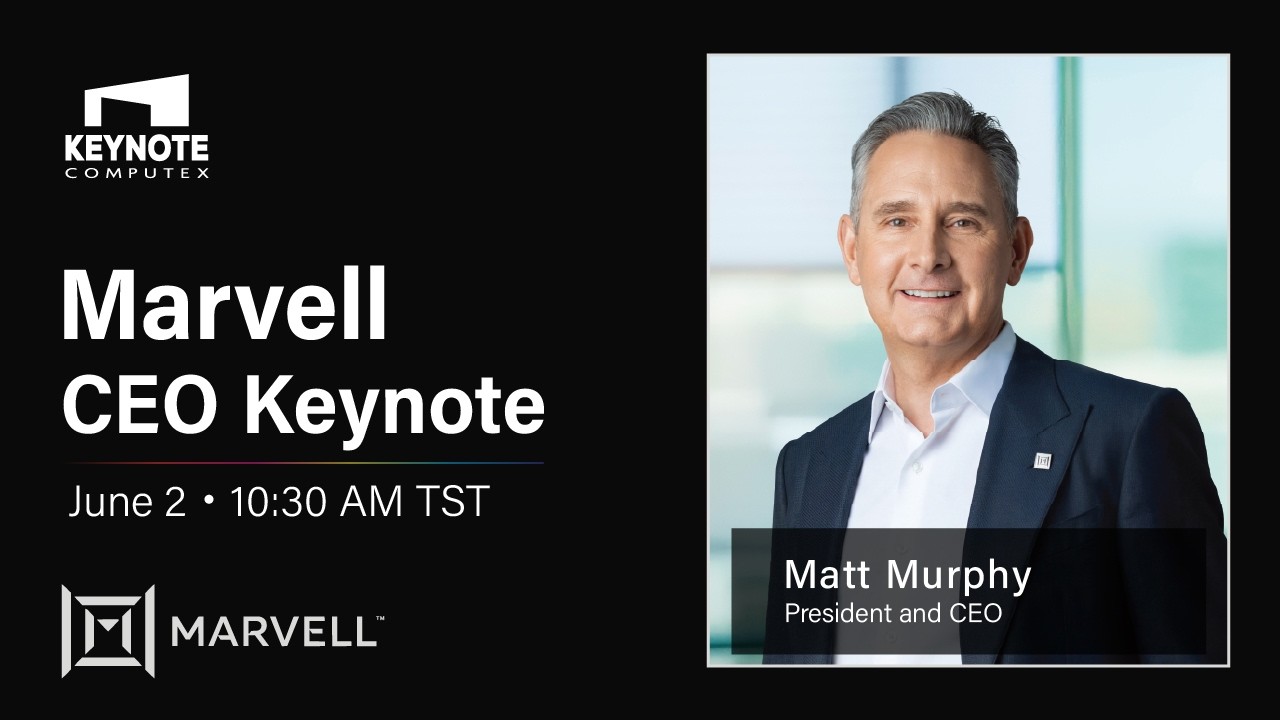
Leading off the second day of keynotes at this year’s Computex trade show is Marvell, who is making their first keynote appearance at the show.
Best known for their networking and storage chips, company CEO Matt Murphy is scheduled to deliver an AI-centric keynote titled “The Future of AI Scaling Depends on Connectivity.” Murphy will be outlining how Marvell chips are a critical component of AI data center infrastructure, and what the company is doing to unlock the next wave of AI innovation.
Marvell Computex 2026 Keynote Preview
As the newest member of the Computex keynote club, Marvell’s keynote is one without precedent. So as far as what to expect in terms of potential announcements is effectively a toss-up.
With that said, Marvell has outlined in its press releases that the high-level theme of the keynote is going to be all about AI data centers and the need for improved connectivity to help drive them. Marvell believes that connectivity will be the next big bottleneck in datacenter design – with compute performance gains outpacing connectivity and networking gains – making for a major market opportunity for Marvell. Between its networking and storage products the company already has a significant role in the data center industry as a supplier, so there is a great deal of interest in leveraging that for a bigger role in (and piece of the profits of) AI in general.
Along with the focus on connectivity, Marvell has also announced that NVIDIA CEO Jensen Huang will be appearing at the keynote to discuss how Marvell and NVIDIA are working together to provide next-generation data center infrastructure. Marvell signed on as an NVLink Fusion partner back in March, with NVIDIA additionally making a $2 billion investment in the company. As a result, the two firms are now far more attached to each other than they have previously been, and Jensen’s appearance will help underscore that. At the same time, the leader of the world’s most valuable company (and bona fide local rockstar) is a top drawer in and of himself, which will further elevate the status of Marvell’s keynote.
The Marvell keynote is scheduled to run for 60 minutes, and will kick off at 7:30pm PT/10:30pm ET/10:30am CST/02:30 UTC.
Marvell Computex 2026 Keynote Coverage Live
It’s a few minutes before showtime, and we are just waiting for the keynote to kick off.
Attendees are now being asked to take their seats.
And here we go.
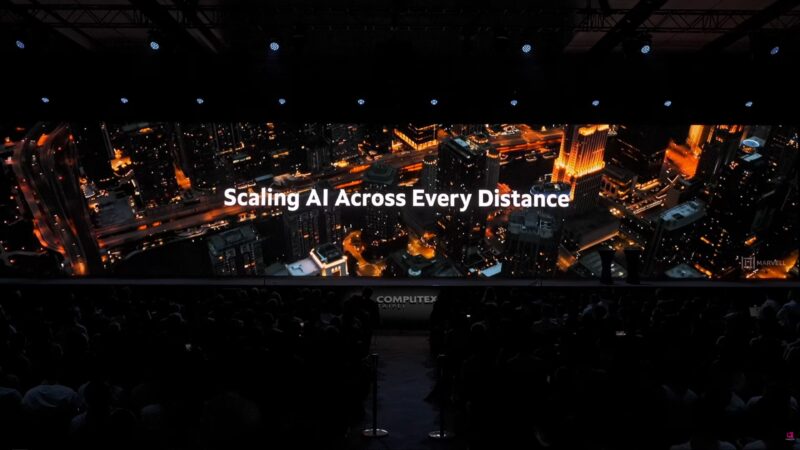
Starting things off with an intro video about the need for connectivity at scale.
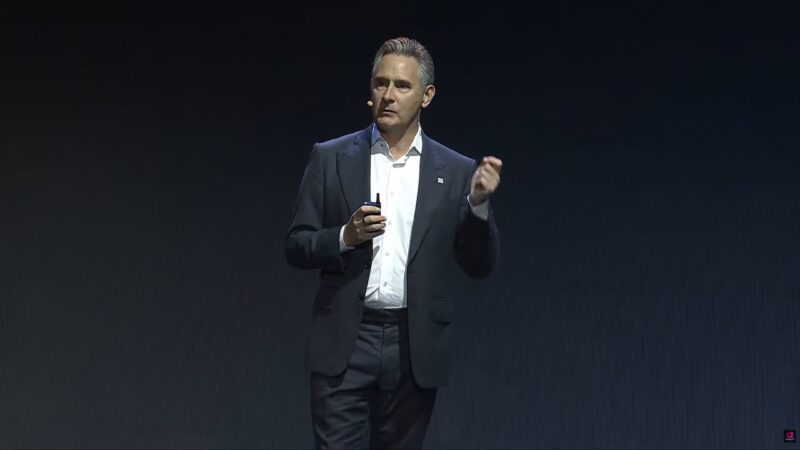
Now on stage: Marvell CEO Matt Murphy.
Murphy is talking about his history of coming to Computex, and the growth in Taiwan in the interim.
What defines the performance of AI infrastructure?
CPUs? GPUs? Memory? Those are all important.
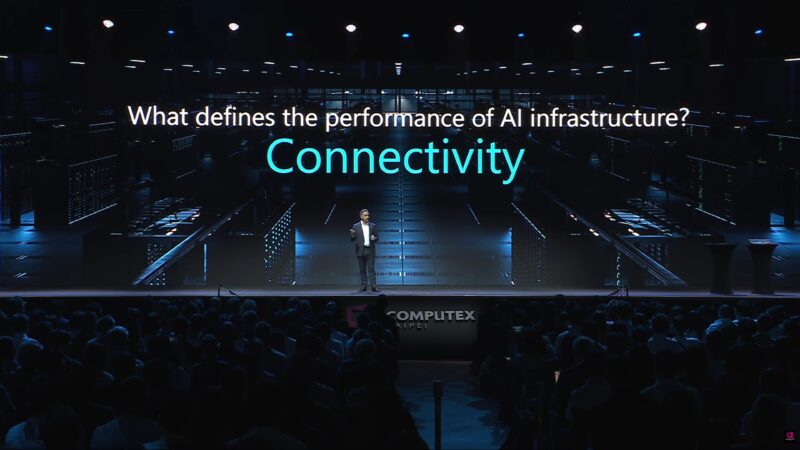
The next major innovation will instead be connectivity. And particularly the switch over from electrical to optical connectivity.
This is a change that Marvell has spent years preparing for.
Murphy wants to meet the industry where it is heading. Particularly for the high-margin data center.
Less than 10% of Marvell’s revenue 10 years ago was coming from the data center.
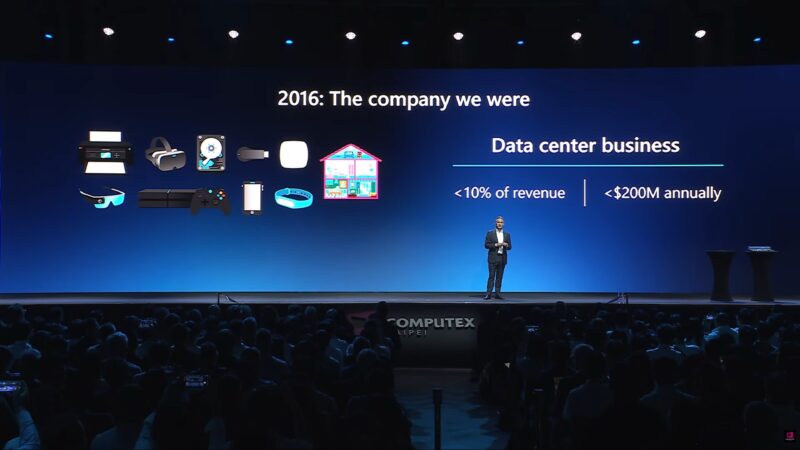
And so Murphy bet the future of Marvell on data centers and data infrastructure.
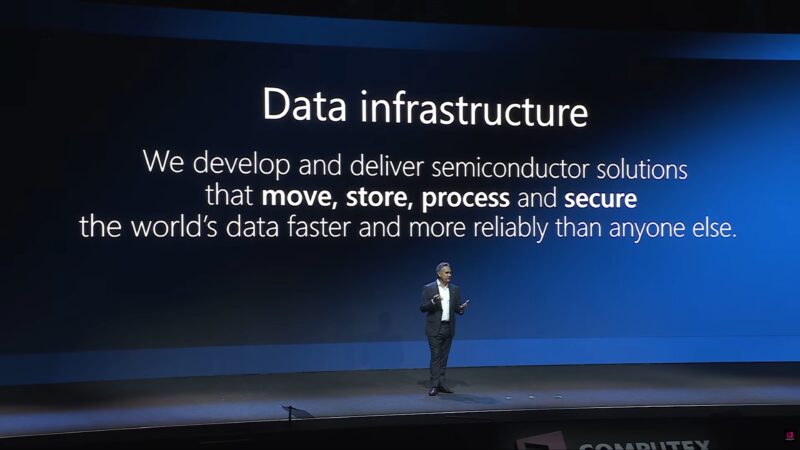
To get there they had to make major investments to develop the necessary products. Both with internal developments and going on an acquisition spree (e.g. Aquantia and Cavium). They also divested other businesses, such as Wi-Fi.
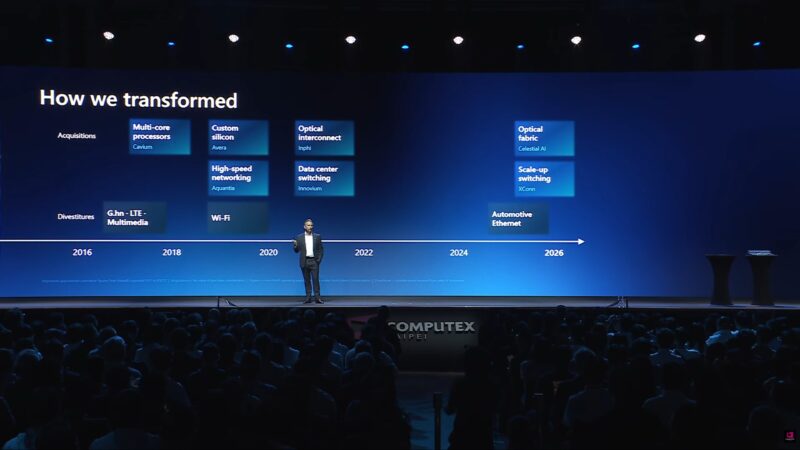
Most recently they acquired Celestial AI for phtonics and XConn for scale-up switching.
In total, they’ve invested roughly 36 billion dollars in their data infrastructure platform.
They also moved from being a fast-follower on using process nodes to using leading-edge process nodes. Marvell skipped 7nm completely, skipping 14nm/16nm to 5nm.
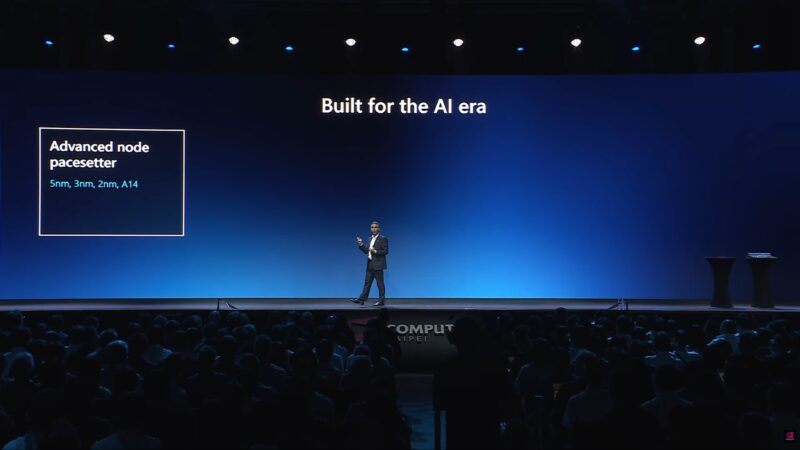
The jump to 5nm went incredibly well.
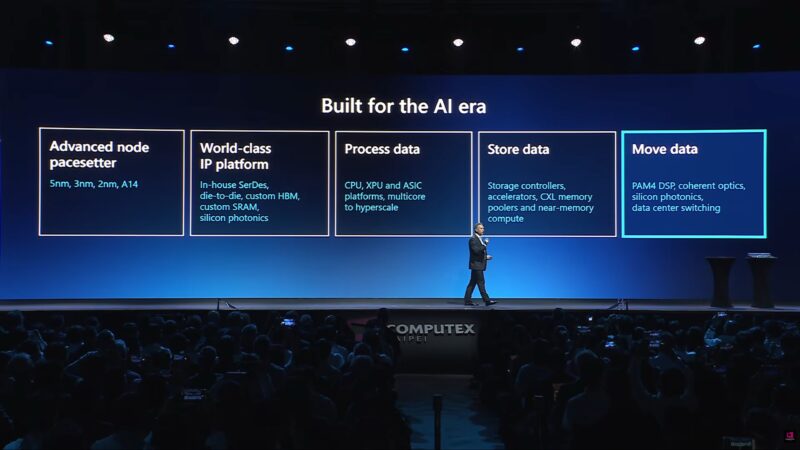
Today the vast majority of their revenue comes from connectivity.
“Today we are the undisputed connectivity leader.”
They have more than quadrupled the company’s revenue since 2016.
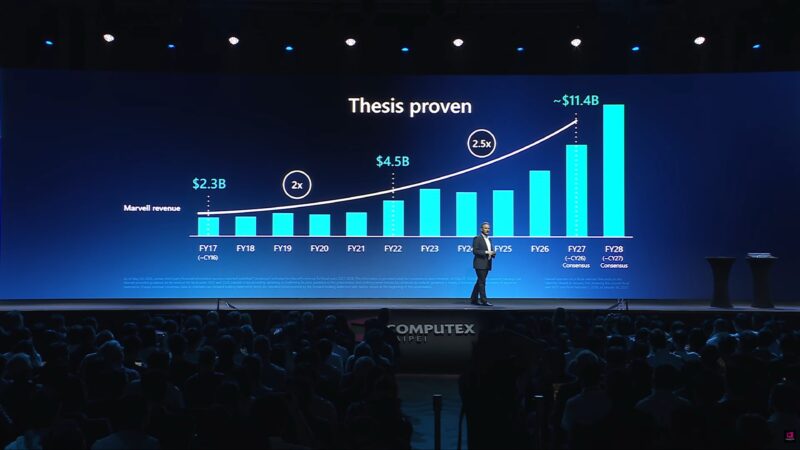
And the growth rate is accelerating over the last few years.
Data center is now 75% of Marvell’s revenue and it is still growing.
But even with all of these changes, they are still in the first stage of this infrastructure build-out.
Now Murphy is quickly going over the history of bottlenecks in AI data center infrastructure. First it was compute, which is what launched NVIDIA to a $5T market cap. Then it was memory. The next bottleneck will be connectivity.
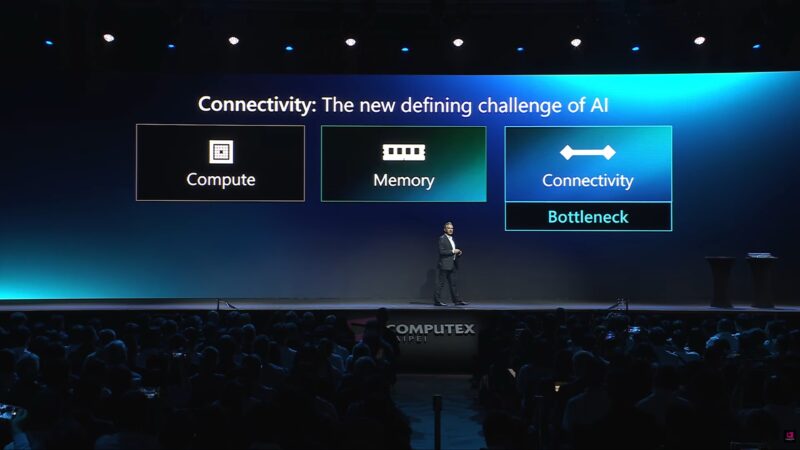
And Murphy is now listing off quotes and customers who have made similar claims.
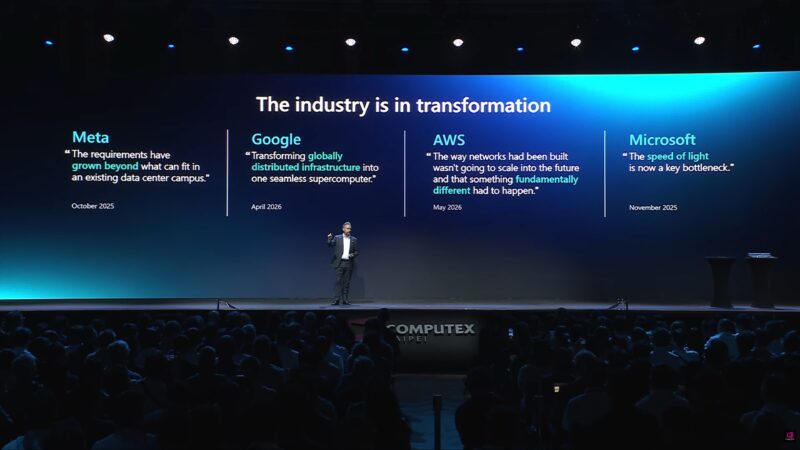
These companies are now turning to Marvell for connectivity solutions.
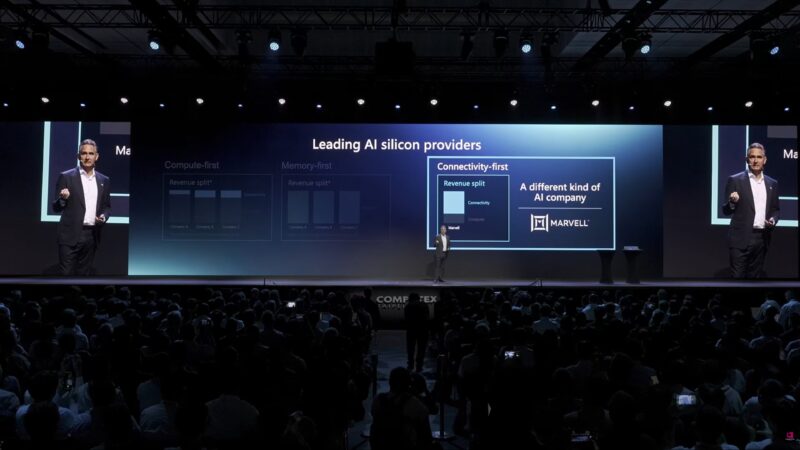
Marvell is unique in the industry due to how much of its revenue comes from connectivity instead of compute.
“We are the Switzerland of the industry. We work with everybody.”
Murphy is now recapping their recent partnership with NVIDIA, and NVIDIA’s $2B investment in Marvell.
And Jensen is here today to chat about that partnership. Here’s Jensen.
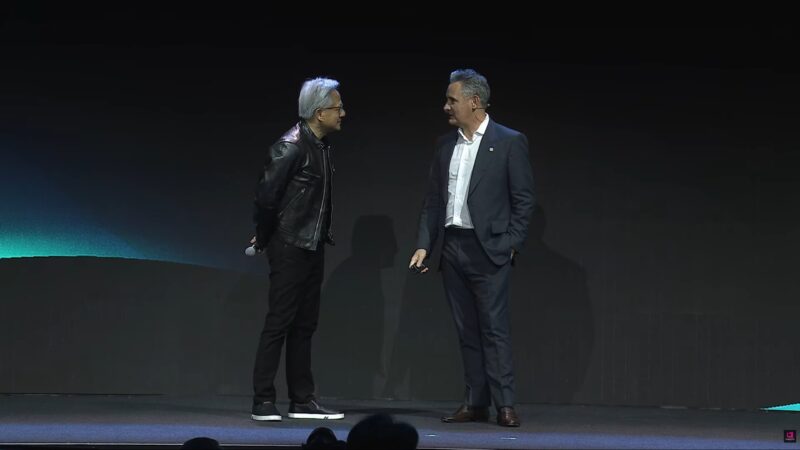
“The next trillion dollar company ladies and gentlemen.”
(This is sounding less like a tech keynote and more like an investment presentation)
Jensen is talking about how agents are driving the demand for connectivity due to their disaggregated nature.
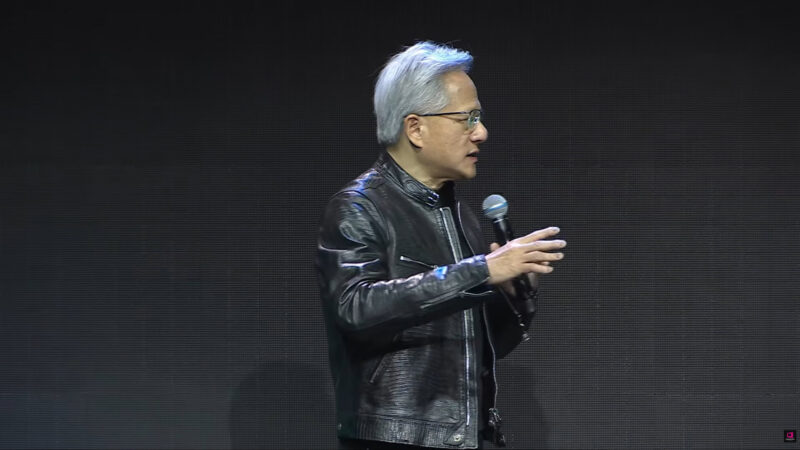
Jensen says that Vera Rubin is to run agents.
Meanwhile NVLink Fusion allows CSPs to pair up custom and semi-custom chips with NVIDIA’s hardware. Creating a heterogenous data center.
NVLink Fusion is about fusing NVIDIA’s and Marvell’s platforms.
The time is now for Marvell and NVIDIA to work together to scale up platforms for agentic AI. (Though if you want to just buy NVIDIA, Jensen is okay with that)
Combining the two companies’ technologies allows for customers to customize their data centers.
Meanwhile both are on the forefront of the switch from copper to optics. Scale up with copper as much as you can. Then scale up further with optics, and you scale up (and across) with optics. Optics where you must, copper where you can. It’s an intersection that Jensen wants to continue for as long as possible.
The end result being that NVIDIA will use tons of both copper and optical networking.
AI/tokens being profitable will drive this infrastructure build-out.
And that’s Jensen (who apparently is now hoofing it over to Arm’s off-site keynote for another appearance).
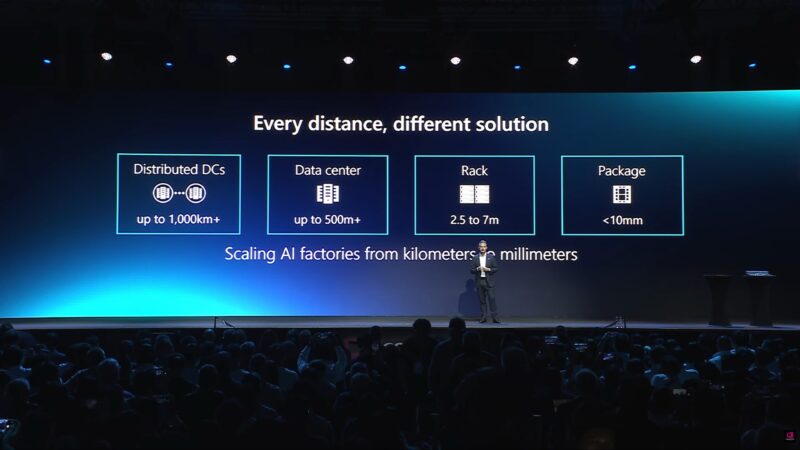
Different distances require different solutions. They are different engineering challenges.
The longest distance is scaling across data centers. Connecting data centers to other data centers.
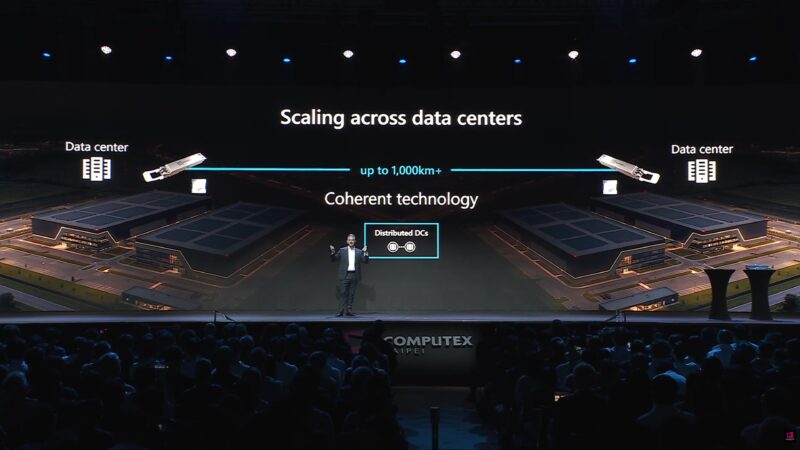
Hundreds to thousands of kilometers. With requires coherent modulation and coherent DSPs (which Marvell makes).
Marvell COLORZ 1600.
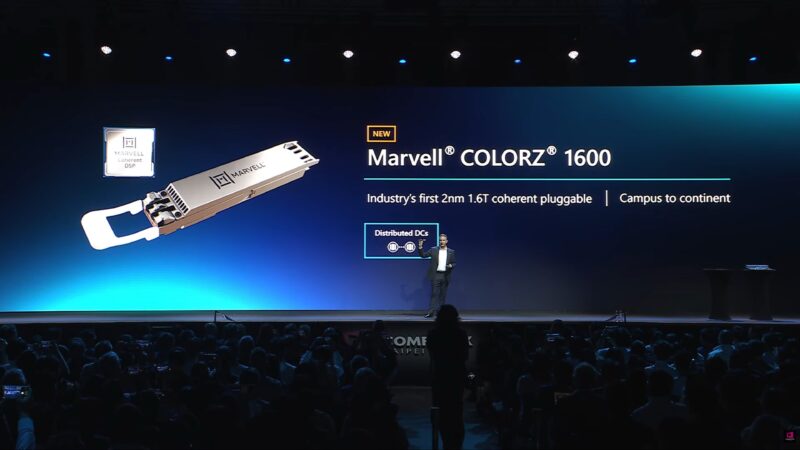
It implements Marvell’s 4th gen silicon photonics tech.
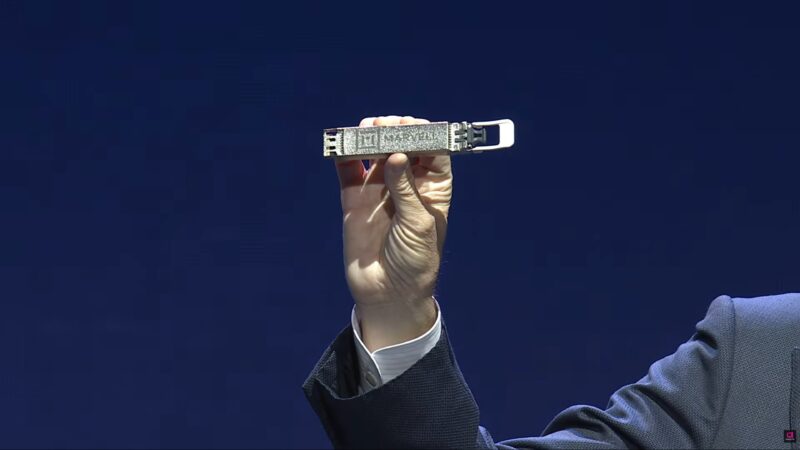
“Demand for bandwidth has never been greater.”
Moving on, inside the data center you have scaling within. Links up to 500m.
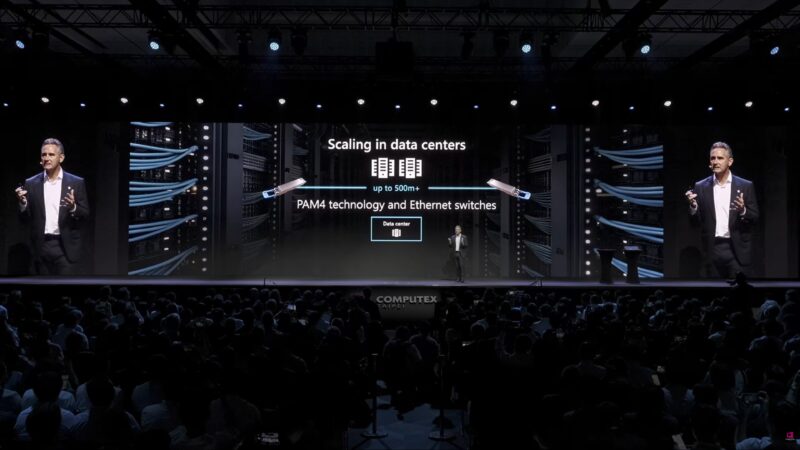
This is optical links using PAM4 modulation, which is more power optimized.
Marvell builds PAM4 DSPs as well as Ethernet Switches that are used in this layer of connectivity.
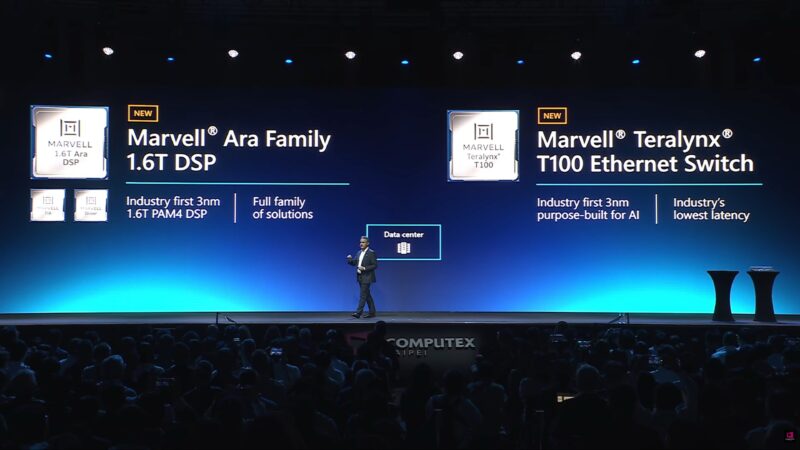
Today the company is announcing its new T100 switch.
Now to scale-up networking. Distances from 2.5m to 7m.
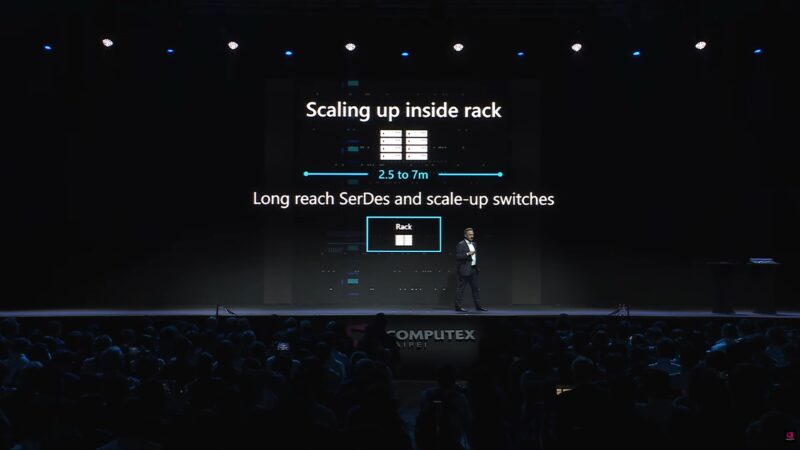
This is the domain of copper, not optical. Using copper SerDes that are going as long as possible
Now to die-to-die connectivity.
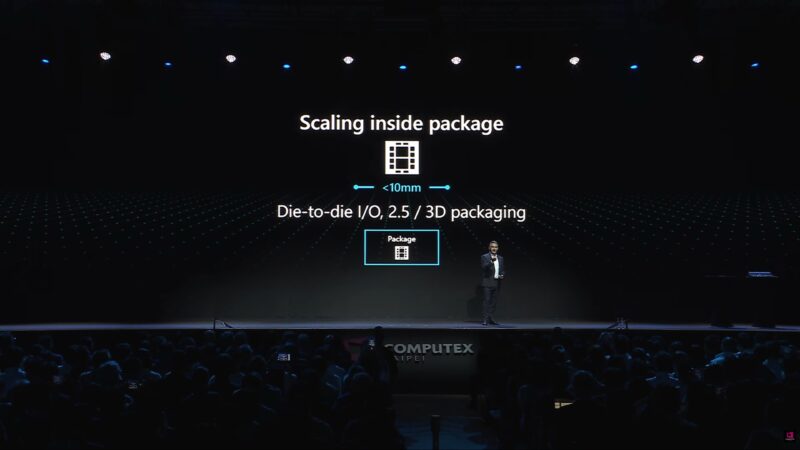
In summary, data center AI connectivity requires a broad portfolio of technologies.
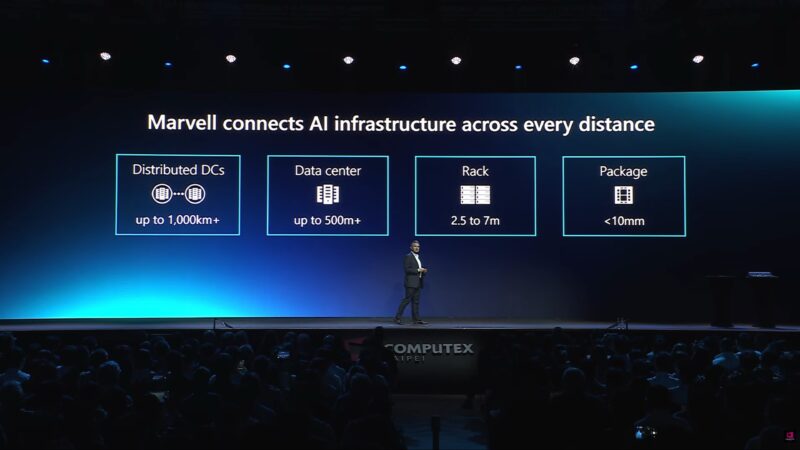
Marvell is unique because they have a complete stack here for connectivity at every distance. Most companies only address one or two of these segments.
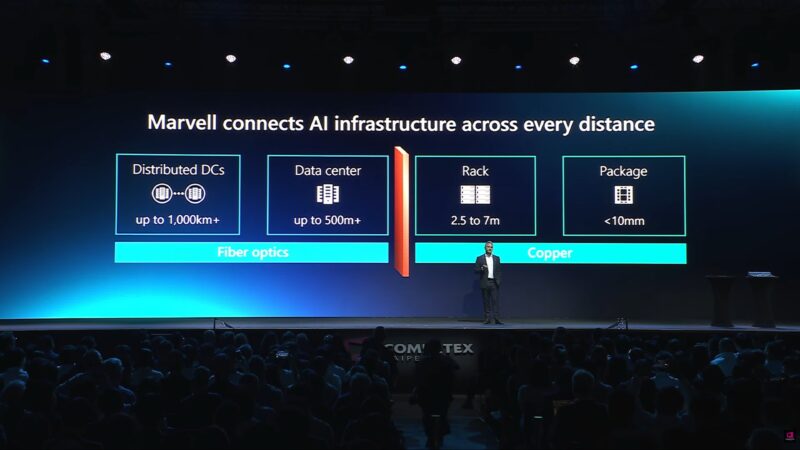
In the middle between copper and optical is the “copper wall.” The maximum distance that copper can viably be used. Going beyond this means going to optical, which is more complicated and expensive.
Still, the wall is going to move. Rack-scale connectivity is going to require moving to optical. The higher bandwidths required will no longer work over copper at the necessary lengths.
200G per lane will be the last generation where copper is sufficient.
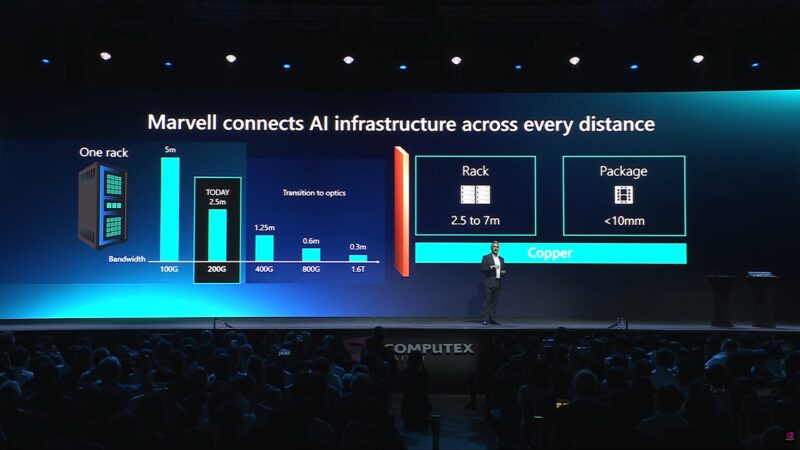
Each time the wall moves to the right, the number of connections increases by an order of magnitude.
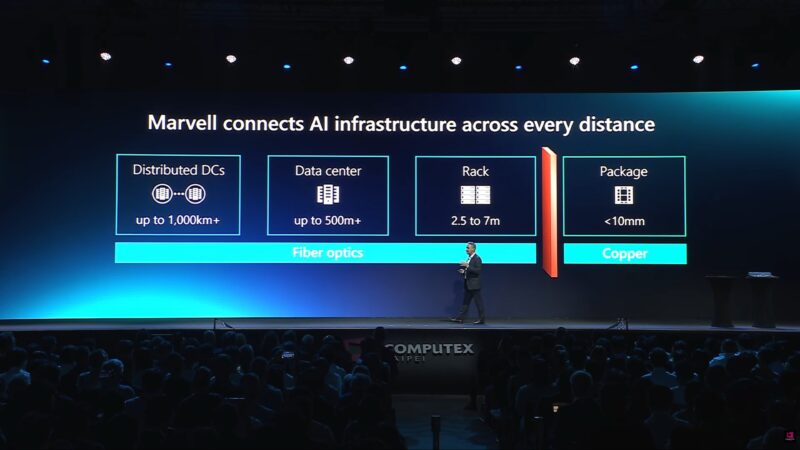
Murphy is comparing this to when 10Gb was the cutting edge, and optics was mostly a telecom technology.
We are about to see the same wave of innovation as optics moves to the rack.
The big enabler here will be co-packaged optics.
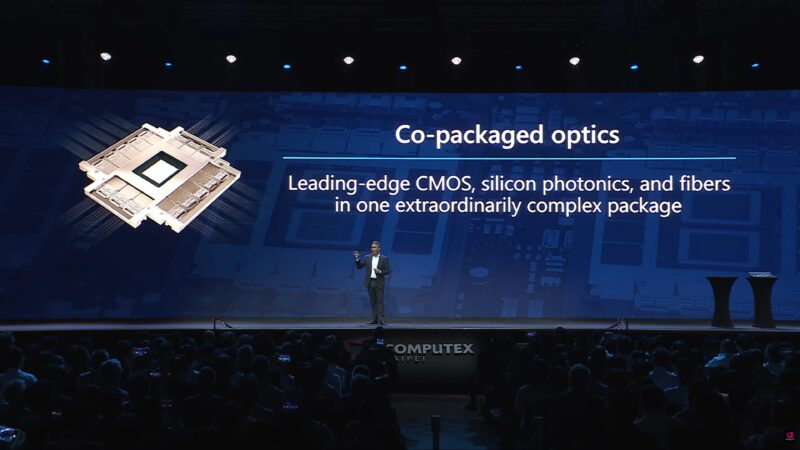
The same optical technology used for today’s optics won’t cut it. You won’t have enough power or enough space. This transition requires CPO. The optics need to be on-packaged.
All of which requires combining cutting-edge technologies. Not just silicon photonics, but leading-edge CMOS, optical DSPs, and more.
“This isn’t some futuristic thing. It’s happening now.”
Time for show and tell.
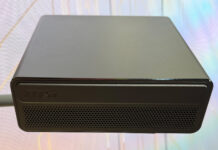
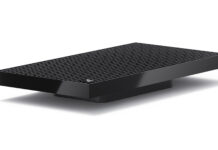
Here’s the 100T Teralink switch.
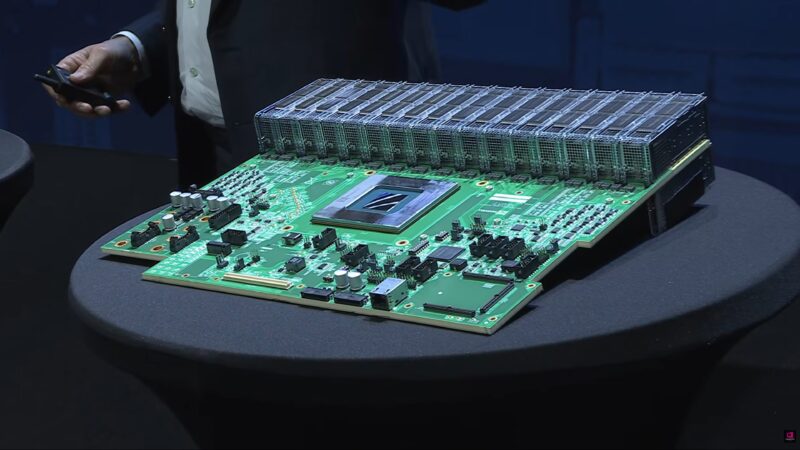
And for comparison, here’s a CPO-based switch.
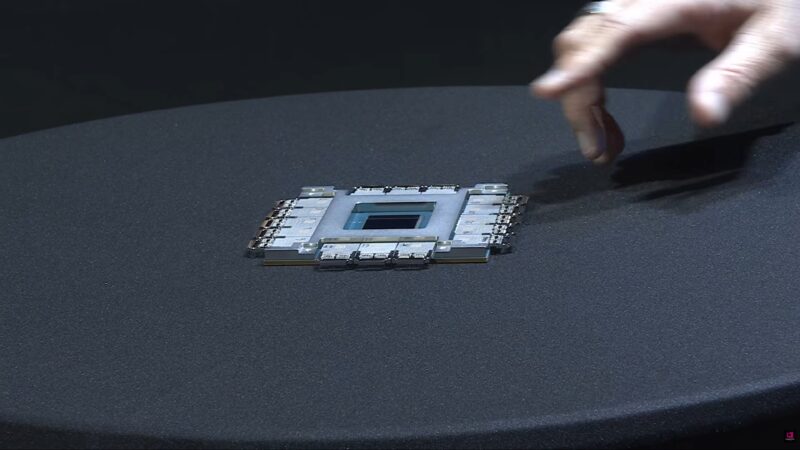
It is vastly smaller. Beyond the switch chip in the center, there is minimal space used for the optical connections compared to the traditional optical switch.
There will be no one-size-fits-all solution for data center optics.
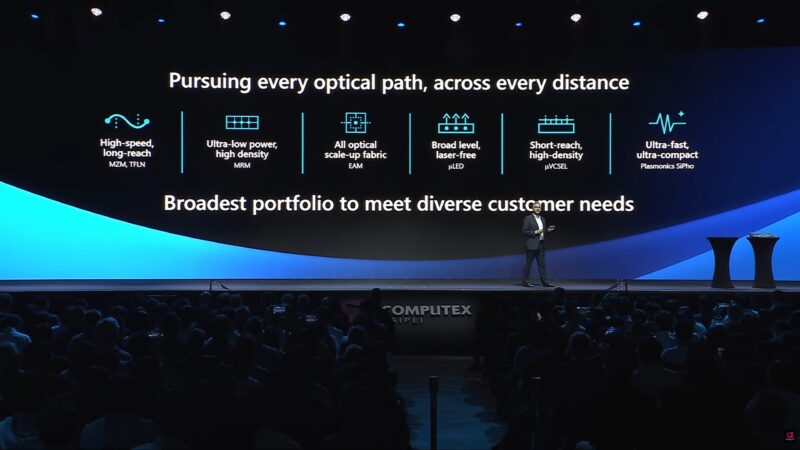
Multiple technologies will be required. And Marvell is well-positioned to deliver them because of their depth of knowledge and product portfolio.
And Murphy is making a point that they aren’t just demoing this tech, but they have been delivering it today.
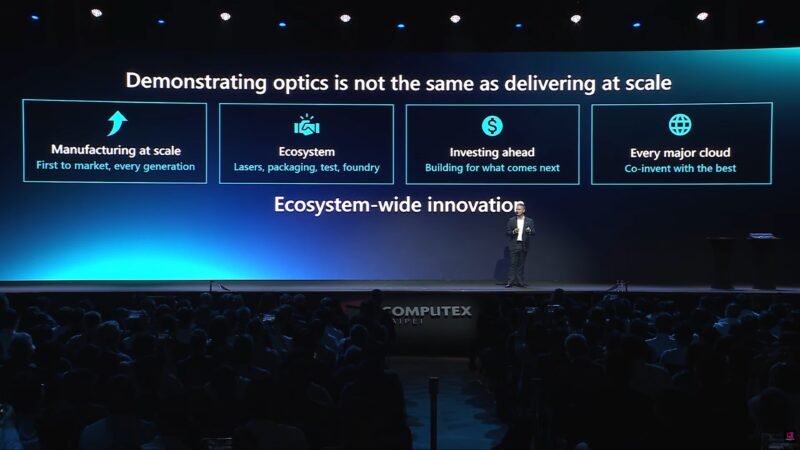
And to do that, they need to invest in the ecosystem before the demand arrives.
Now Murphy is talking up some of Marvell’s partners and suppliers, whom he calls critical to helping the company get to where it is today.
Now joining Murphy on stage is ASE’s CEO Tian Wu.
ASE bet on Marvell very early. Marvell has seen great success based on that.
For ASE it was a gradual process.
Marvell’s business model became aligned with ASE’s.
ASE needed to bet on a company that was well-positioned for the future.
Marvell made a commitment to ASE, and ASE in turn is investing in the infrastructure to build Marvell’s products.
ASE and Taiwan’s experience will be extremely valuable in pushing technology forward. Which makes this ecosystem very very difficult to replicate.
And that’s Tian Wu.
“What does that inevitable future look like?” where a lot of copper connections are gone, and almost everything is optical.
Today’s servers have all been designed around the constraint of distance. But how to things change if distance no longer matters?
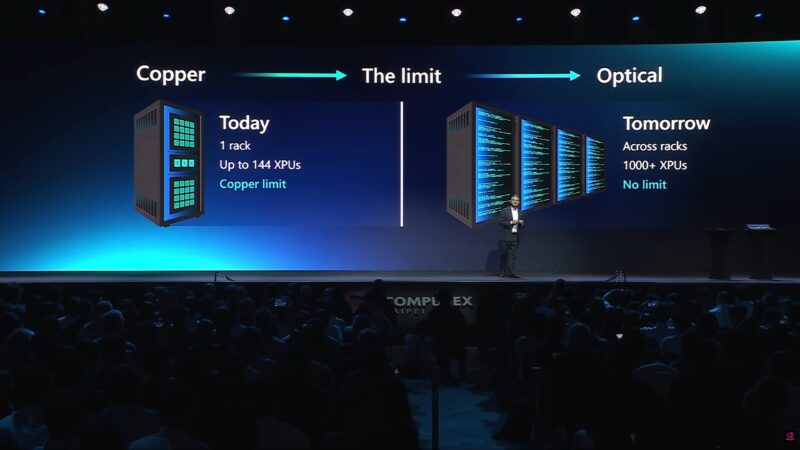
With optics the size of the scale-up domain can change. Going from 144 XPUs to thousands. Distance stops being a limit. Optically connected workloads can grow an order of magnitude larger.
Even within the server, optical can be used inside as well, with a complete disaggregated server architecture where CPUs, memory, XPUs, etc are all in separate systems. Which means no longer building whole trays and systems to a specific pre-defined ratio.
Compute can be pooled. Memory can be pooled.
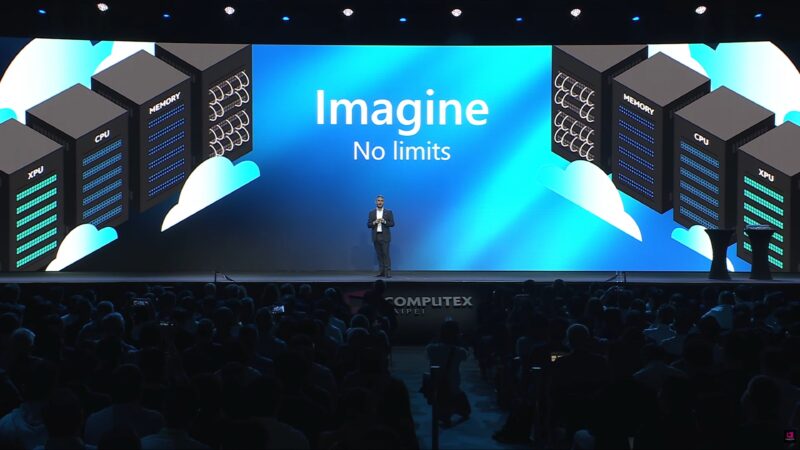
Architects can design systems without all of today’s connectivity constraints and limits.
In summary: Marvell believes optical will be the next era of computing infrastructure.
And that’s a wrap for the Marvell keynote.