These days, DRAM is in such short supply that folks are getting creative in providing memory capacity. We have been talking for a long time about CXL’s ability to use different types of memory behind the controllers. It is similar to how IBM and companies like Microchip had the same promise with OMI. Now, Kioxia is offering a NAND-based CXL device so you can add memory capacity without paying the DRAM price per GB.
Kioxia XL1 CXL XL-FLASH NAND Device
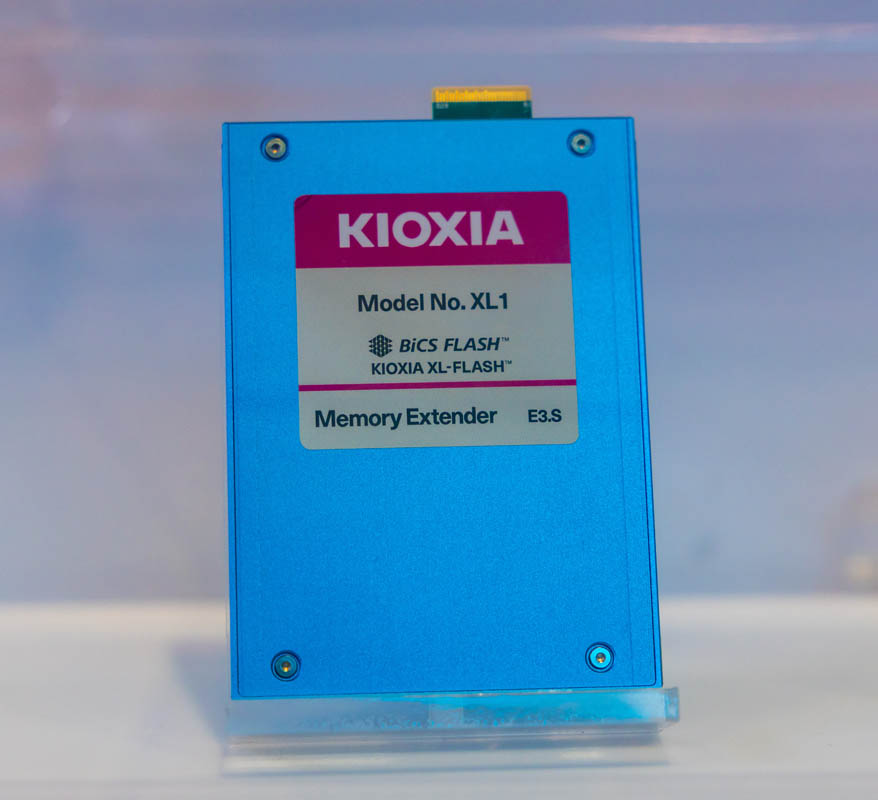
Here is the drive that we found at FMS 2026, which was a bit unassuming.
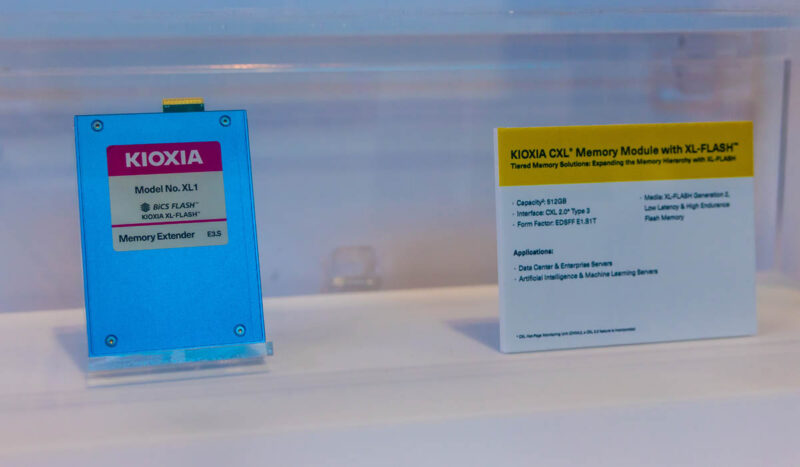
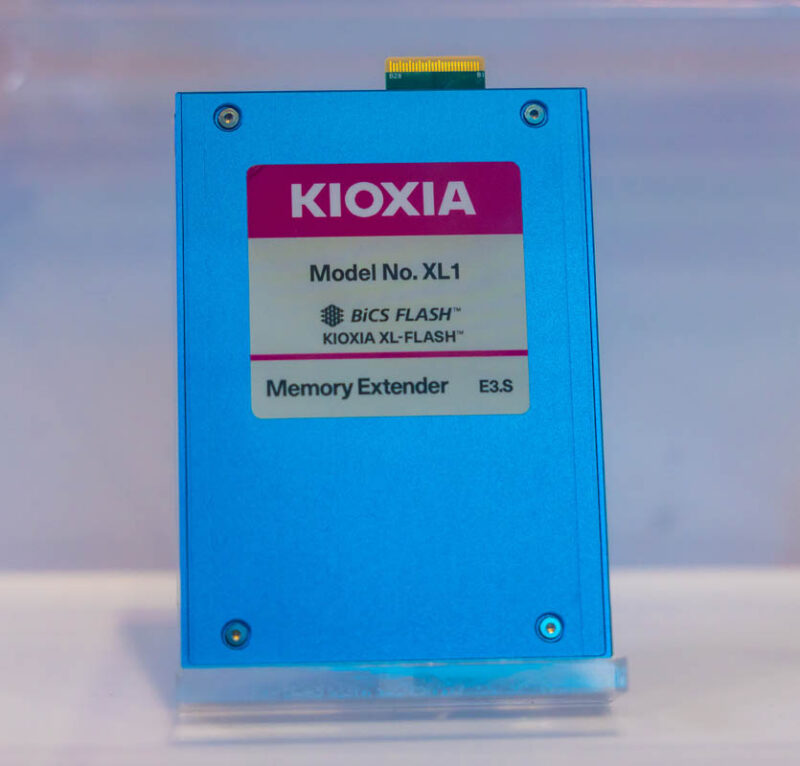
The drive at the show was an E3.S form factor. That means the device has an EDSFF connection that is running CXL in this case instead of PCIe. For system designers, this is a flexible solution since the same system can have traditional NVMe SSDs or CXL devices attached.
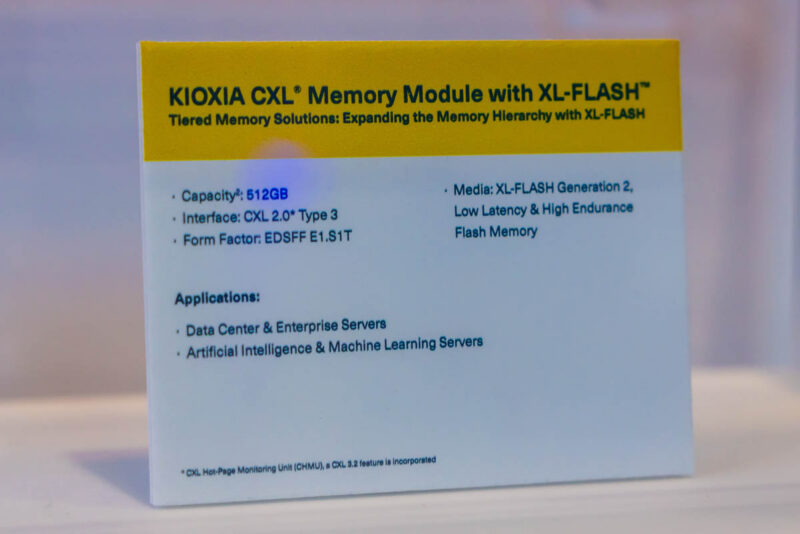
Here is the little spec sheet that was at the show. This is a 512GB CXL 2.0 device. Since it is a Type 3 device, it is a memory expansion device. The other major feature is that this is a Kioxia XL-FLASH Generation 2-based solution. The advantage of XL-FLASH is that, unlike TLC and QLC NAND, it has much higher write endurance and lower latency.
While there was a device on the floor, Kioxia also had one running. Here you can see the 512GB device running at just under 1GB/s with 755ns latency.
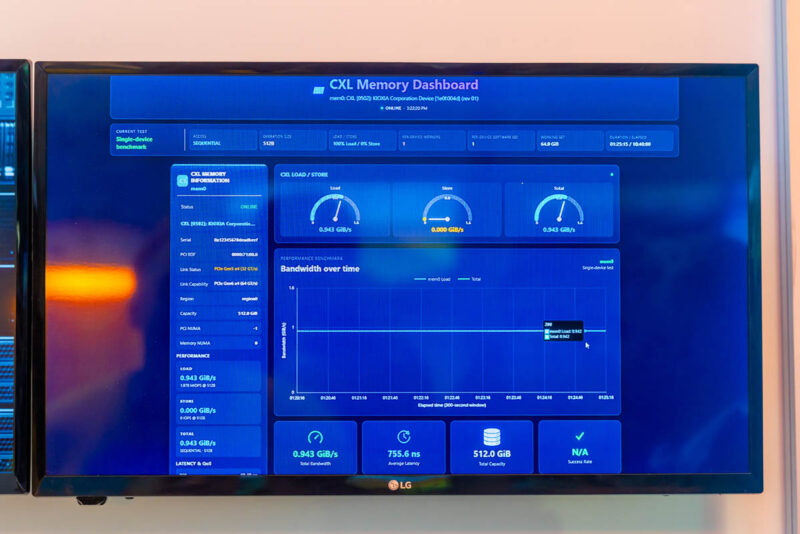
The interesting part is that this is just shy of 2M IOPS running a 100% 512B loads.
Final Words
Undoubtedly, a DRAM-based CXL solution can be faster than the XL1’s NAND-based solution. Still, many workloads have very hot data as well as many very cold memory pages. As a result, the idea of using regions of memory with faster DRAM and then other regions with slower media types has been around for some time. Intel Optane was a famous example, with Intel’s original idea being to have dedicated Optane channels (notably, CXL was part of this broader memory-architecture vision). Kioxia’s idea allows companies to take advantage of this model. XL1 lets servers use NAND for colder memory regions while using DRAM for hot data, lowering costs.