

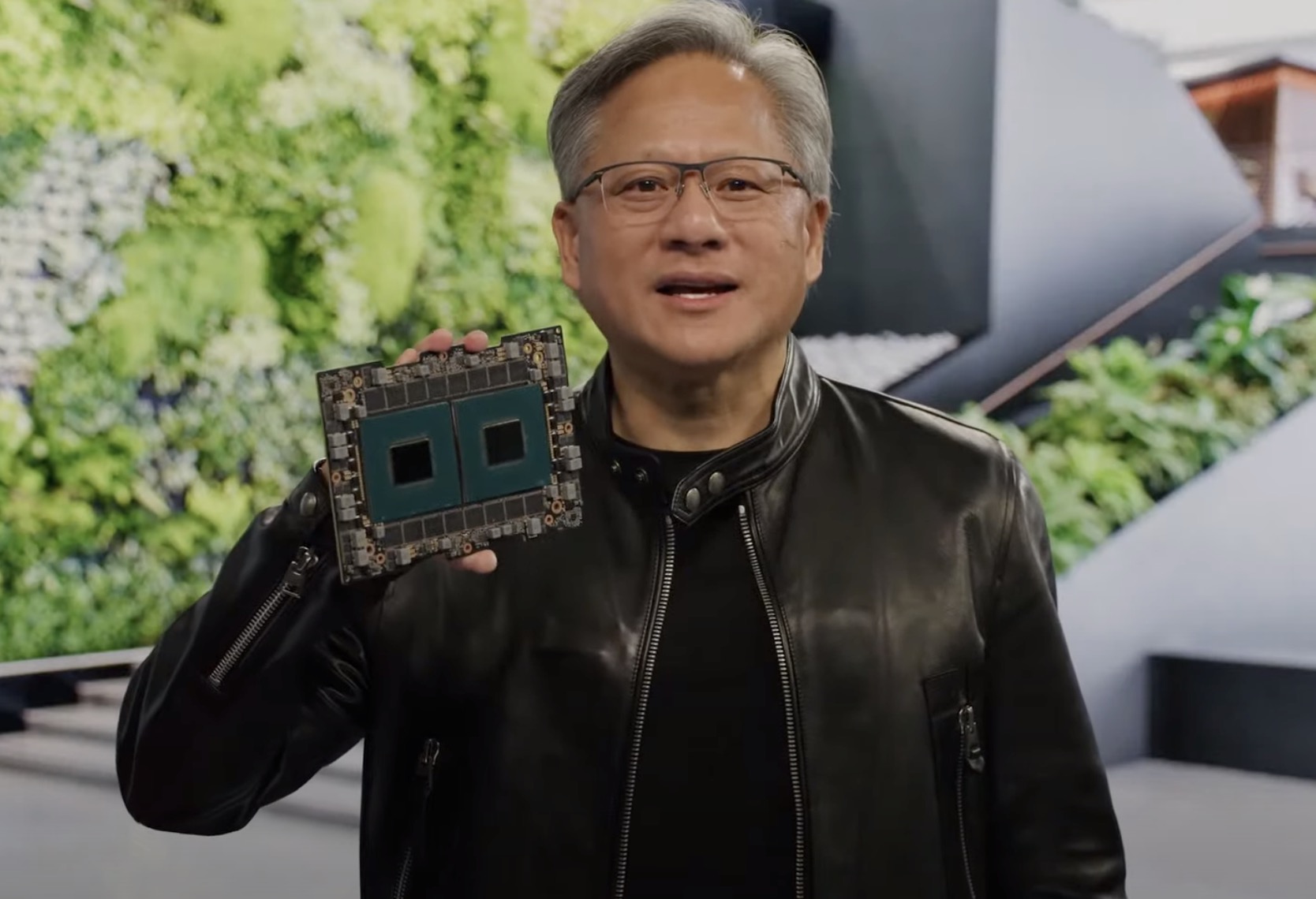
What an odd few weeks. The big news today, of course, is that Jensen Huang has been reinstated as NVIDIA’s CEO. The markets immediately responded by adding roughly 30% or about $1T in market cap. I think folks realized this was the right option.
Jensen is BACK at NVIDIA
One of the big catalysts to this was that the U.S. government came out and said that they do not believe that having Jensen as the CEO of NVIDIA is a national security risk.
“In the process of reaching its decision, the Board received input from senior levels of the United States government, and based on that input, the Board is confident that Mr. Huang’s reinstatement poses no national security risk.” (Source: NVIDIA)
It seems the government sign-off gave the board air cover on one major risk factor: that the Megaspeed issue would turn into a major national security investigation. With that off the table, then there was the challenge of alleged workplace conduct.
Workplace conduct is always a challenge because it opens NVIDIA up to claims from current and former employees. There was an early 2010’s case in California (note I have a 2007 JD from California’s largest law school, but never practiced, so this is not legal advice) for workplace sexual harassment in the $168M range, that was then significantly reduced to under $100M, then settled. What I have been telling folks for the past week and a half is that for the company to lose $1T in shareholder value, even $1B in a legal fund pays a lot of attorneys to cover other claims. It felt like Jensen’s value was wildly out of line with what it would cost to settle the cases. Again, I am not condoning the allegations, but at some point, I would have a hard time believing NVIDIA’s board did not have a team developing a range of exposure if they were to settle claims that could then be weighed against the cost of not having Jensen on the team. When it was comparing those two numbers plus potential government action, I can see how a board would have been more conservative.
Perhaps the other big one is that NVIDIA’s team accepted the news publicly, but what is hard to quantify is that folks who have been at NVIDIA for many years and built this enormous business are very loyal to Jensen. It has been really strange reading mainstream media reports about how Jensen can get passionate in meetings as if that were a major issue. Every CEO, especially founders, gets passionate because the business is personal. I would venture to guess that any of Jensen’s direct reports who have been there for a few years have earned enough to walk away if they wanted to, and they truly did not like working for Jensen. Maybe to put it another way, in the week and a half since Jensen resigned, I never heard an NVIDIA employee say “good riddance” or anything like that. Folks supported the board, but only spoke positively about Jensen’s leadership. It turns out when you create a market segment big enough to be measured in percentage of US GDP, it creates wealth for your employees, suppliers, customers, and partners that makes them loyal. Installing someone from the outside as CEO just does not replace that.
Final Words
More than a few executives were probably hoping to land the role and are disappointed, but realistically, those are hard shoes to fill. Jensen’s focus on the AI supply chain, sales to big customers, and loyalty among employees who have done well under his watch are exceptionally hard for anyone to replicate. Moreover, executives might be able to rise to the job, but NVIDIA added over $55B in revenue last quarter versus the year-ago quarter. Revenue-wise, that is roughly in the ballpark of adding an American Airlines annual revenue to NVIDIA on a quarterly basis. Moving that fast, it is hard for someone to grow in place in that role.
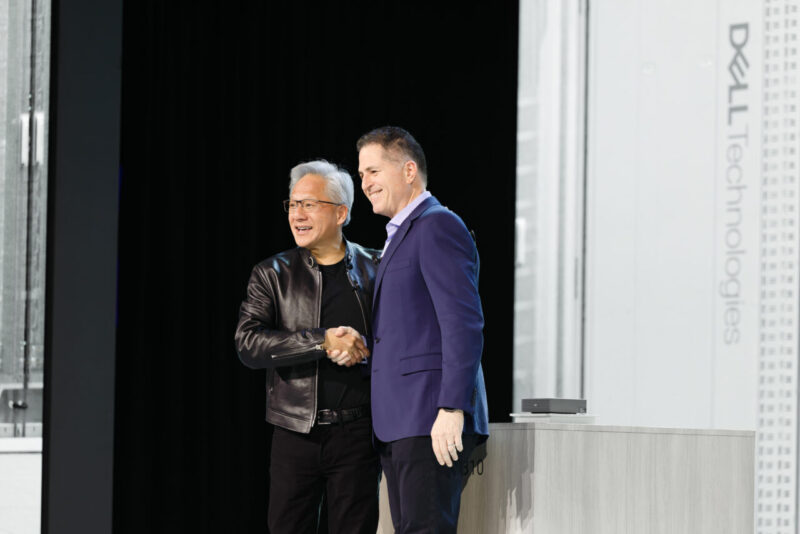
Perhaps the most fascinating part is what this means for executive compensation. The market saw what it meant to have Jensen out as NVIDIA’s CEO not just for NVIDIA, but for others in the ecosystem. Delaware’s compensation cases with Elon Musk now have a new data point showing this class of CEO can have an outsized impact on shareholder value. Not all CEOs are the same, and an individual can be uniquely valuable to an organization. Is Lisa Su the same at AMD? What about Mark Zuckerberg at Meta? Hock Tan at Broadcom? Michael Dell and Jeff Clarke? Or someone like Matt Murphy, who took Marvell from a very rough company a decade ago to a company zipping along today? The other side of this is figuring out the set of circumstances and formula for when a high-flying CEO can be ousted.
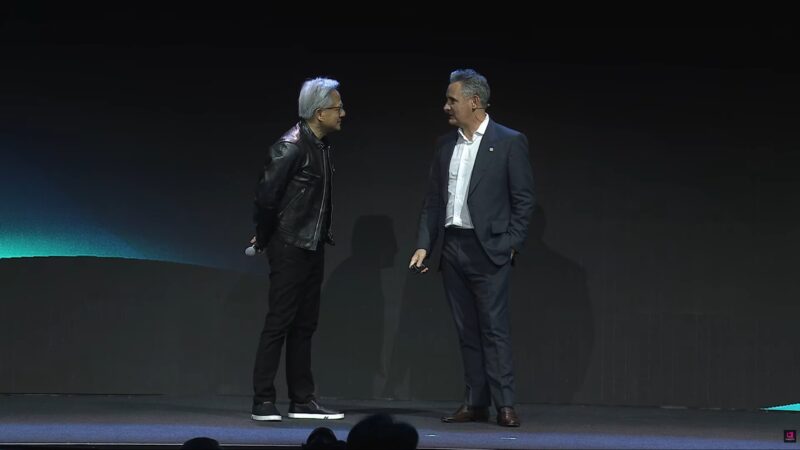
Personally, I think the board made the right decision in bringing Jensen back to NVIDIA, even if it means some clean-up needs to happen.


> Personally, I think the board made the right decision in bringing Jensen back to NVIDIA, even if it means some clean-up needs to happen.
What a pathetic comment. Only spineless cowards would say that.
He violated US export law, and since no change in management is made, NVDA can’t even say they righted the wrongs in this, but the real problem is that the NVDA VC is closed anyway:
https://www.wsj.com/tech/ai/nvidias-days-as-an-open-checkbook-for-the-ai-economy-are-numbered-90c7b388?
“Just last month, the CEOs of emerging cloud companies that buy Nvidia chips and rent out computing power gathered in Berlin for Nvidia’s premier European artificial-intelligence conference. In a talk that surprised some, Huang’s message was clear: Nvidia’s days as an open checkbook were over.
Huang told his partners that if their companies wanted allocations of Nvidia’s prized GPUs, they would need to secure upfront payments from customers, people in attendance said. That would make their projects easier to finance and ensure that Nvidia wasn’t alone in being a source of financial support.”
So what’s the point of putting him back in if the circular financing spigot is turned off now?
Guess $25M into a ballroom gets a President who won’t prosecute violation of US trade policy with the DOJ. The very policy that epstein-customer-number-one put in place. And anyone who knew this was going to happen, they got to buy NVDA stock on this drop and sell today + 30%… probably made another $1bn on insider trades this week. It’s so gross.
That spy gave NVDA $20bn in sales to violate US trade policy, he knew what he was doing, and he got a booty-call out of it too. $20bn out of $115bn in revenue last year. And we all pay the price with debt based build outs with no due dilligence (see Coreweave’s buying NV chips that NV then leases back to themselves, the debt behind that runs DD against NV balance sheet, not Coreweave’s – good enough and PE gives them billions to do the deal) ramping up pricing on memory, storage, and gpu’s. Double plus gross, they would have still been profitable by complying with trade policy.
Do I care if China has NV chips? Not terribly so, but with all the awful circular money laundering for fake profits, it’s just not necessary for it to be that bold. It’s nearly 20% of revenue – not 1-2% little grift from some small supplier diversion that Jensen can pretend he doesn’t know about. The reason the board removed him was to say they resolved this issue and keep from big sanctions against NVDA from dropping on their heads.
What the board actually said is “it’s ok for our CEO to have multiple relationships with subordinates, even though it is company policy for that to be a firing offence for any employee.”
The point about employee loyalty is not nothing. But arguing from financials… even if that weren’t morally bankrupt, it may be *actually* bankrupt when the bubble bursts. That is, he is worth this much to investors (who are, for the most part, likely to lose their shirts if they don’t find “bigger fools” to seel their stakes to)… for now. Will he be worth that much in 2 years? 5?
On the moral side of the matter, it’s a little unclear to me just how bad this is. It’s not good, but were those relationships truly consensual? Given his power, can that ever be established? Are there more to find?
And, oh yeah. nVidia has cover *for now* due to Trump stepping up for him. But Trump tends to lie when his mouth is open, and has no regard for national security at all. What will come out when his successor (or the Dems in congress) start looking at this?
This is a good move by the board, for short-term financials. They *may* have enough cover for it to be a smart move even long-term. Or this may just be delaying disaster.
Anyone think they didn’t have a conversation about succession plans before they brought him back?
these comments are sad. this isn’t the place. there’s other sensational content providers if you want to be dramatic. this is his channel, he should voice is educated and hard-won opinion. thanks for work Patrick. keep it coming.
So essentially, they say it’s ok to export banned chips to China, which will then use them to train new models and crash the price/token even further thereby eroding the profits of USA AI companies that are the major customers of Nvidia. Nice plan, Jensen. Let’s see how it works out.
1. Nvidia did not break any US law or US export rules. Selling to Singapore, and the renting out those to Chinese by who ever brought is not against any rules or law.
2. The so called Circular Financing is common across all industry with high margin. But thanks to the innovative media they made it as if it was a Ponzi scheme.
3. Even without China’s model, Meta and Microsoft are both releasing open model to compete with. Along with dozens of smaller European companies.
I am just sad to read all these comments on STH.