

HPE has announced that its Spaceborne Computer-4 will power artificial intelligence workloads and, according to it, will be the first HPC benchmark on the lunar surface. The compute module is set to ride aboard Astrolab’s FLIP rover, which will land near the Moon’s South Pole as part of NASA’s Commercial Lunar Payload Services (CLPS) initiative. This moves HPE’s spaceborne program beyond the International Space Station and into an atmosphere-free environment with much higher radiation exposure.
The mission is intended to launch in late 2026 on Voyager Technologies’ Griffin-1 lander. Once deployed, Spaceborne Computer-4 will run large language model retrieval-augmented generation, vision inference, LiDAR data processing for mapping and navigation, and an AI services container designed to demonstrate reliable deployment of scalable AI applications at the lunar edge. AI is headed to the moon.
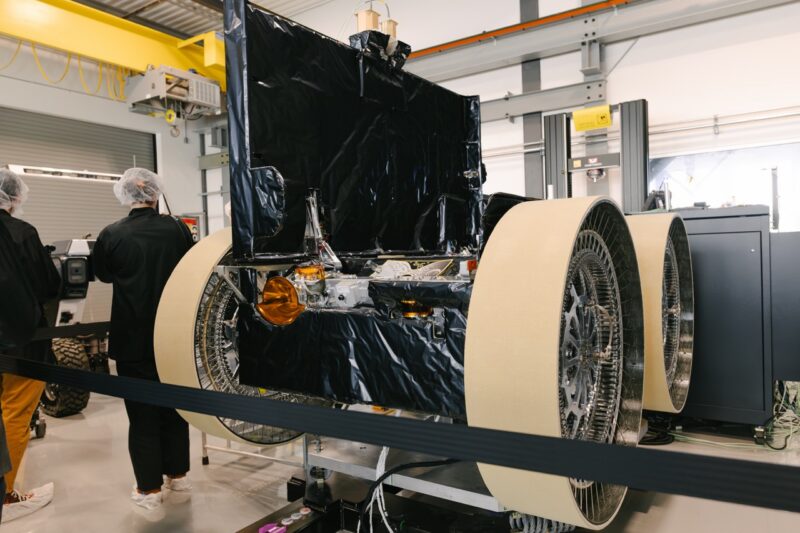
We first covered this hardware in June, when we looked inside the storage of Spaceborne Computer-4 at HPE Discover. The fourth iteration is a much smaller and lighter system than the HPE Spaceborne Computer-1 we covered years ago, which makes sense because mass is critical when sending payloads to the Moon. The idea is to build a small compute subsystem that can operate with low mass, low power, and that can make decisions locally, rather than having to transmit back to Earth.
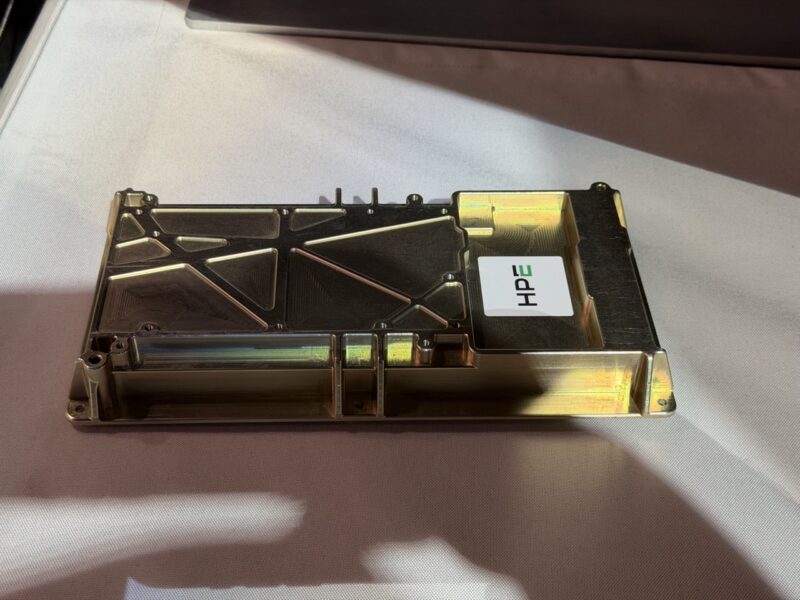
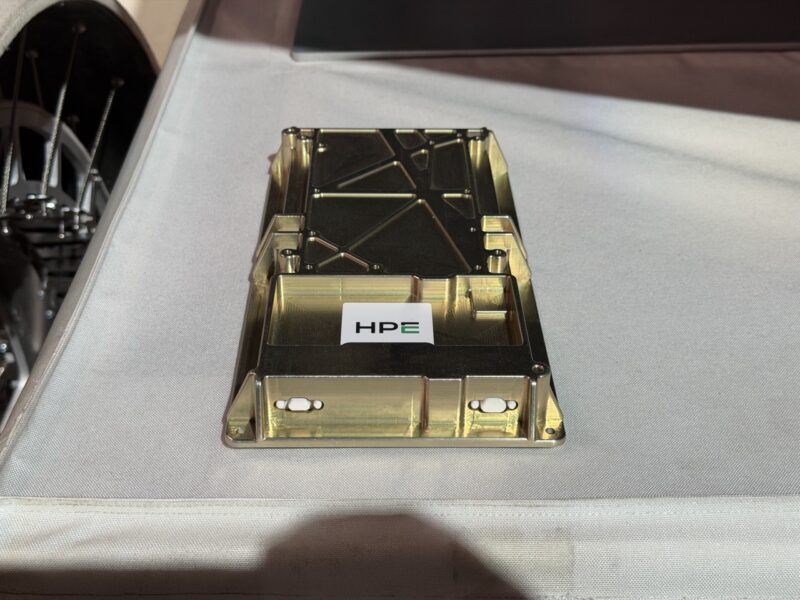
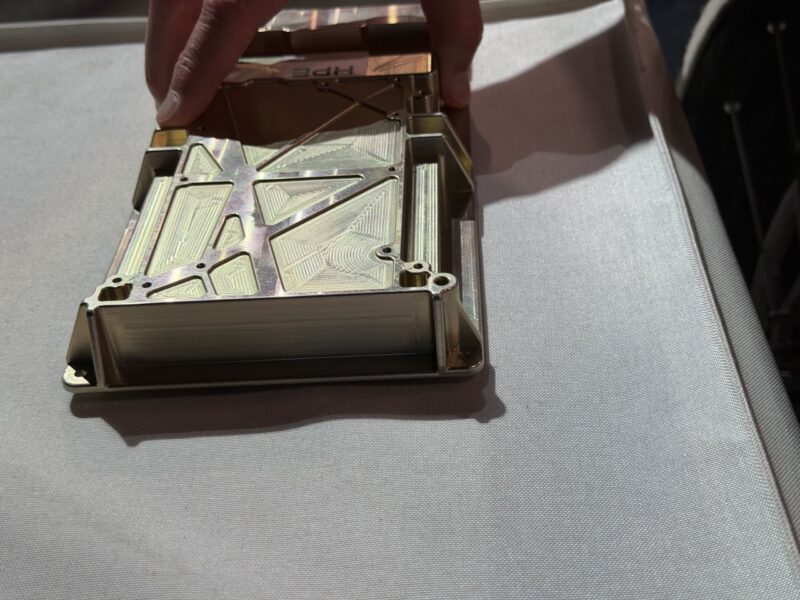
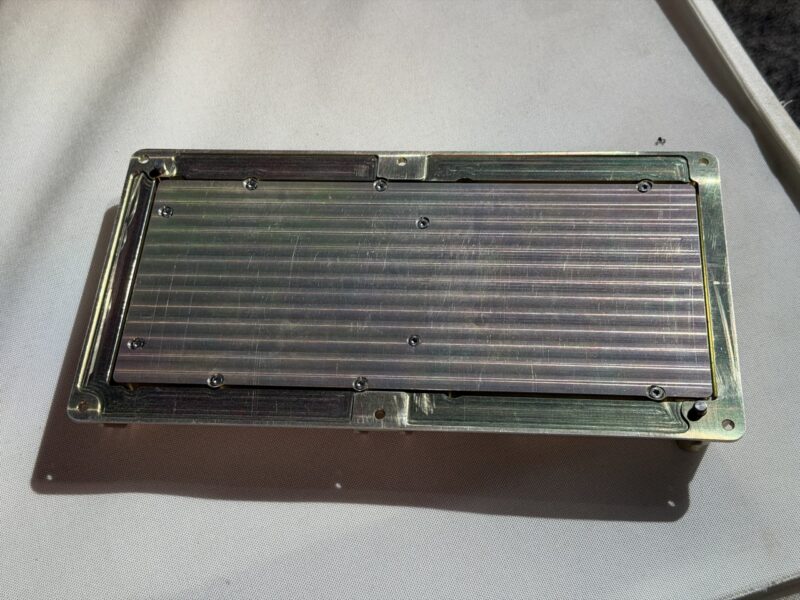
Since there is no air on the Moon to move across a heatsink, the system uses a space radiator instead of fans. The housing has an intricate lattice structure that we saw in person at Discover 2026.
For storage, the system uses a Kioxia BG-series M.2 SSD, the same class of DRAM-less drive you might find in a low-cost TinyMiniMicro PC. Kioxia has been proving commercial NAND on the ISS for years, and this mission extends that work to the Moon’s harsher radiation environment.
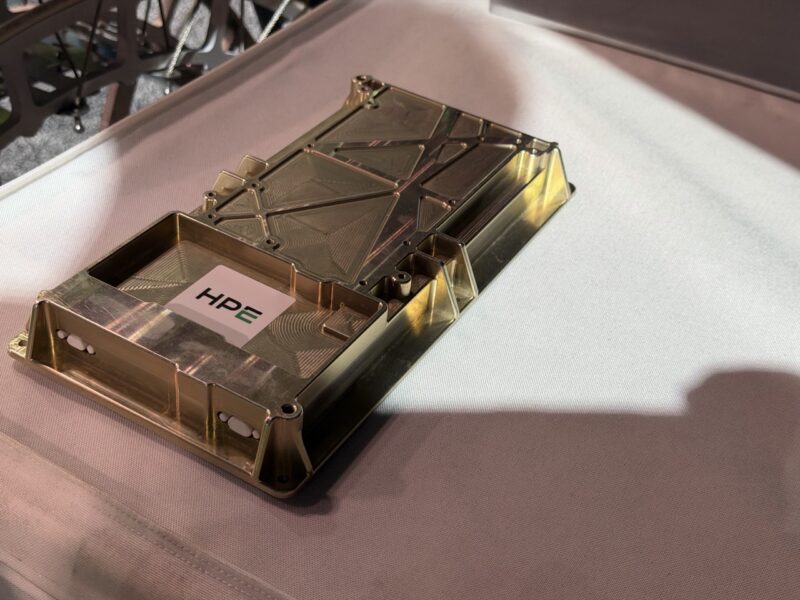
HPE says the compute module is lightweight, self-contained, fanless, and equipped with both a low-power CPU and GPU. The company also assembled software to optimize interaction with Earth-based resources and securely deliver results back from the Moon.
HPE will also support Astrolab’s mission control in Hawthorne, California, using HPE Private Cloud and HPE CloudOps Software to manage and automate workloads from Earth.
NASA and Deloitte are joining the mission to deploy additional AI workloads. NASA will run its FLUID (Federated Learning for Unbounded and Intelligent Decentralization) experiment, coordinating three separate AI models trained on data from Earth, the Moon, and the International Space Station. NASA will also conduct a tuned LLM test with semantic processing abilities to search and interpret onboard documents. Deloitte’s Silent Shield system will provide near real-time predictive cyber-analytics and anomaly detection.
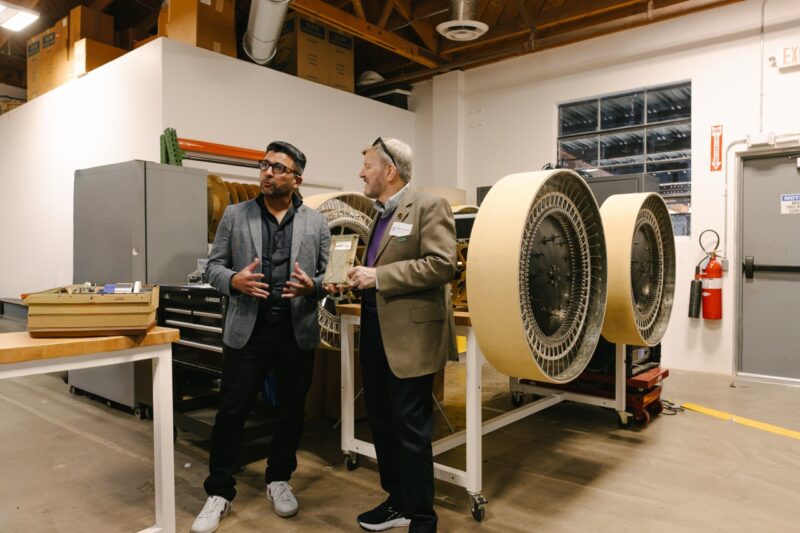
We missed an event in Hawthorne, CA last week due to OCP 2026, but we received a few photos from the event.
Final Words
If these benchmarks work as planned, they will provide useful data on whether off-the-shelf-class components can support the emerging lunar economy instead of requiring expensive custom space-grade silicon. We expect this compute mission to succeed, assuming it powers on on the lunar surface. Given the cost of lunar launches, everything is thoroughly tested before it gets loaded into a rocket.