

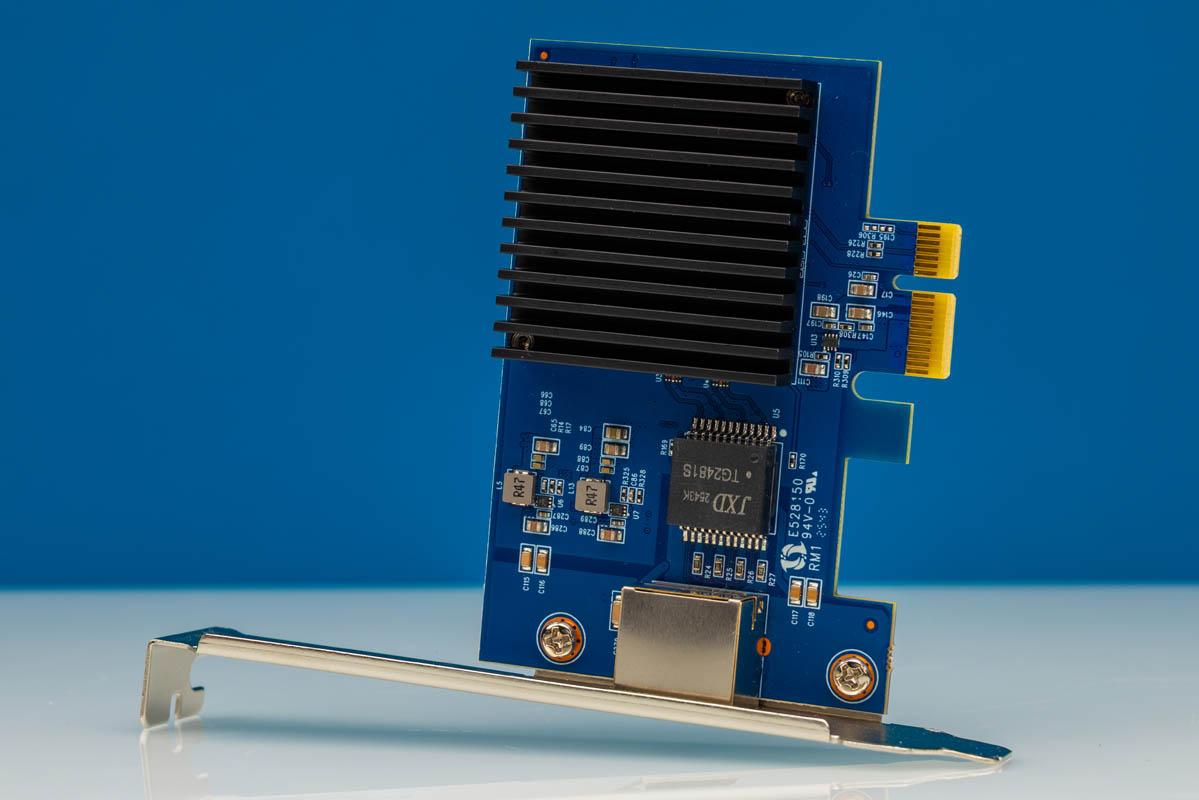
We purchased the BZIZU Realtek RTL8127 PCIe 10GbE network adapter for $46, and it looks very familiar. This appears to be another brand label on the same basic RTL8127 PCIe Gen4 x1 card we covered in our original RTL8127 review. That matters because the earlier cards often came through AliExpress-style listings, while the BZIZU version is available through Amazon with faster delivery and easier returns. For systems with spare PCIe x1 slots, this is an inexpensive way to add 10Gbase-T without using a larger expansion slot.
Here is an Amazon affiliate link to where we purchased ours.
BZIZU RTL8127 PCIe 10GbE Network Adapter Hardware Overview
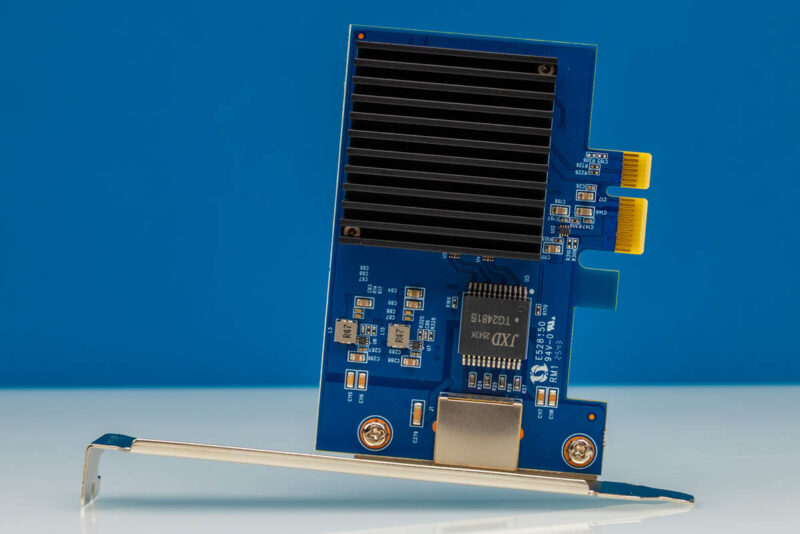
The BZIZU RTL8127 is a compact PCIe add-in card with a single RJ45 10Gbase-T port and a full-height bracket pre-installed. This small x1 layout fits into tight spaces where larger NICs would not work.
Here is a view of the I/O, which shows the full-height bracket attached and the single RJ45 10Gbase-T port visible on the I/O side.
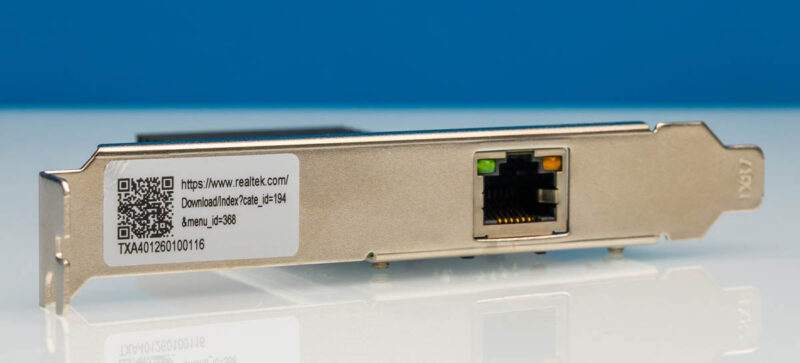
If that label does not scream “generic,” I am not sure what does. This is very much just a rebrand of the cards that we tested previously.
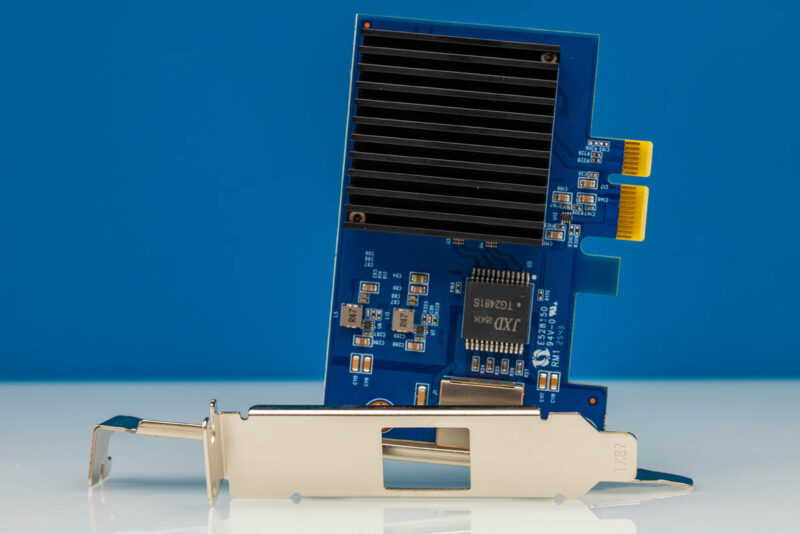
Looking down from above reveals the heatsink covering the RTL8127 controller, while the RJ45 port and PCIe x1 edge connector remain visible.
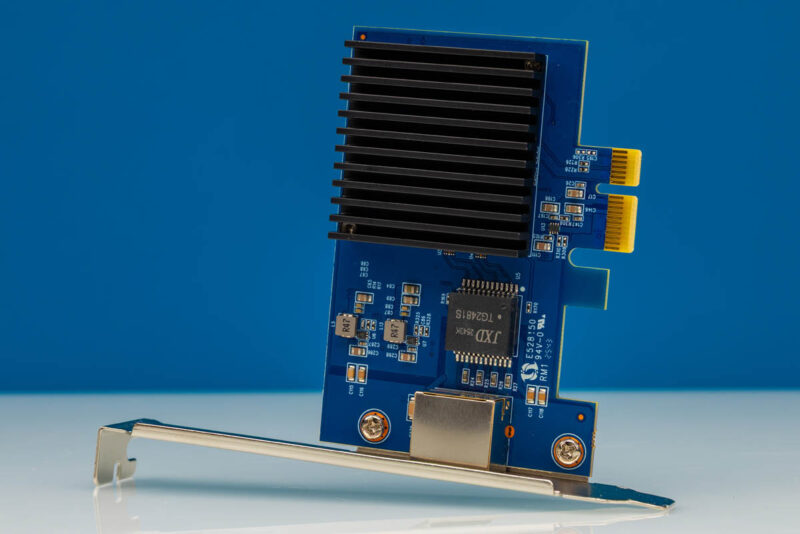
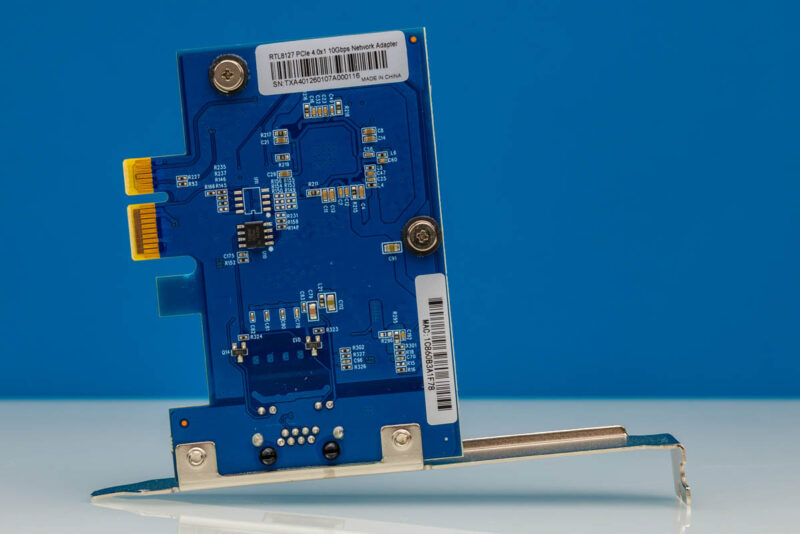
A sticker on the bottom side labels this as an RTL8127 PCIe 4.0 x1 10Gbps Network Adapter. That specification confirms the host interface and maximum link speed.
Included accessories consist of a low-profile bracket for smaller chassis. You can swap brackets depending on whether a chassis requires standard or low-profile expansion cards.
Next, let us plug this in and see how it performs.

The heatsink is hot with the RTL8127 on this card or not excessive ?
Did you mean to link back to the SAME review?
It seems like there are just sellers that are reselling the same RTL8127 card that we saw in our BZIZU Realtek RTL8127 PCIe 10GbE Network Adapter Review.
How’s the power draw compared to the AQC113? How well does it perform in an older PCIe v3.0 platform?
When I click on the link Amazon shows me the RTL8127 card that is reviewed here, but then suggests a similarly branded BZIZU 10Gb card based on Aquantia AQC107 that is $5 cheaper. The “also like” menu also includes a $17 cheaper 10Gb card based on the Intel 82599EN.
Suppose this is for Linux where both latency, bandwidth and CPU loading are considerations. How do I choose? At the level of these cards is it a only a matter of price?
This still doesn’t present all useful essentials.
Like what does the chip actually offloads/accelerates ?
What capabilities does it have ? How does it differ from 10G Intel or Marvell/Aquantia ?
Not everything is in raw iperf3 numbers.
Eric Olson, do you have PCIe 4 slots? That’s what this card requires for full performance. The older cards are PCIe 3 (or even 2!) and require more lanes. The size of the heatsink is a good indicator of power/heat.
@flo – It’s mostly for show, the cards use less than 2 W of power.
@Cheezehead – less than half. There’s a PCIe 3.0 x2 variant of the chip for older systems.
If the pcie gen 4.0 x1 slot is run through the chipset this hinders the speed of the 10G card because the chip doesn’t allow rss and only utilizes 1 cpu core. Dropping the speed down to 1G. I fount this out the hard way on my x670 Gene mobo.
Most of the images return a 404 error when you click for bigger versions.
Also no mention of whether this supports 2.5Gb/5Gb operation (I assume being a recent chip it does)?