

Last quarter, I visited the ASUS server thermal testing lab in Taiwan. This is where the company does its thermal testing for customers, validation, and even longer-term reliability testing. Inside the lab, there are a number of facilities, each with a different focus area. One of the fun parts of this lab is that it is where ASUS actually bakes its servers to simulate different operational stresses. Let us get to it.
As a quick note, ASUS sponsored our visit, so we have to say this is sponsored.
ASUS Walk-in Environmental Chamber
AI server development moves quickly enough that vendors need facilities capable of simulating years of thermal stress in compressed timeframes. Knowing how a server’s components will fare for 5 years is useful, but by then there will be (several) new generations of AI servers. To accelerate this and simulate different customer environments, the industry uses environmental chambers to reduce the time required to collect this data. Also, these types of chambers are used to validate heatink designs, fans, and so forth.
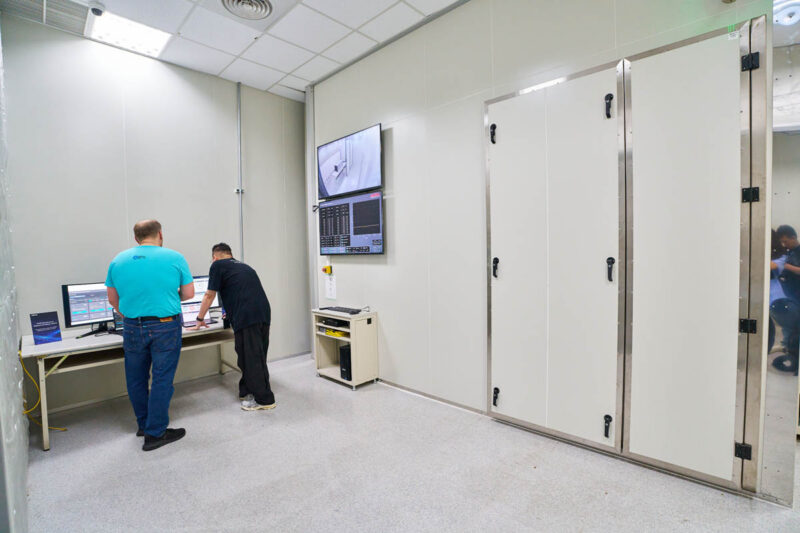
This walk-in environmental chamber behind me handles standard operating range validation for both individual servers and complete racks. ASUS runs tests from 25 degrees Celsius up to 45 degrees Celsius, covering the typical data center ambient conditions most enterprises will encounter.
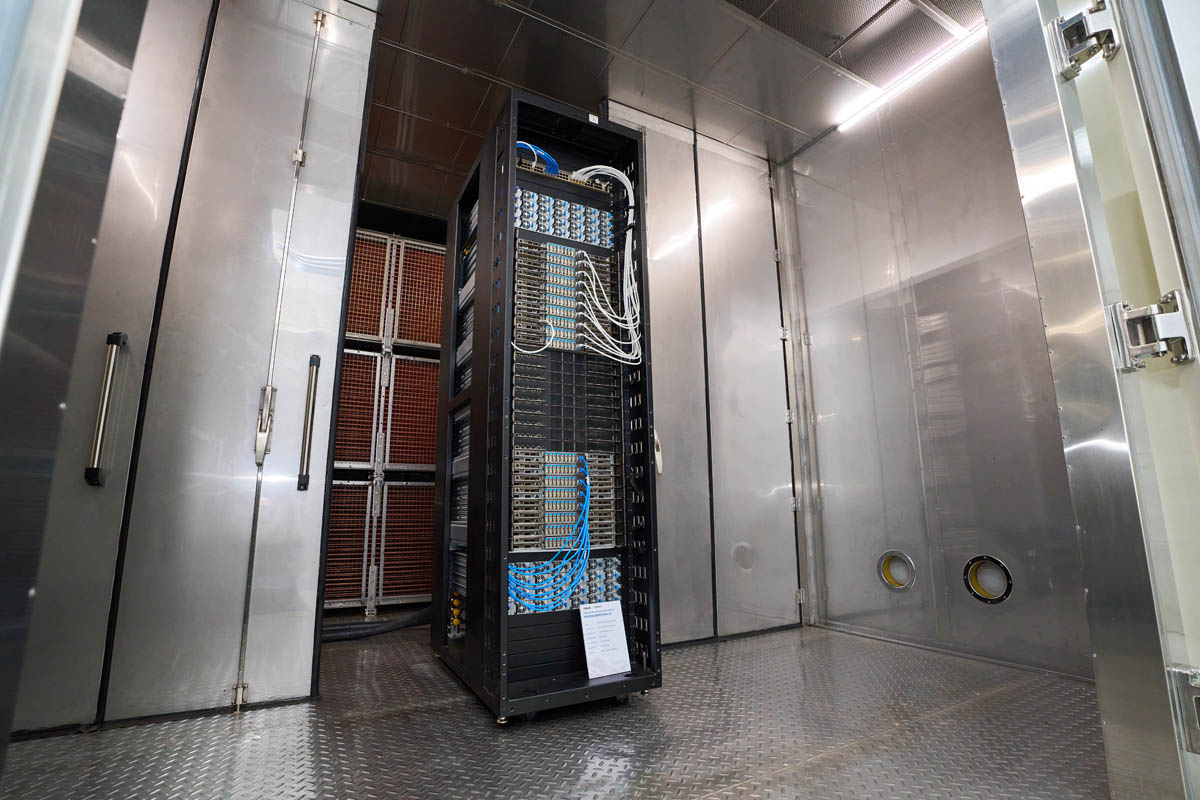
ASUS’s NVIDIA HGX B200 8-GPU “Blackwell” generation server currently occupies this chamber during our visit. The space is large enough to accommodate full rack configurations rather than just single nodes, which matters for liquid-cooled systems where coolant distribution and manifold behavior change at rack scale. Testing a complete rack reveals thermal interactions between nodes that single-server validation cannot capture. Still, sometimes, you just need to test a single server. One of today’s 8-GPU server nodes can use the power of two older generation 208V/30A racks. In a way, this is like testing two racks worth of 2015 gear in a single machine.
Most vendors test individual air-cooled servers in environmental chambers. ASUS designed this one to accept full racks because liquid cooling introduces dependencies between nodes that do not exist in only air-cooled deployments. Coolant temperature, flow rate, and pressure drop across a 72-GPU rack behave differently from those across a single compute tray. Also, a single partially liquid-cooled server behaves very differently from a fully air-cooled or fully liquid-cooled server.
These days, AI infrastructure demands system-level validation rather than component-level checks, so the old chambers that would test up to a single 4U server are just not big enough. When we visited in June 2026 this was completed as you can see above, but in April 2026 we got to see it just before it was finished.
ASUS Extreme Environmental Chamber
The extreme environmental chamber handles conditions that exceed normal data center operation. This facility accepts entire racks and simulates temperatures from minus 40 degrees Celsius to 85 degrees Celsius. Humidity testing ranges from 10 percent (like some days here in Scottsdale, Arizona) to 98 percent (Taipei can often get to 98% relative humidity), covering edge deployments from cold outdoor installations to tropical environments with minimal climate control. Or, basically, where I started and ended my trip and where I ended up 14 hours later.
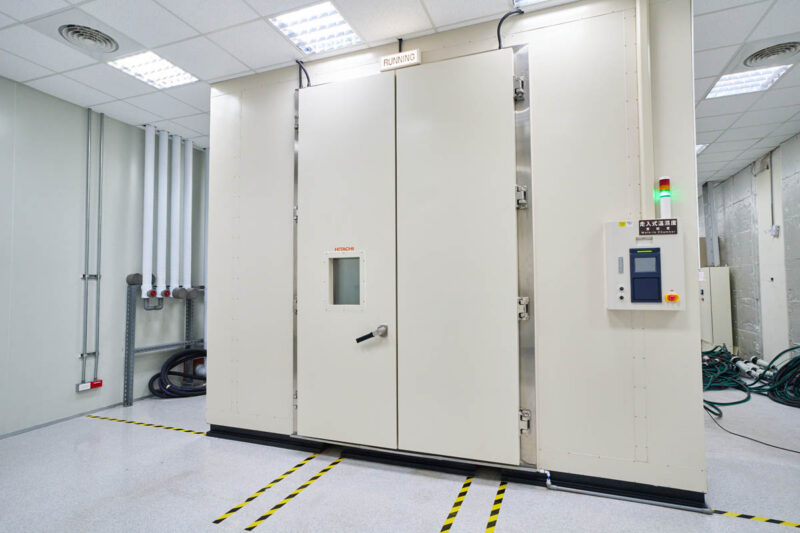
Operating at these extremes serves two purposes. First, it validates that rack components survive shipping and storage in unconditioned spaces. That may seem small, but when the industry started shipping full NVIDIA GB200 NVL72 racks via air/ sea freight, temperature started to matter in the assembled systems. Many NVIDIA GB200 NVL72 and newer racks are shipped in climate-controlled trucks. Second, it identifies failure modes that emerge only under sustained thermal stress. Component aging accelerates at high temperatures, and running servers at 85 degrees Celsius for extended periods reveals weaknesses that would take years to surface in normal operation.
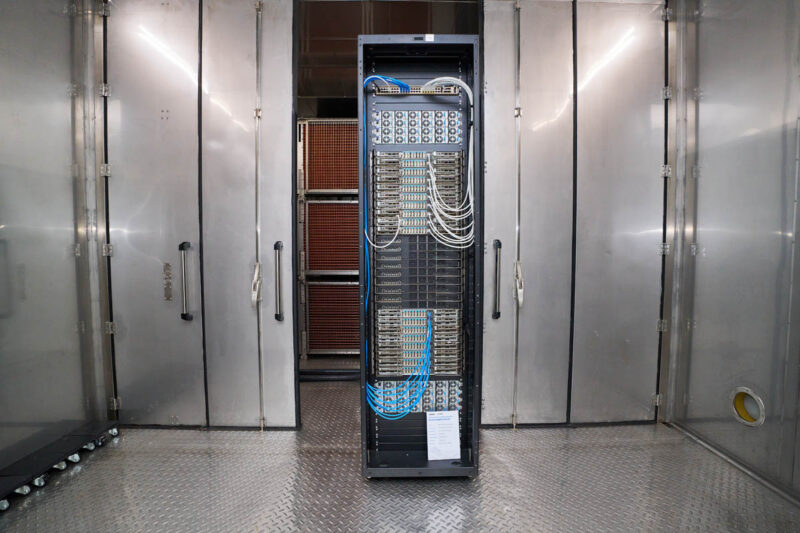
ASUS was operating the rack liquid-cooling system at 20 degrees Celsius during our visit, but was also testing higher coolant temperatures. Running warmer coolant reduces chiller energy consumption, though it can come at the cost of component reliability and performance headroom. Finding the right balance requires measuring actual failure rates across thousands of hours of accelerated aging tests.
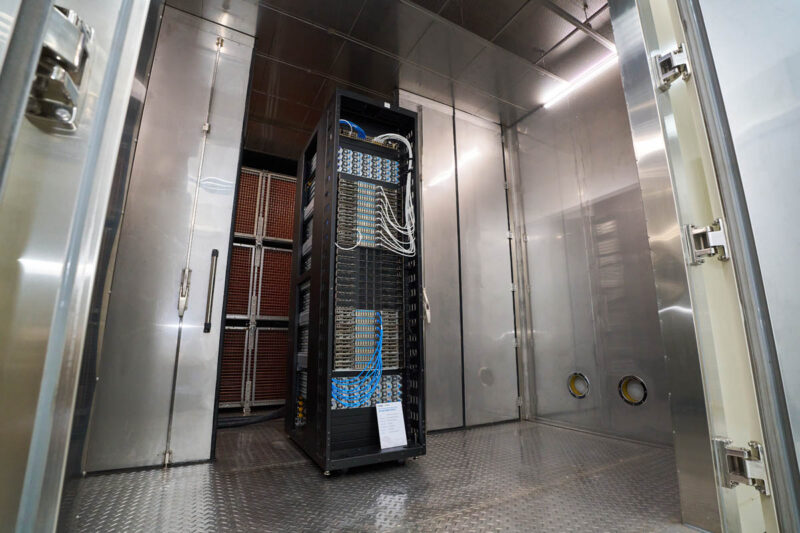
Noise levels inside this chamber are high when the environmental systems are running at full capacity. During our April 2026 visit, we walked around the chamber. It is huge, as you can see in the interior here, but the back houses all the power and fluid feeds, along with the environmental systems.
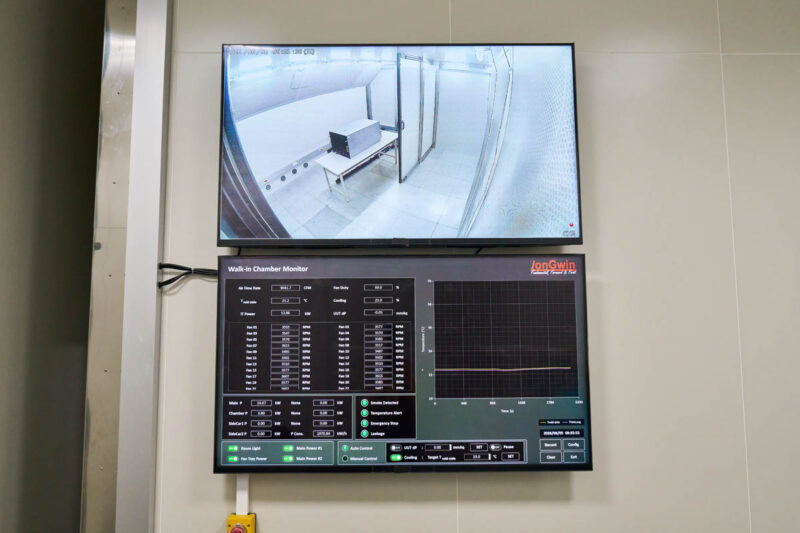
Remote monitoring becomes essential during long test runs because spending hours in the chamber environment is impractical for technicians. Said another way, if you do not want to hear how loud the racks are and you want to keep the chamber operating its intended duty cycle, you need to automate the testing so the door stays shut.
ASUS AI System R&D Lab
The R&D lab focuses on rack-scale liquid-cooling integration rather than individual-server validation.
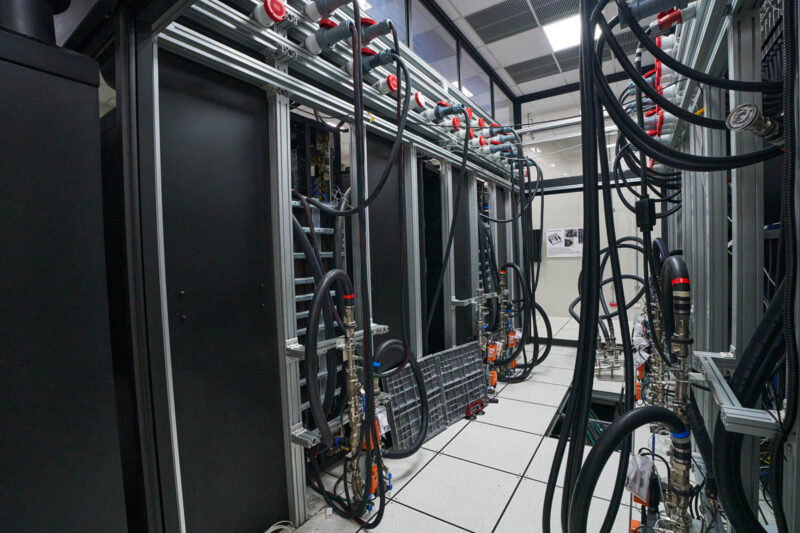
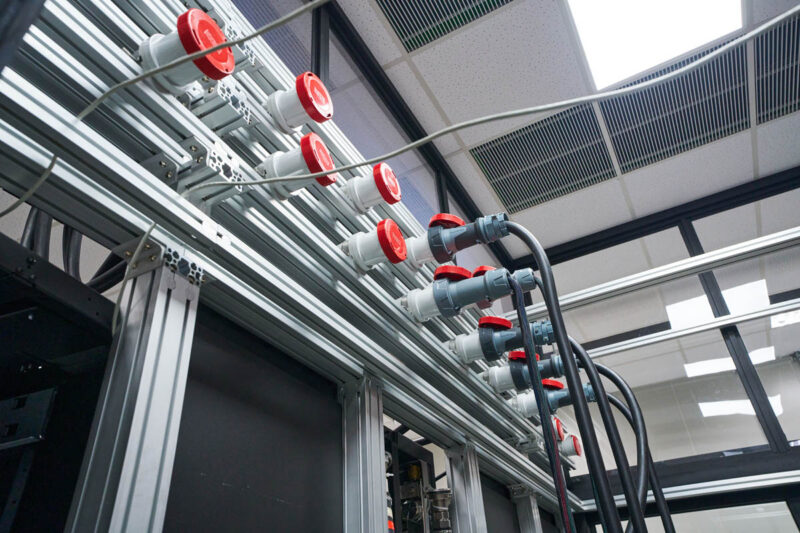
Rows of racks occupy this space, with power distribution running overhead and liquid-cooling infrastructure below the raised floor.
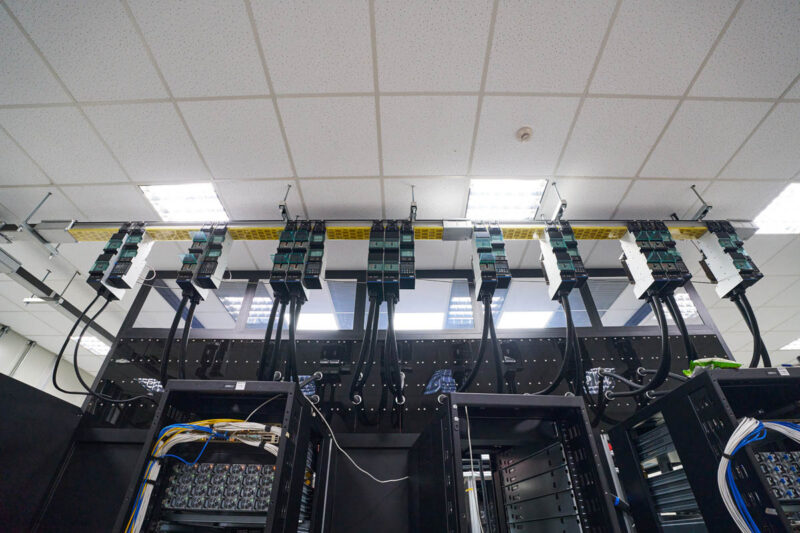
This arrangement mirrors what customers will deploy in production data centers, allowing ASUS to validate installation procedures and maintenance workflows before systems ship.
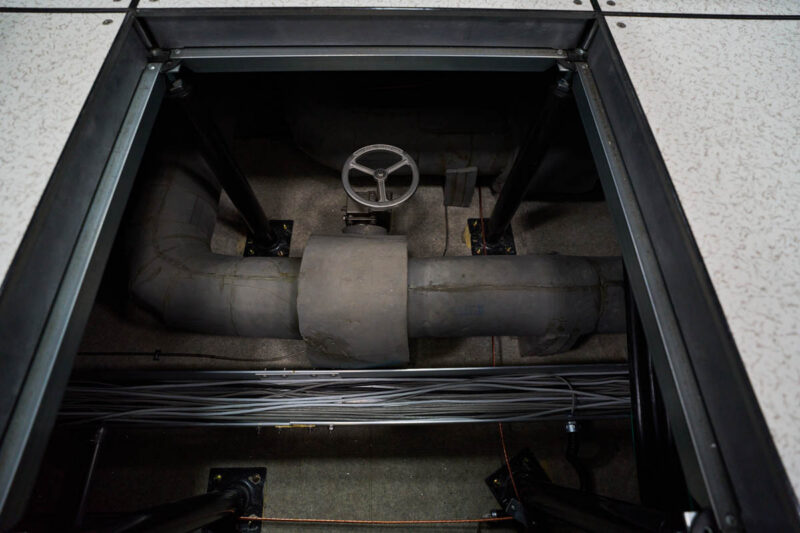
Looking beneath the raised floor reveals the piping network that distributes coolant throughout the lab. Each rack connects to this manifold system, and the layout demonstrates how liquid cooling scales from single racks to multi-rack pods. Pipe diameter, valve placement, and leak detection all require coordination across the entire installation. ASUS also needs to verify that sensors work and appear reliably in its management software.
These days, the industry is tackling challenges beyond just detecting a leak, including ensuring a leak has minimal impact on the rack and the entire cluster’s operation.
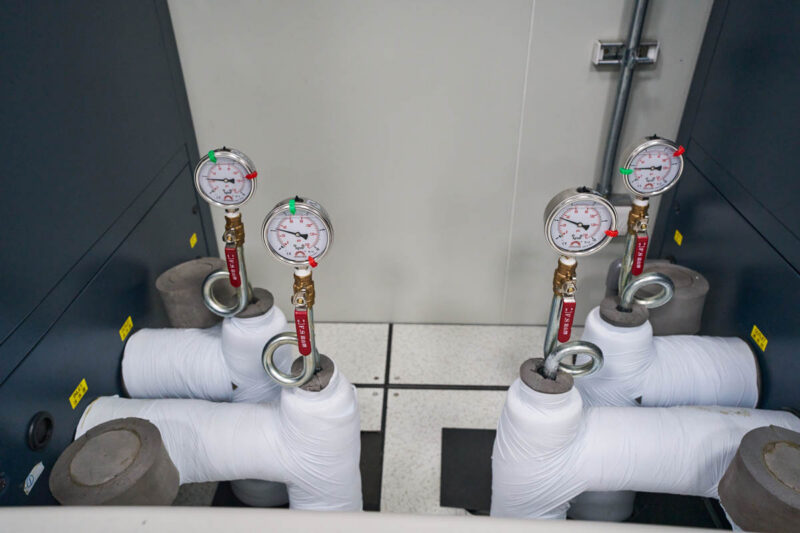
This facility handles up to 1.1 megawatts of power across its rack positions. Liquid-cooled AI racks concentrate far more power density than traditional enterprise servers, and validating thermal performance at this scale requires infrastructure that matches production deployments.
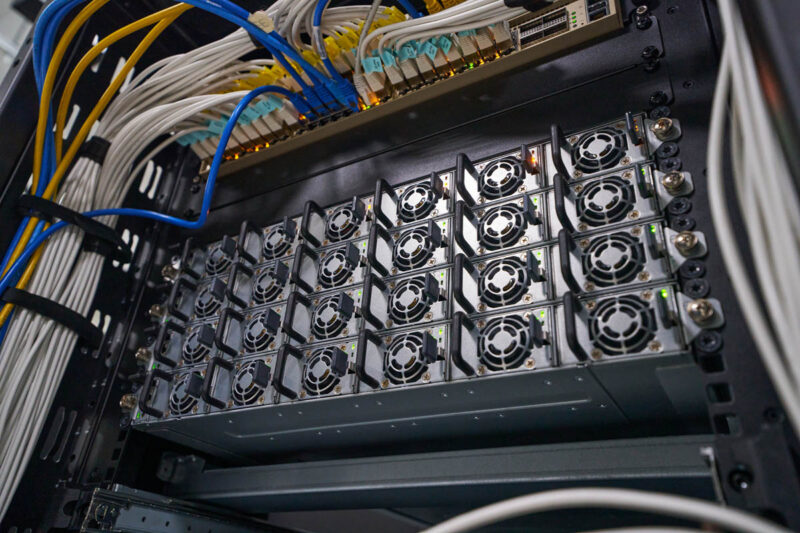
Air-cooled testing facilities cannot replicate the coolant distribution challenges that emerge at these power levels.
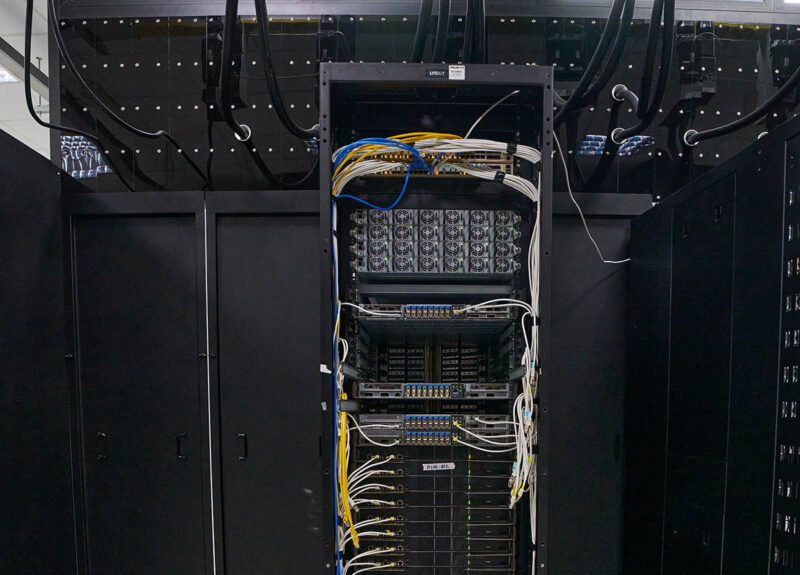
ASUS’s NVIDIA GB300 NVL72 rack integration differs fundamentally from testing individual NVIDIA GB300 nodes, shifting focus from thermal management of a single compute tray to coordinating cooling across 72 GPUs, managing coolant flow through multiple cold plates, and ensuring that leak detection and monitoring systems function correctly at rack scale. This lab exists to validate those system-level behaviors before customers deploy production hardware.
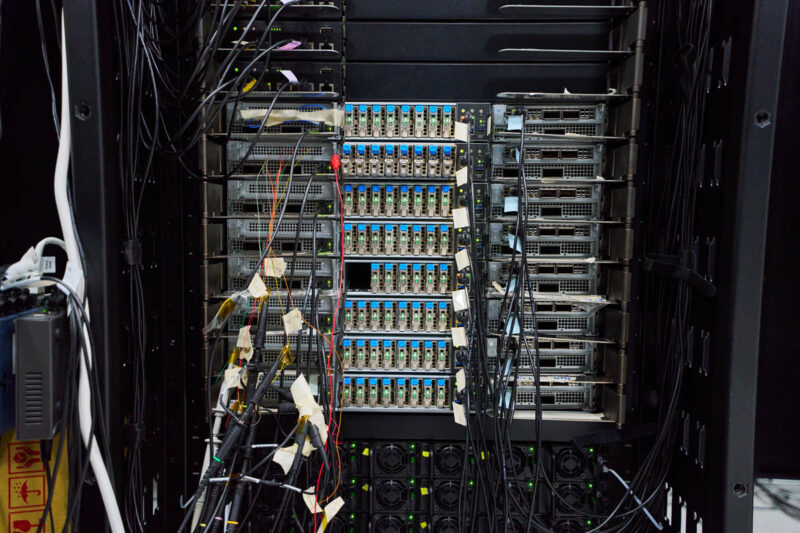
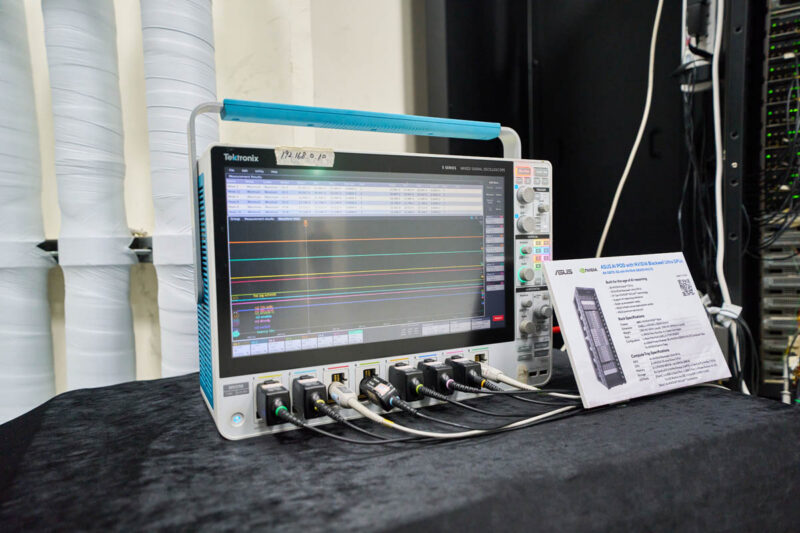
A fun part of this lab is that the company is doing a lot of the work that many do not think about when they see a finished rack. We often see complete NVIDIA GB300 NVL72 racks, but we do not see validation happening with a few nodes hooked up to a Tektronix scope. That work happens here.
One neat aspect of the lab is that it uses a raised floor, but modern server gear weighs quite a bit. So there is a ramp built alongside it to offer another way to get gear up to the raised floor from the staging area.
Since the lab has to handle both liquid-cooled and air-cooled components, it has air handlers like a traditional data center that cool the warm air that is contained in the hot aisle and brought down from the cieling, chilled, and then the cooler air is released back to the cold aisle.
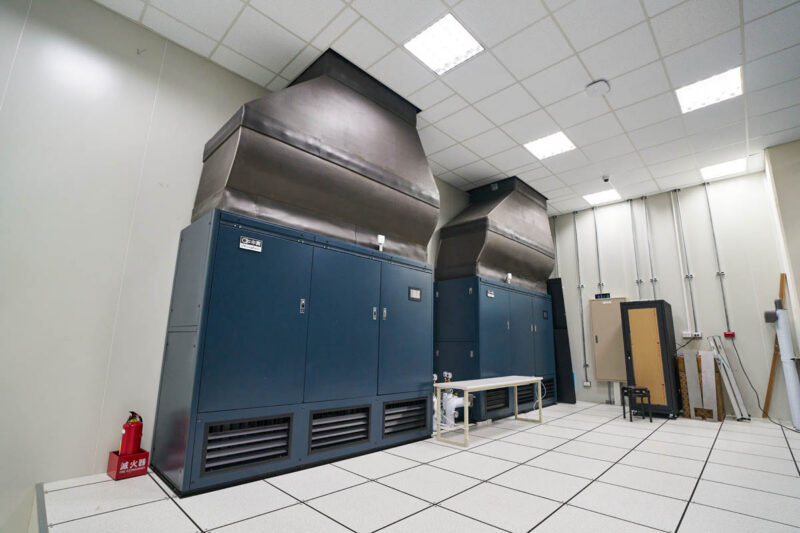
Ear protection is important in the lab because, like a data center, it can get noisy.
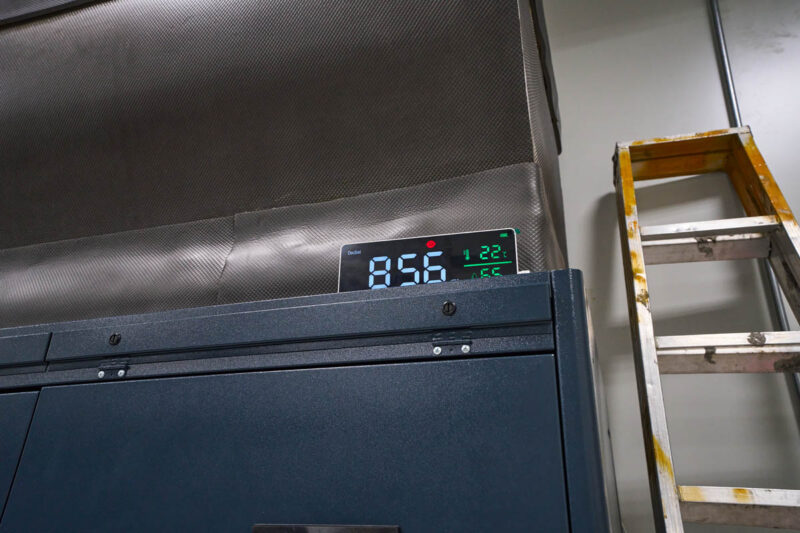
Next to the R&D lab is the power and chiller room for the setup.


Great behind-the-scenes look at how AI servers are tested before deployment. It’s impressive to see the level of thermal validation and reliability testing that goes into ensuring these systems can handle demanding enterprise workloads.