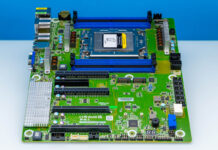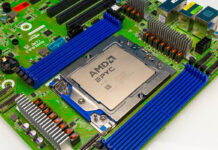

At OCP Summit 2026, ASRock Rack showed off its DMRD16-2L+. This is a single-socket board for Intel’s Diamond Rapids Xeon platform featuring sixteen-channel memory. The motherboard was also notable because it does not have standard PCIe CEM card slots and instead features all MCIO connectivity.
ASRock Rack DMRD16-2L+ Spotted with 16 DDR5 Slots for Diamond Rapids
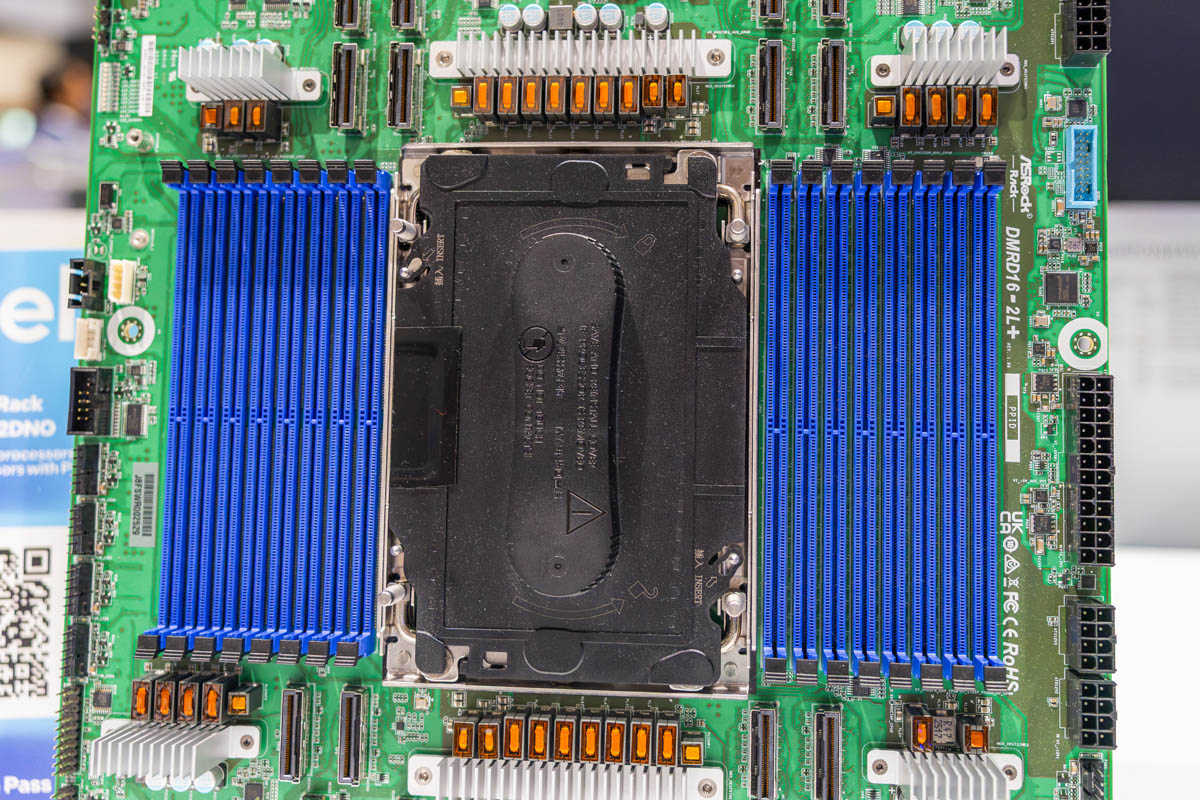
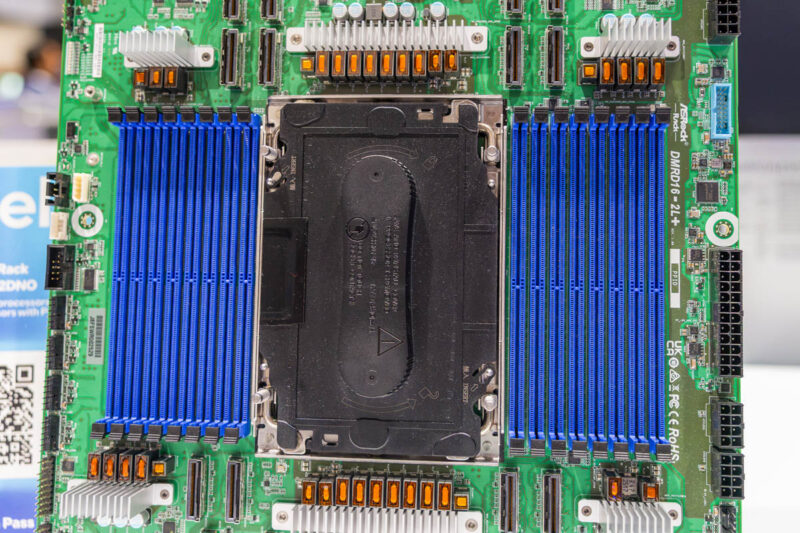
This EEB board measures 12 inches by 13 inches and uses a single DIMM per channel (1DPC) layout across the sixteen slots. You can see that the socket is huge and has a neat cover. Instead of just pulling it off, you twist the socket cover to lock it in place.
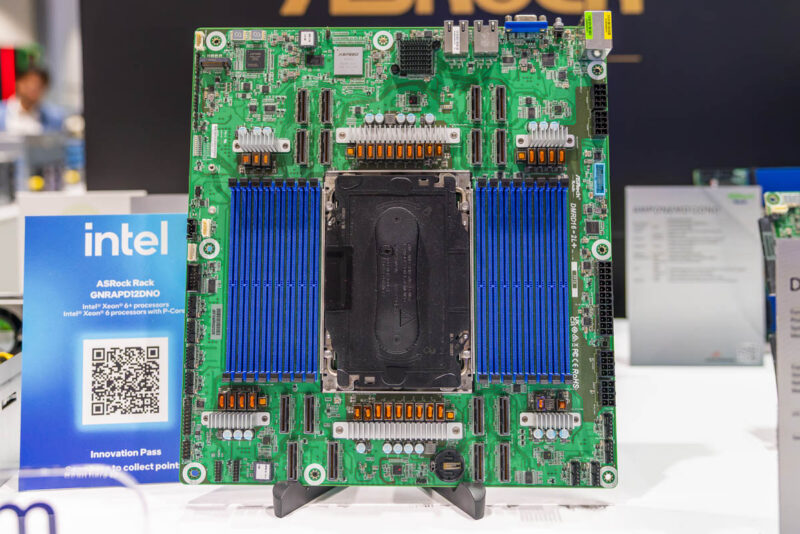
ASRock Rack says it supports three module types: RDIMMs up to 128GB at max 8000MT/s, MRDIMMs up to 128GB at max 12800MT/s, and MRDIMM 2U modules up to 256GB, also rated for a maximum of 12800MT/s.
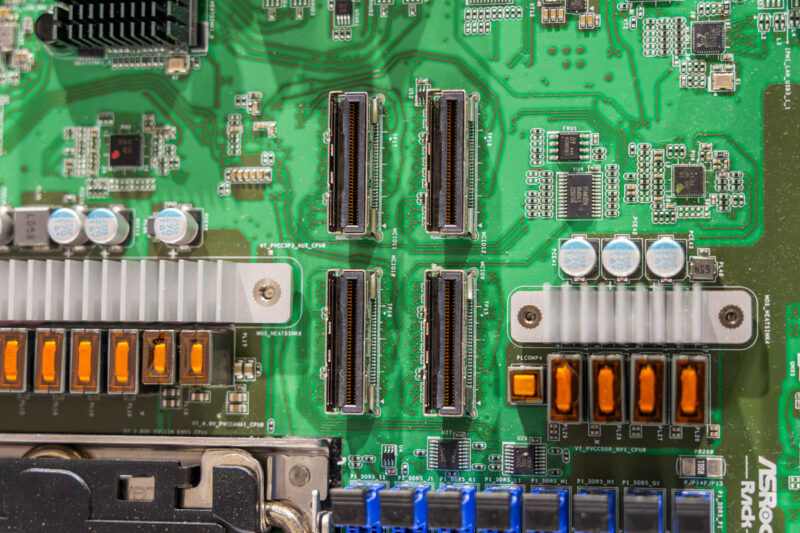
On the board, we have lots of black MCIO x8 connectors on the I/O side. You can use up to 16x of these connectors across the board, each rated for PCIe 6.0 or CXL 3.0 at x8. So that is 128x PCIe Gen6 / CXL 3.0 lanes worth.
For local storage, there is a single M-key M.2 slot supporting PCIe 5.0 x4. It supports M.2 22110, 2280, and 2260 drives.
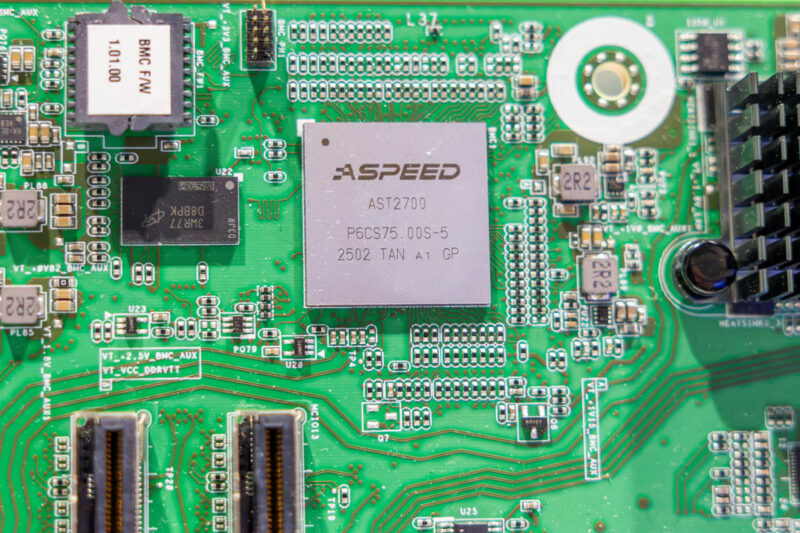
For management, ASRock Rack went with an ASPEED AST2700 BMC. There is also a dedicated IPMI port via Realtek RTL8211F and two RJ45 1GbE ports driven by an Intel I350 controller for basic network connectivity.
The rear I/O cluster includes two USB 3.2 Gen1 Type-A ports and a DB15 VGA connector. Two additional USB 3.2 Gen1 ports are available via an internal 19-pin header, alongside a separate internal video header, one COM header, and support for a 13-pin SPI TPM module.
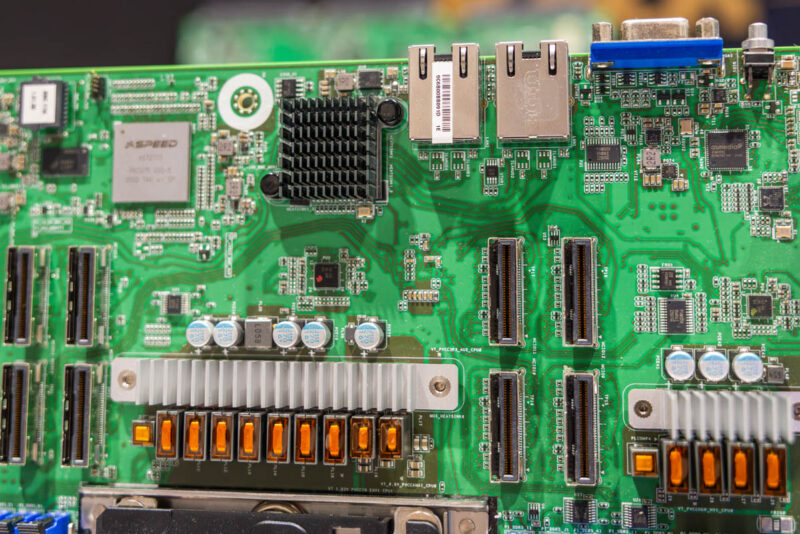
Something neat here is that this does not have an OCP NIC 3.0 connector, nor traditional PCIe CEM slots. That means the server this goes into has all of its PCIe Gen6 I/O going through MCIO connectors. We have talked about PCIe signaling challenges since Ice Lake and Gen4, but with Gen6, we can see clear signs of the move to more cables.
Final Words
It is cool to see Intel’s Diamond Rapids architecture translated into physical hardware. The company has talked about sixteen channels for a while, but seeing it laid out on this single-socket board makes the design’s scale clear. With one DIMM per channel across two banks, you get all sixteen slots around a single CPU socket which is a lot.