

Taking place in San Francisco this week is AMD’s annual enterprise and AI-focused event, Advancing AI. Once one of a few differently yearly(ish) events spread across AMD’s different product segments, the rise of AMD’s fortunes in the data center market has meant that the AI-focused event is quickly becoming AMD’s marquee event of the year due to the importance of the products that get announced here.
AMD tells us that this is their biggest event yet; and with the show filling the entirety of the Moscone Center West, AMD does not need to exaggerate there. Driving the major turnout is a few different elements, the first of which being that AMD has turned what was previously a press conference into a full blown trade show with developer sessions, product booths, and more. The event has effectively turned into AMD’s equivalent to NVIDIA’s GTC – just 60 miles down the road.
AMD Advancing AI 2026 Keynote Preview
But like GTC itself, the prime event is the keynote speech, where AMD CEO Dr. Lisa Su will be revealing a suite of data center and AI product announcements for the company. AMD, for its part, has not been shy about laying out its plans for 2026, so we have a solid idea of what to expect from the keynote.
The big news year? AMD’s first rackscale system, Helios, and all the chips that will go in it. Previously teased by AMD at last year’s event, Helios is the fusion of AMD’s MI455X GPUs, EPYC “Venice” CPUs, and Pensando DPUs, with a complete system fitting into a single rack and employing a speedy scale-up networking architecture to allow the rack to function as a single machine. The rack is AMD’s answer to NVIDIA’s NVL72 racks, and while it has technically not even been fully detailed yet, AMD has already publicly lined up customers for the system, including perennial partner Microsoft.
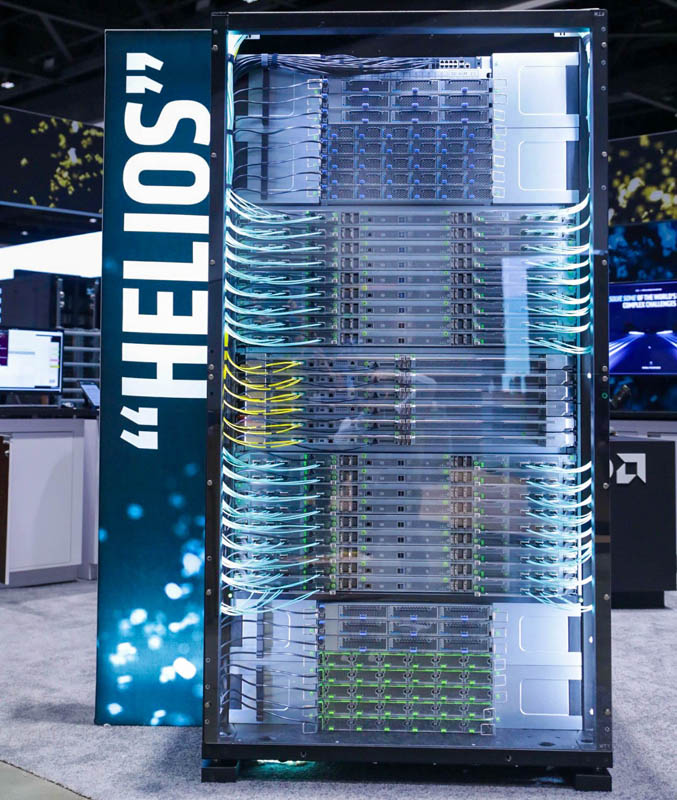
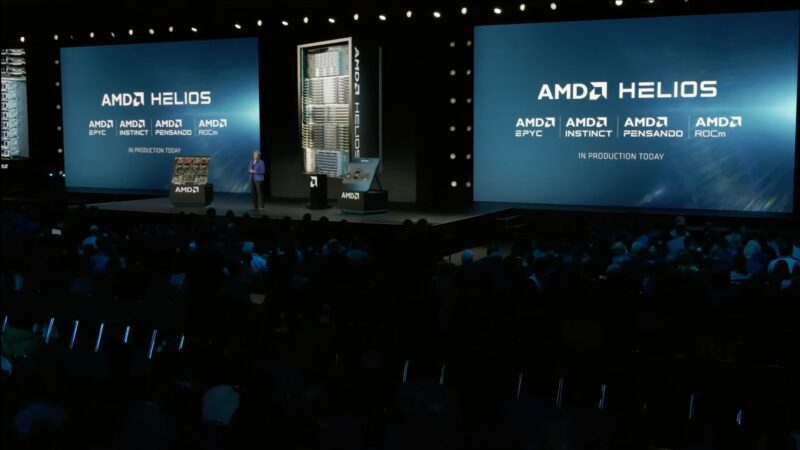
To that end, we are expecting much of the 2 hour keynote to focus on Helios and the components of it, with Su and her lieutenants delivering new details on the MI455X GPUs, the EPYC “Venice” CPUs, the Pensando DPUs, and the latest iteration of AMD’s ROCm software stack. Any one of those would be significant news on their own, but from AMD’s perspective they are all meant to work together and are going to be presented together as such.
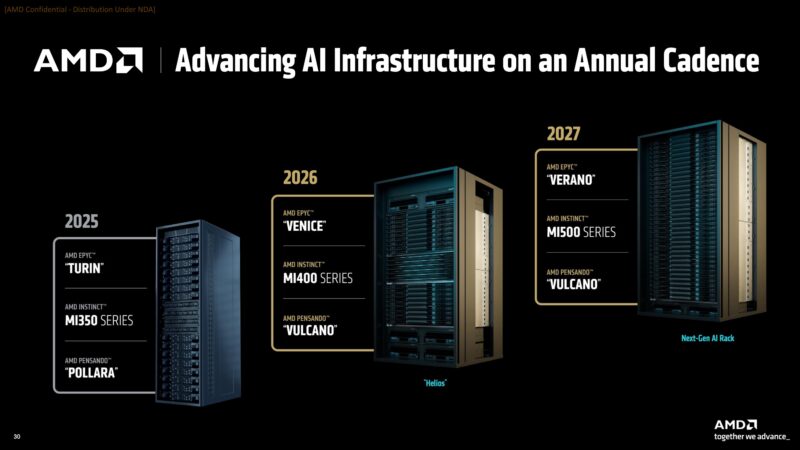
Besides promoting Helios, we expect today’s keynote to also solidify when the various components of the system will go into volume production and when the first racks will ship. To date AMD has said that they will ship in the later part of 2026, but they have not said anything beyond that. Hopefully we will also get a refreshed roadmap for future AMD chips and racks beyond Helios, though AMD may opt to keep their focus on the near future here as opposed to last year’s future-centric showcase.
And, of course, we are keeping our eyes peeled for any surprise announcements from AMD.
The Advancing AI 2026 keynote kicks off at 9:30am PT/12:30pm ET/16:30 UTC. Please come join us here at ServeTheHome for our live blog coverage of the keynote.
Since this is being done live, please excuse typos. If you want to watch along, here is the link:
As always, we suggest opening the keynote in its own browser, tab, or app for the best viewing experience.
AMD Advancing AI 2026 Keynote Live Coverage
We’re a few minutes before showtime, and everyone who hasn’t grabbed a seat is trying to find one of the remaining chairs. AMD has an overflow room setup for this keynote, and they are going to need it.
We have Patrick checking out the keynote itself, while I’m catching the action from the press room where the Wi-Fi is better and the lighting brighter.
Because this is a two-day event, attendees (and press) were here in the building yesterday while AMD was rehearsing for today’s keynote. No spoilers, but it’s going to be a loud and energetic event. The GTC comparisons are quite apt.
And the cautionary statement is up. Here we go.
AMD is opening things up with a video about AI computing power and AMD’s role in providing it.
And here’s Dr. Lisa Su.
“This is our biggest show ever because we have so much to tell you.”
“AI is the most important technology of the last 50 years.”
Lisa is talking about the rate of progress, and how the state of AI has changed significantly in just months.
And AI is changing things across every industry. Despite it still being in the early days.
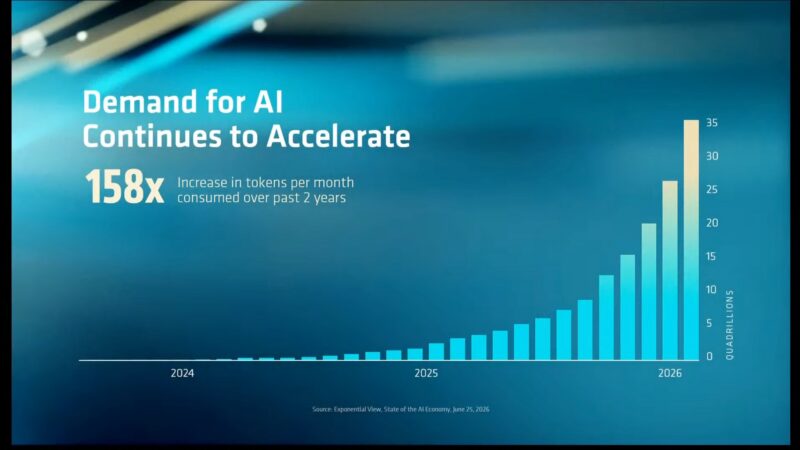
The models are getting a lot better. The performance improvement of models is faster than the rate of performance improvements from hardware.
Inference has now overtaken compute. More AI compute capacity is used for inference than training.
And AMD is going to be talking a lot today about agentic AI.
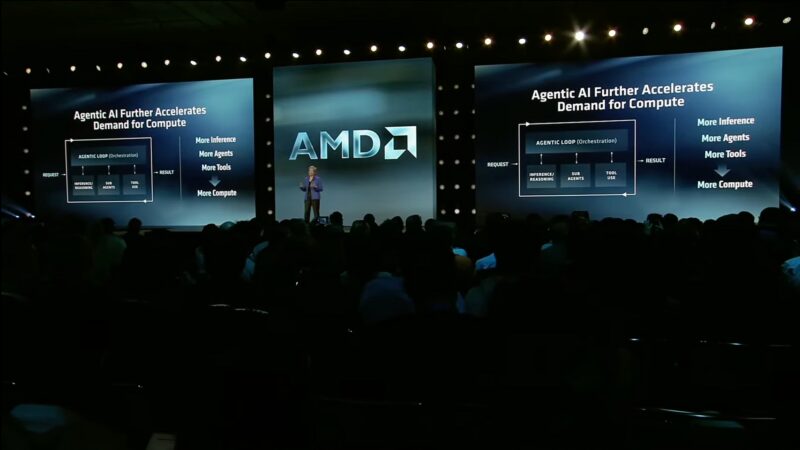
Compute demand is growing at an incredible pace. Agentic AI needs a lot more computing resources than earlier AI chatbots.
The shift to agentic AI is growing the AI accelerator market significantly.
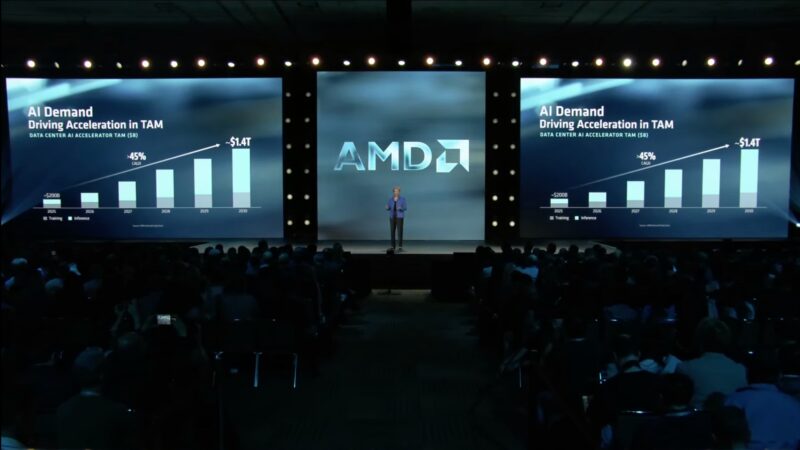
AMD now expects the TAM for the AI accelerator market to reach $1.4T in 2030. It will be the size of the entire chip market today.
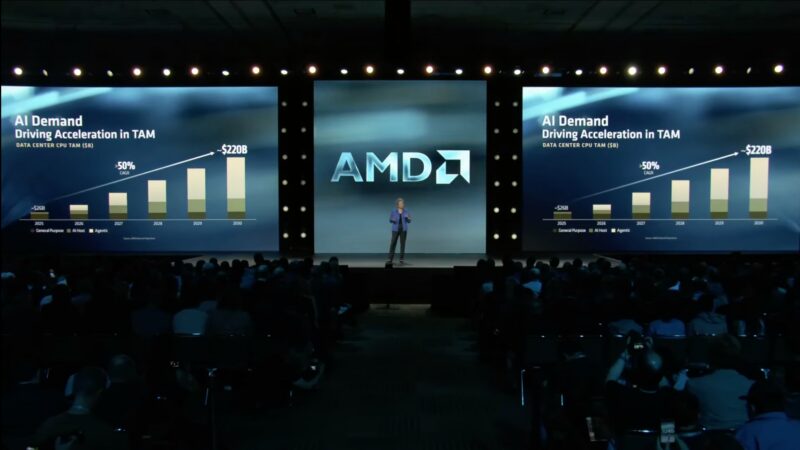
A lot of that will be GPUs. But it’s also going to be CPUs. Agentic AI needs a lot of CPUs to actually handle the tasks the agents are running, never mind orchestrating the GPUs.
The rate and pace of agentic AI adoption is much faster than AMD was expecting.
The CPU market will be a $220B market in 2030.
AMD is focused on infusing AI everywhere.
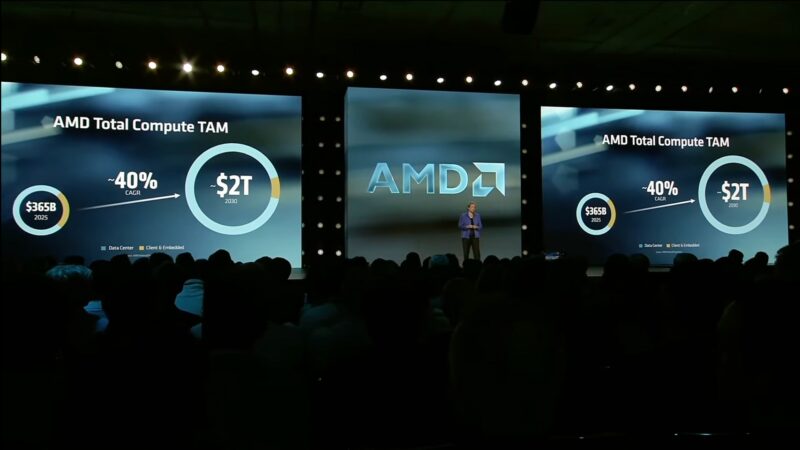
Altogether, AMD is expecting a 40% CAGR for a total addressable market for silicon of $2T by 2030.
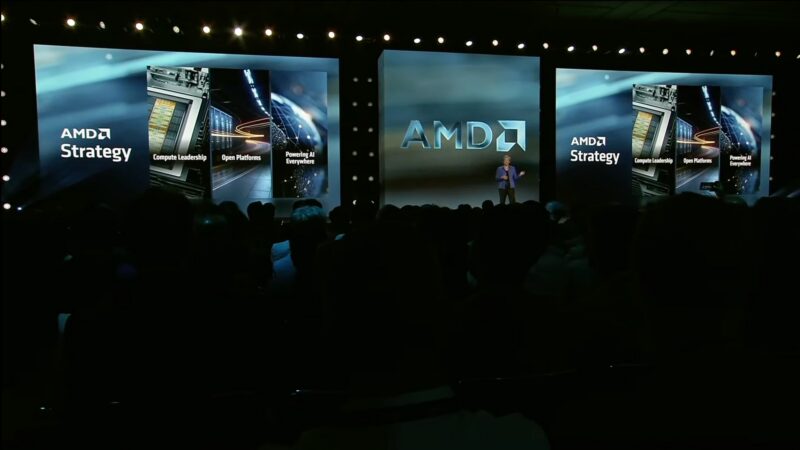
Now on to AMD’s strategy.
In short: Leadership computing products, open platforms, and powering AI everywhere.
First up: Data center.
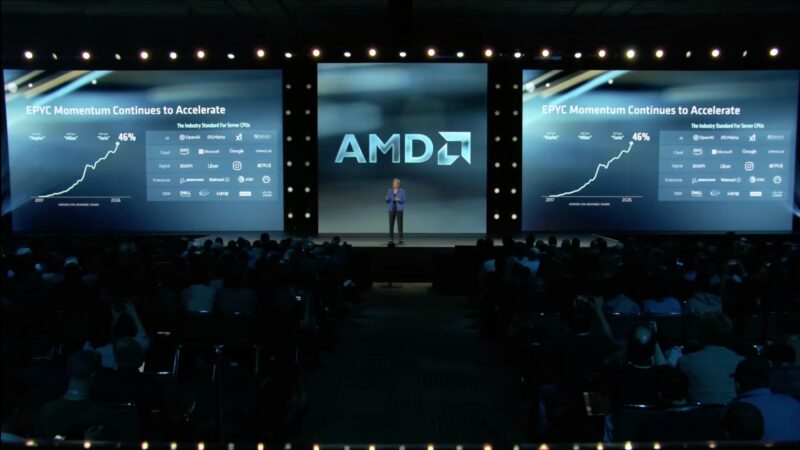
AMD is now up to 46% of revenue share in the server CPU market.
And AMD’s GPU sales are growing as well.
For frontier models, these days rackscale systems are required.
Launching today: Helios. AMD’s AI compute rack.
“I have a lot of show and tell for you.”
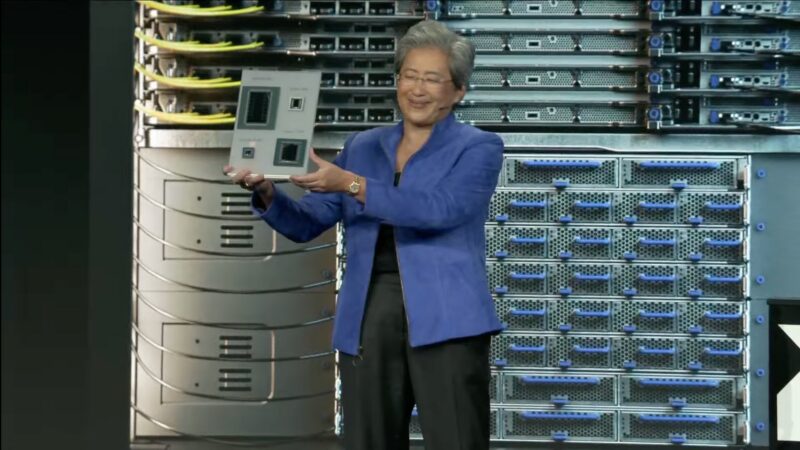
Here’s the MI455X module, mounted on an Enhanced Accelerator Module (EAM)
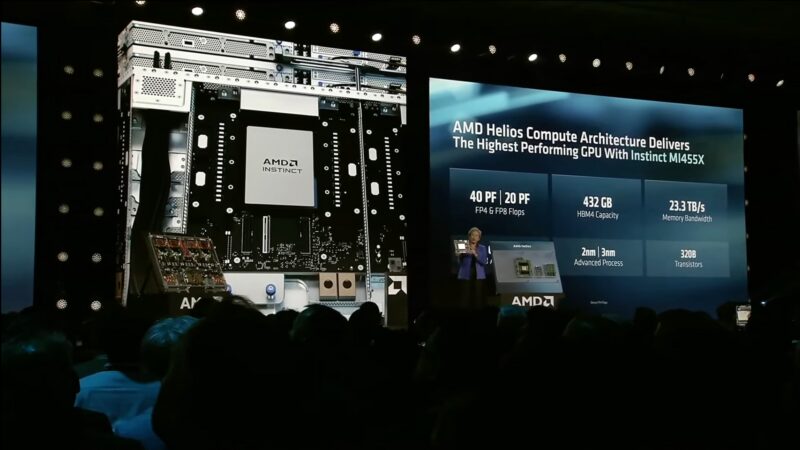
Recapping the MI455X architecture. 2nm compute chiplets, 3nm elsewhere. Multiple compute dies, 432GB of HBM4 memory.
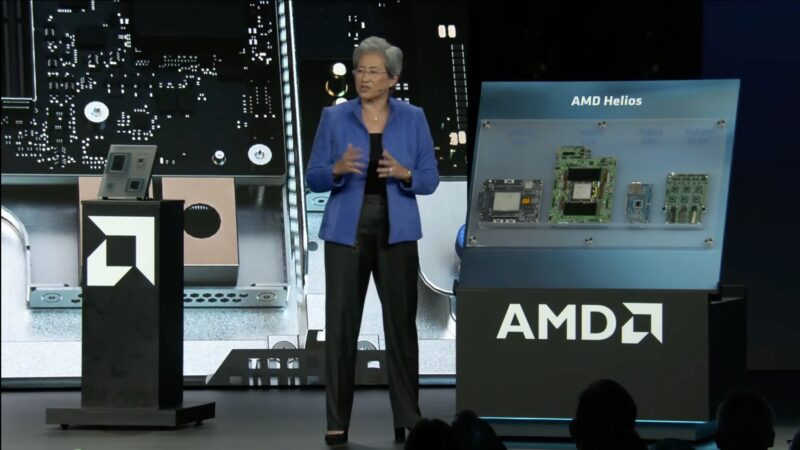
Along with MI455X there are the compute boards based on AMD’s Venice, and the Pensando Vulcano NICs.
“Helios is simply the best AI rack in the world.”
Now talking a bit about performance. 50% more memory capacity, 15% more FP4 performance.
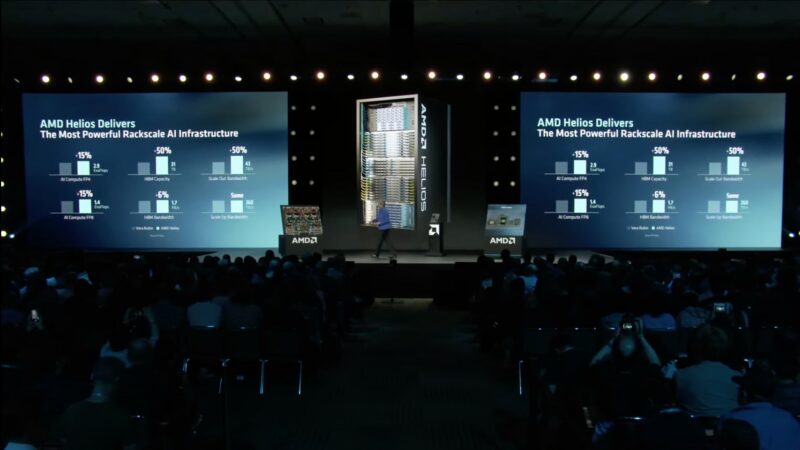
Announcing today that Helios is in full production. Shipments will start in Q3. Ramping into the second half of 2027.
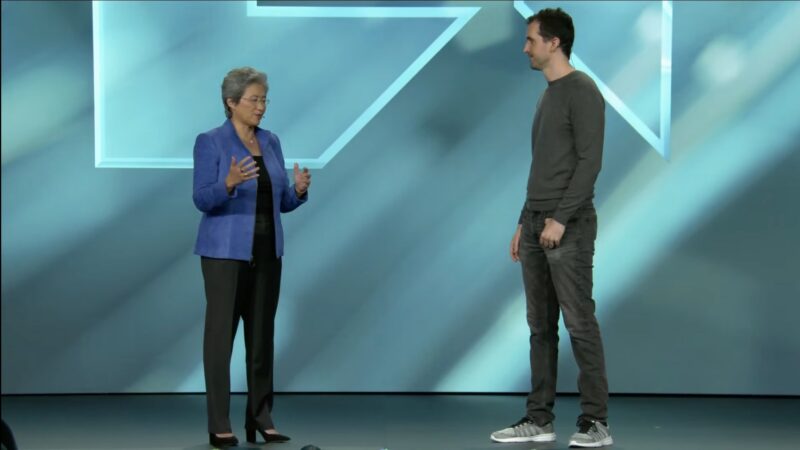
Now it’s time for some of the guest spots at the show. Starting with Anthropic’s Tom Brown.
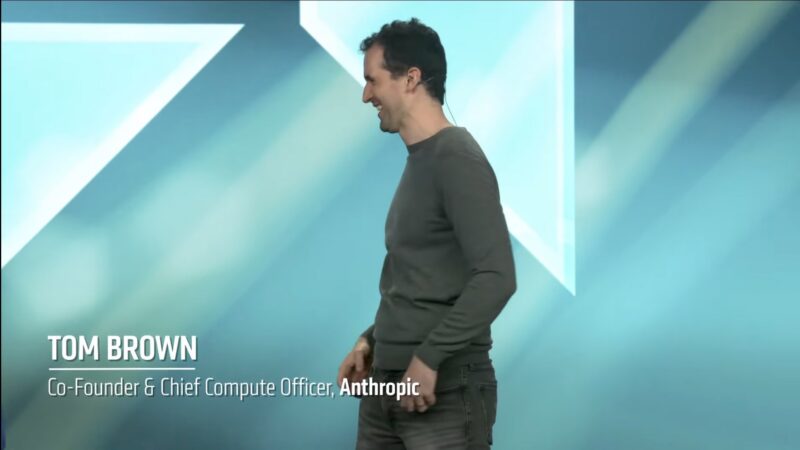
Anthropic’s compute needs have been growing very quickly. This week AMD and Anthropic announced that Anthropic will be buying 2GW of Helios hardware from AMD for their own use.
Anthropic is happy with the performance of the hardware. And considers AMD’s open platform strategy to be helpful for them.
Lisa hopes this is the start of a strong, multi-year partnership. But what can AMD do to further help Anthropic? Working together on the scale-up. Which brings more compute to bear for Anthropic. Security is increasingly a need as well, from the chip level right up to whole racks.
And that’s Anthropic.
Here’s more on performance.
MI455X vs. MI355X: Up to 34x faster token throughput.
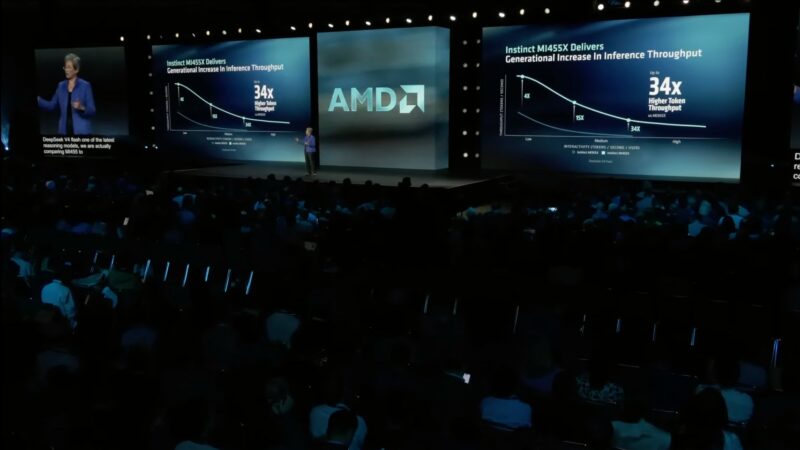
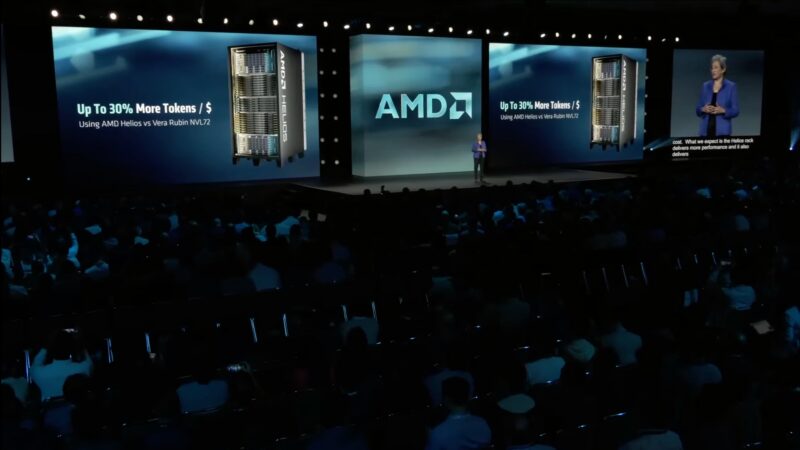
MI455X is taking a major step. Serving more users in the same investment. Power is the big limiter right now, so efficiency is a need. AMD says Helios is 10-15% more performant here. Leading to 30% more tokens per dollar than the competition.
Now time for another guest spot: OpenAI.
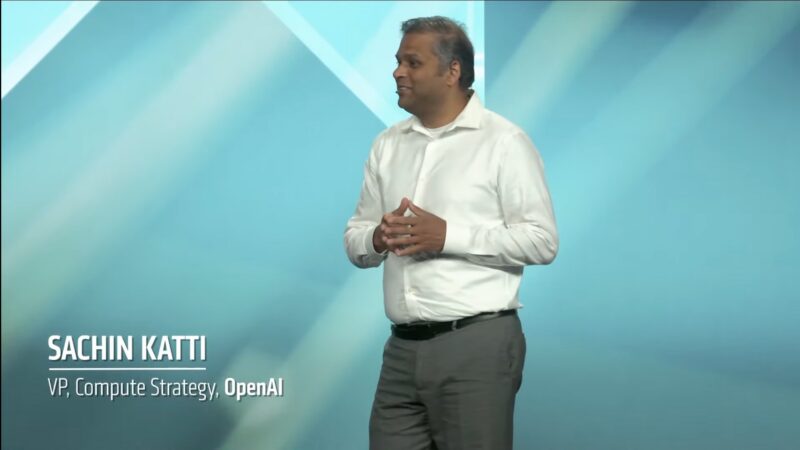
OpenAI needs more compute. The more they can throw at training the more capabilities they can enable. And more inference means agents can get more done.
Lisa: “I don’t think I’ve ever spoken to you where you haven’t asked for more compute.”
OpenAI is still in the process of deploying their 6GW of AMD hardware that they announced last year. They were one of the first big AI companies to buy into AMD’s ecosystem.
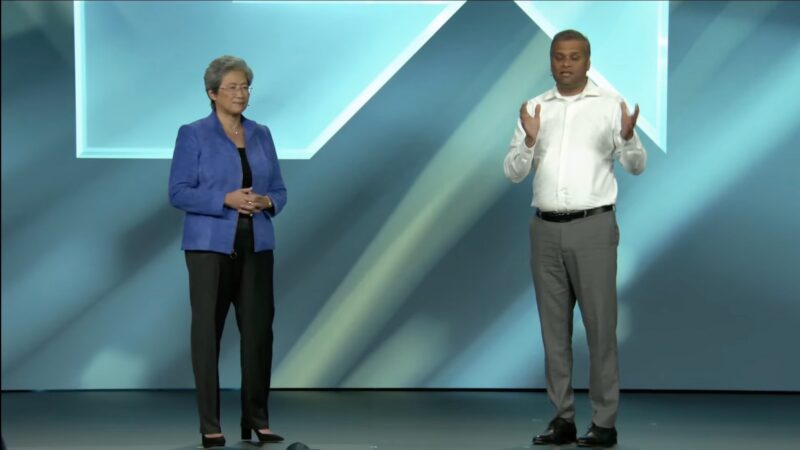
OpenAI got a pre-production Helios rack a few months ago and they are working to optimize it. They expect to start deploying Helios by the end of this year and accelerating into 2027.
Katti is talking about how AI has changed coding, and even how AI models are being coded.
What does OpenAI need from AMD? “I need more compute more quickly.” “At least he’s consistent.” Katti believes it’s a systems problem at a data center scale. The whole data center will be a system going forward. Which means co-designing hardware with AMD. Meanwhile they are also looking forward to MI500 and beyond (coming 2027).
Now turning to CPUs.
These have been the foundation of AMD’s data center strategy for the longest time.
Naples, Rome, Milan, Genoa, Turin, and coming up next: Venice. “A clear roadmap and very consistent execution.”
Turin is already the best server CPU in the world.
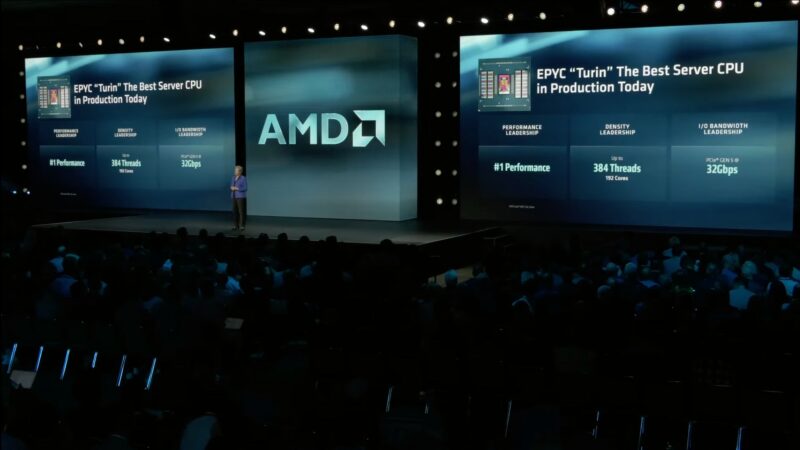
With agnetic AI, CPUs now matter more than ever. AI systems need more than just GPUs running inference.
A good CPU needs a high frequency core, fast I/O, to keep GPUs fed.
To do this, AMD needs a diversity of CPU types. CPUs with very fast cores, CPUs with many CPU cores for high throughput, and CPUs in the middle.
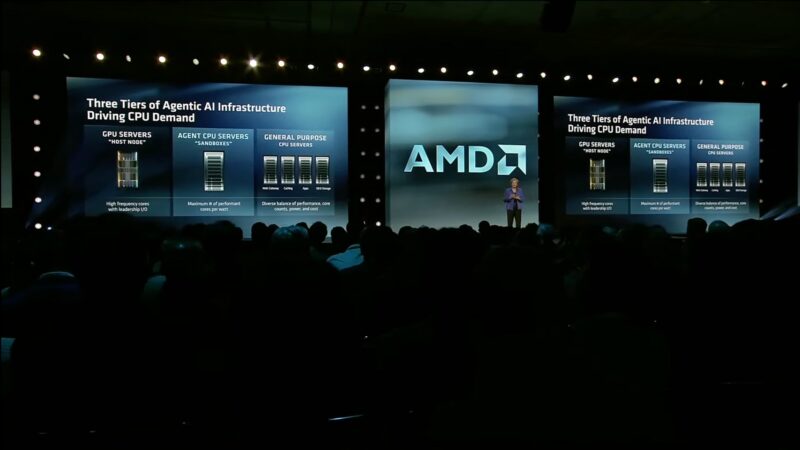
Zen 6 delivers higher IPC and higher frequency than Turin/Zen 5.
This is one of the largest generation of gains in the history of EPYC.
TSMC 2nm. Up to 256 cores per socket.
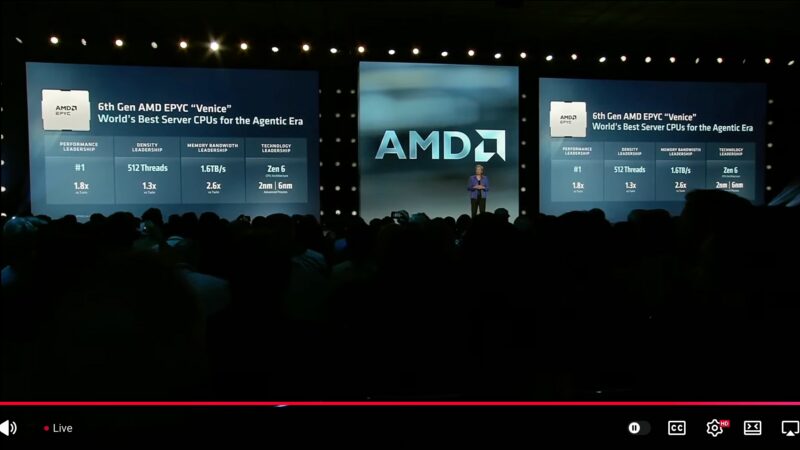
The big CPU will be Venice HF, which is shipping inside of Helios
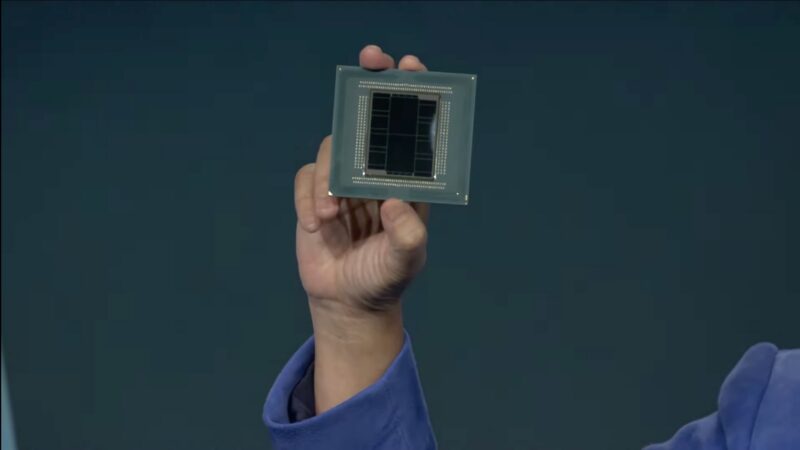
Meanwhile AMD’s dense version of Venice features 256 cores.
Then there’s a 128 core version for general compute.
And after that comes Verano, which will go into AMD’s next rackscale system.
As well as Venice-X, which will feature 3D stacked cache with the cache chiplets below the compute chiplets.
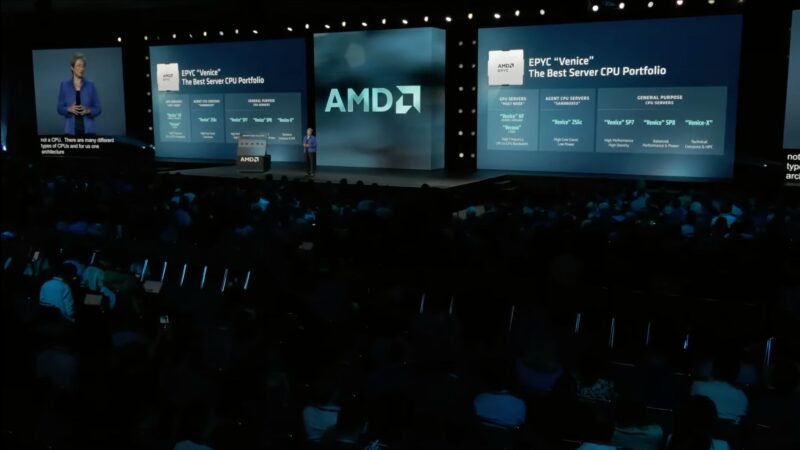
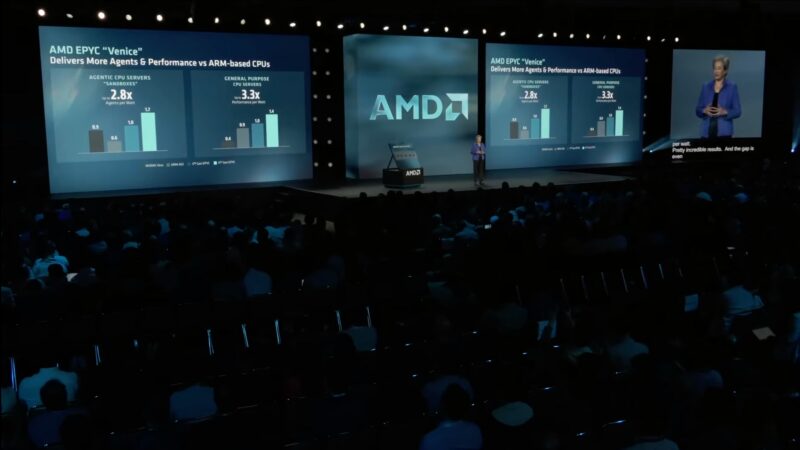
Lisa is now throwing out some performance figures: 2x the perf/agents per watt of the competition. An even wider gap between it an Arm competitors.
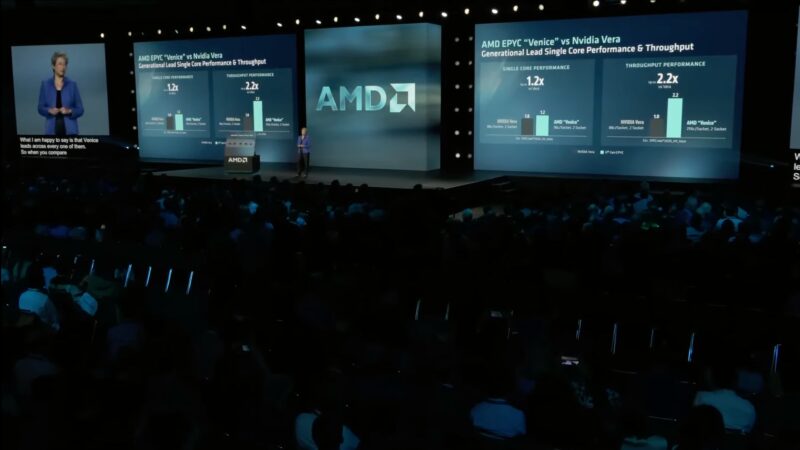
And versus NVIDIA’s Vera? 2.2x performance per socket. i.e. AMD focusing on total chip throughput.
Meanwhile Lisa is talking up the benefits of x86 software compatibility versus Arm. Everything (still) runs on x86.
With Venice OEMs are offering a broad spectrum of racks.
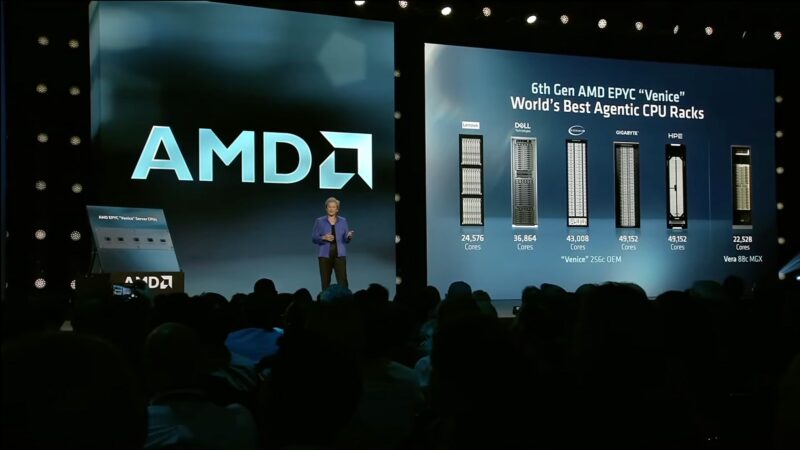
Venice is in full production. Customer demand is higher than ever before.
Now time for another guest chat: Meta’s Santosh Janardhan.
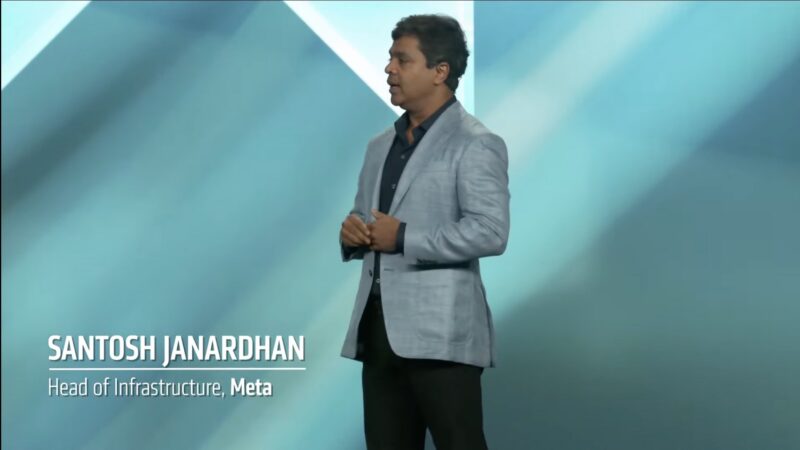
Meta wants to deliver intelligence wherever the user is.
Meta used to think about CPUs. Now they think about whole data centers as a single system. Systems need to be co-designed and co-created.
Meta and AMD developed the rackscale OCP standards together.
Meta thinks CPUs are becoming just as important as GPUs, if not more.
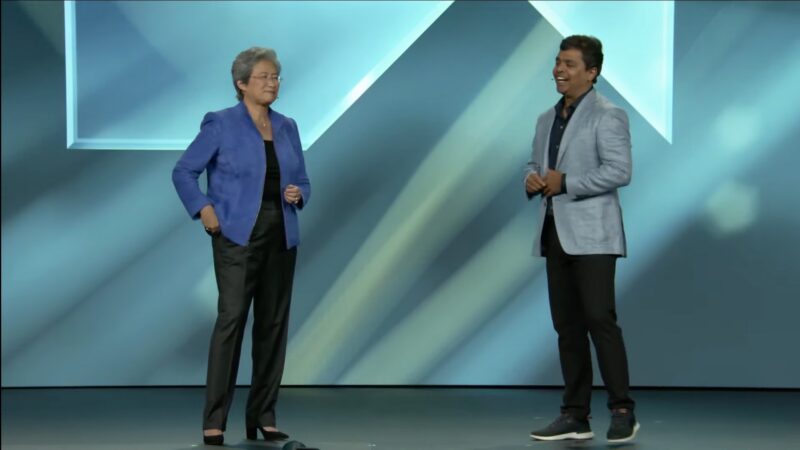
Meta’s technical team has given AMD a lot of feedback.
They’re also one of AMD’s deepest partners on the GPU side starting with MI300. Meta is “super excited” about MI450.
“The earlier we co-design, the better we are.”
What does Meta need from AMD and the wider industry? Besides the common silicon and power chokepoints, they want early co-design. Sit down and start today for what will be deployed in 2028.
And that’s Meta.
Lisa is now turning to other parts of the inference market.
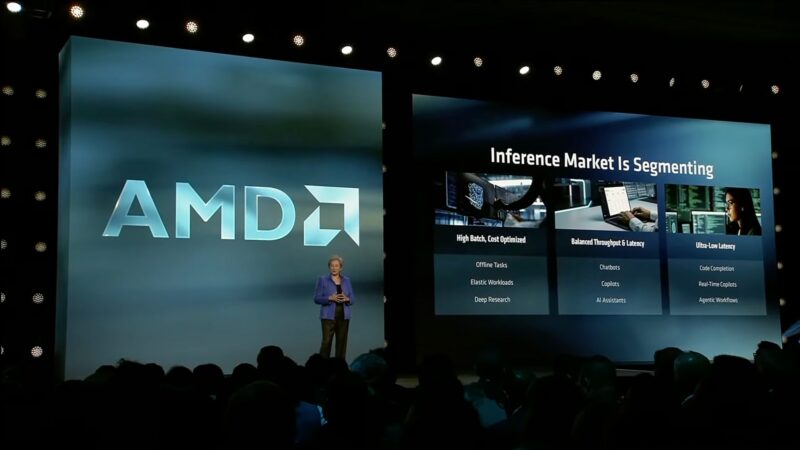
Some user bases need ultra low latency inference. Not necessarily max efficiency throughput, but rather getting responses for a smaller number of users more quickly.
And that brings us to the next guest: Cerebras’s Andrew Feldman.
Feldman is recapping Cerebras’s wafer scale engine product.
Lisa thinks Cerabras has tremendous innovation.
Now the two want to put Helios together with the wafer scale engine.
To serve the ultra low latency, Cerebras is partnering with AMD to build a disaggregated solution.
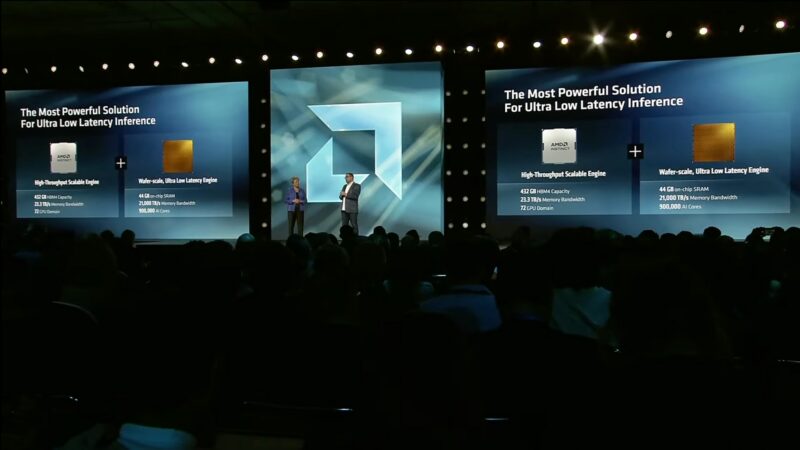
The combination of Helios plus the wafer scale engine will allow Cerebras to deliver ULL with Helios providing heavy lifting in the background. 5x the performance of the wafer scale engine alone.
The combined solution will be available in Cerebras’s cloud service later this year.
This sounds a good deal like NVIDIA pairing up with Groq – combining multiple types of Ai accelerators – though driven by Cerabras this time instead of the big silicon vendor (AMD).
And that’s Cerebras.
Now pivoting over to software. Lisa has turned over the stage to SVP Vamsi Boppana.
ROCm is now getting releases every 6 weeks, instead of every few months. AMD has increased their pace in software significantly.
AMD is investing in key abstraction techniques without requiring developers to write kernels with low level code.
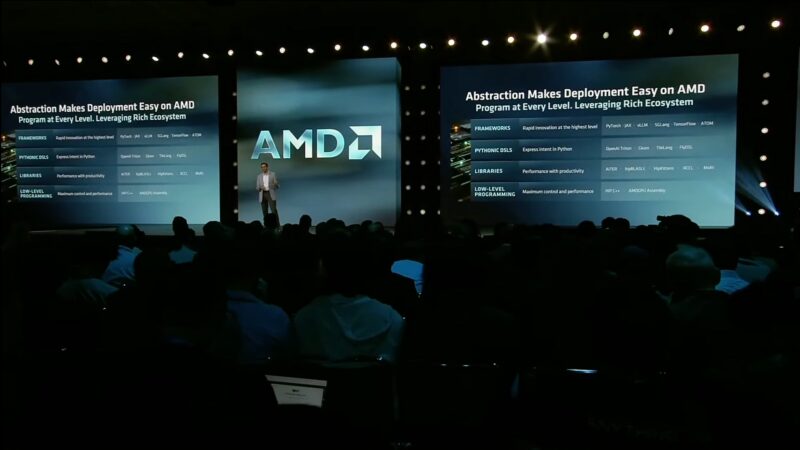
AMD’s engineers are already using AI tools to write AI GPU kernels.
AMD expects this to significantly transform computer programming.
And AMD wants to put that in the hands of every dev.
Introducing ROCm.AI.
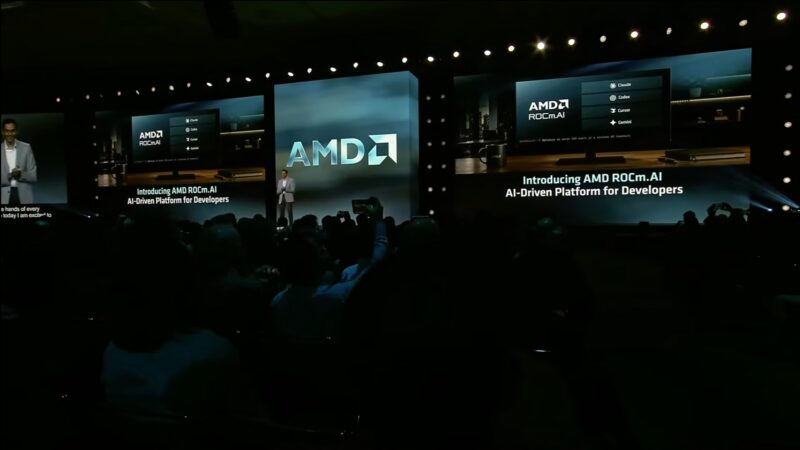
Underpinned by major coding AI agents such as Codex and Claude. But with AMD’s tools on top.
Among those tools are AMD-created skills for ROCm, and Hyperloom: a code and performance optimization tool.
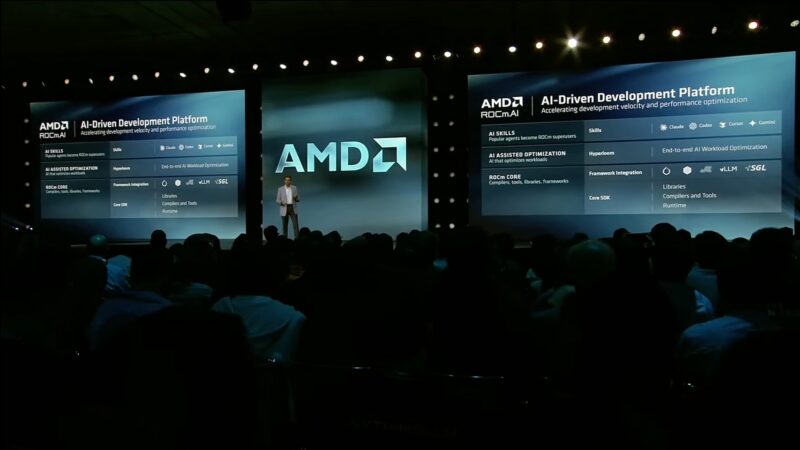
ROCm is going to transform the way developers interface with AMD’s platforms.
With ROCm.AI, the tuning and optimization process becomes much easier. The system takes care of it itself.
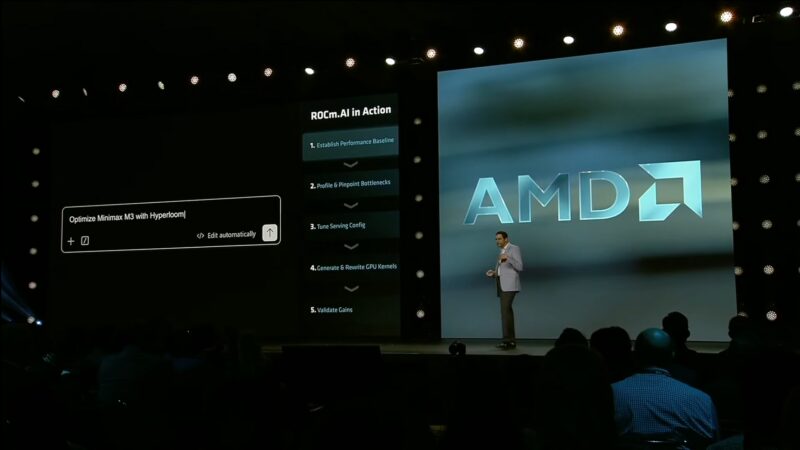
Showing a demo now. Hyperloom was able to improve the token rate of the code by 38%. Wow.
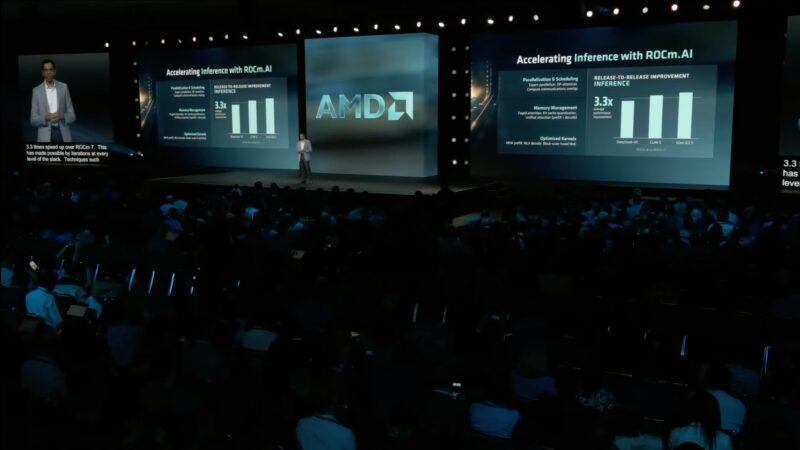
The latest ROCm release improves inference performance by 3.3x over ROCm 7. And training performance by 2.4x.
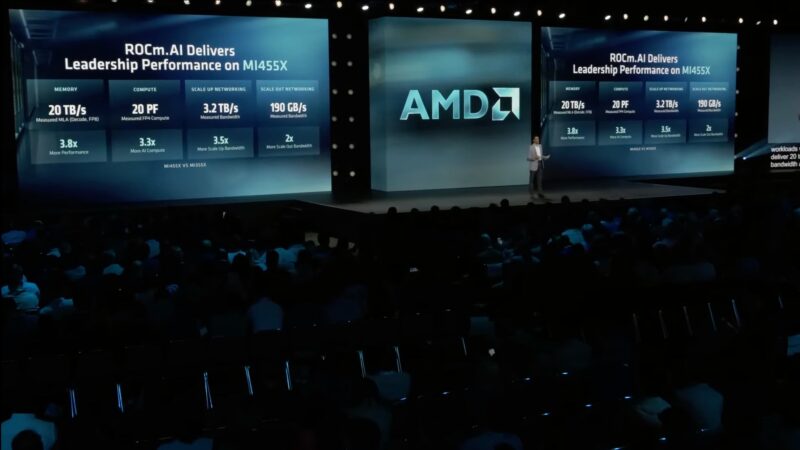
Meanwhile day-0 readiness is a huge deal for AMD. And it’s something that ROCm.AI enables.
Now time for another demo, this time deploying a model on Helios.
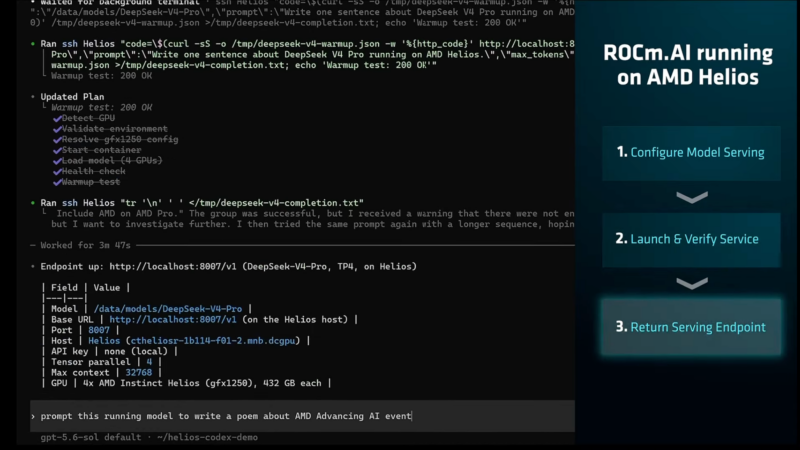
And then using that model to write a poem.
Now time for another guest spot: OpenAI again with Philippe Tillet, Triton’s creator.
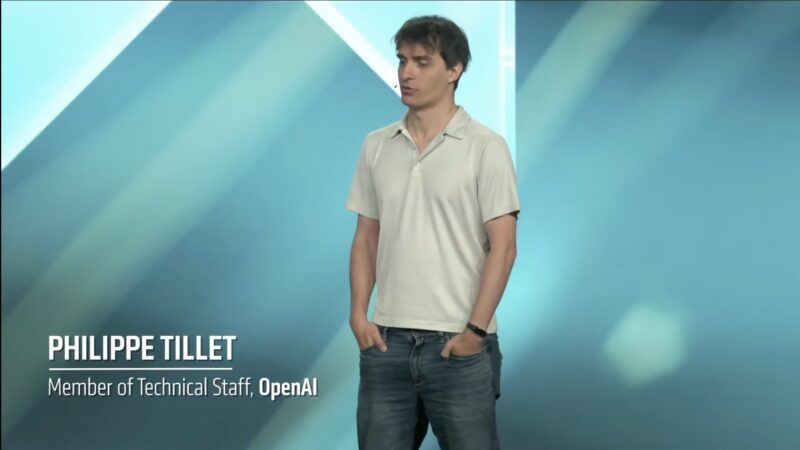
Tillet is talking about the importance of hardware and tools for advancing AI. OpenAI already has Helios racks, of course.
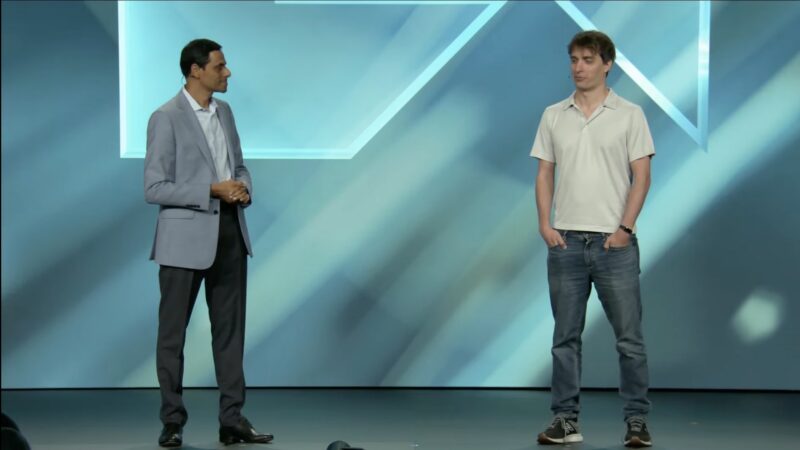
AMD and OpenAI have been collaborating on using AI to program GPUs. Models are getting to the point where they’re capable of generating high-quality kernels, something they weren’t good at before.
AI models are getting better. And Tillet believes that AMD’s embrace of open source has helped with this.
And that’s OpenAI (again).
ROCm isn’t just for AI, but for developing high performance computing systems.
MI430X will target the HPC market with strong FP64 performance. Intended to deliver leadership performance for HPC with hardware FP64. 288 TFLOPS FP64. All with the same memory capabilities of MI455X.
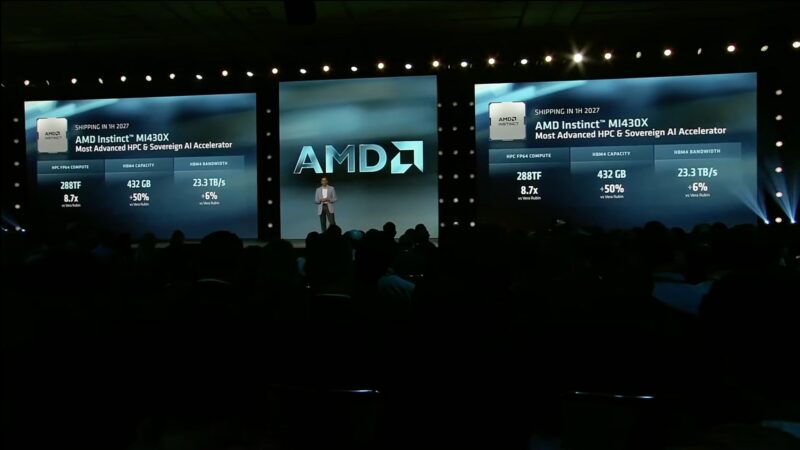
Leveraging AMD’s chiplet strategy. Sounds like they swap out the MI455X compute dies for different FP64 compute dies for MI430X.
MI430X ships in H1’2027.
Now time for another AMDer: Dan Mcnamara, SVP of Compute and Enterprise AI.
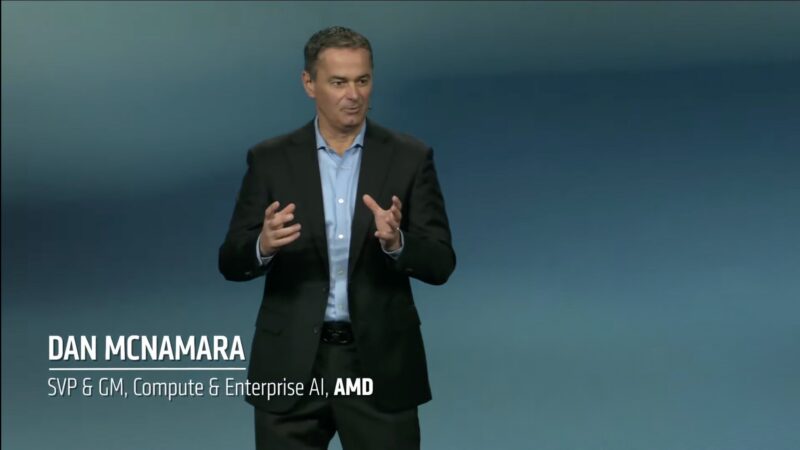
AMD’s ambitions extend beyond just data center chips and markets. There are also client markets. And increasingly, the physical AI market.
AMD has introduced many industry firsts. A focus on customer needs. Making EPYC the leader in enterprise computing.
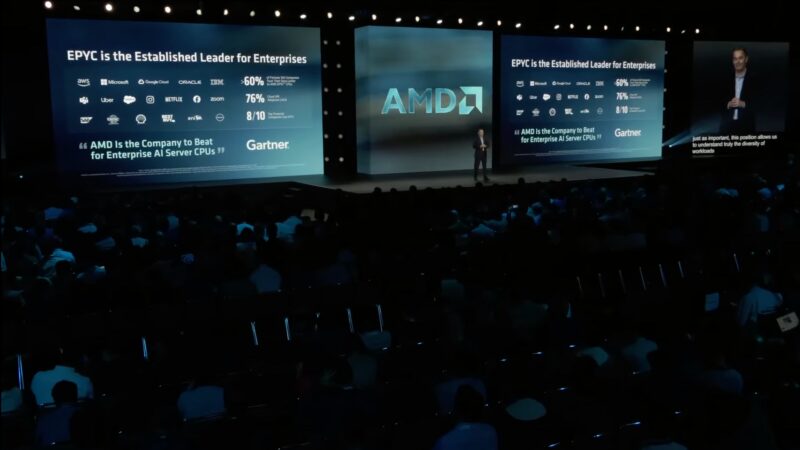
No single EPYC SKU covers all enterprise needs. Which is why AMD offers a wide range of SKUs from 8 to 256 cores with multiple chip designs.
This is a more general purpose look at performance.
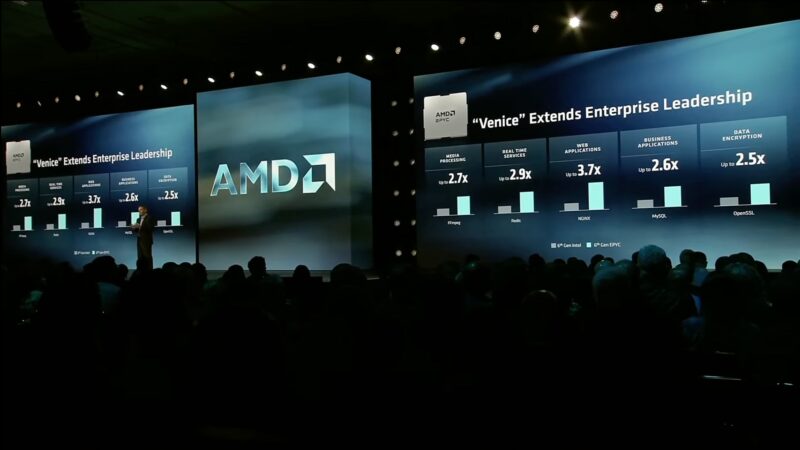
But AMD expects that most enterprises will be deploying AI next year. A mix of cloud services and on-prem infrastructure. As well as client execution.
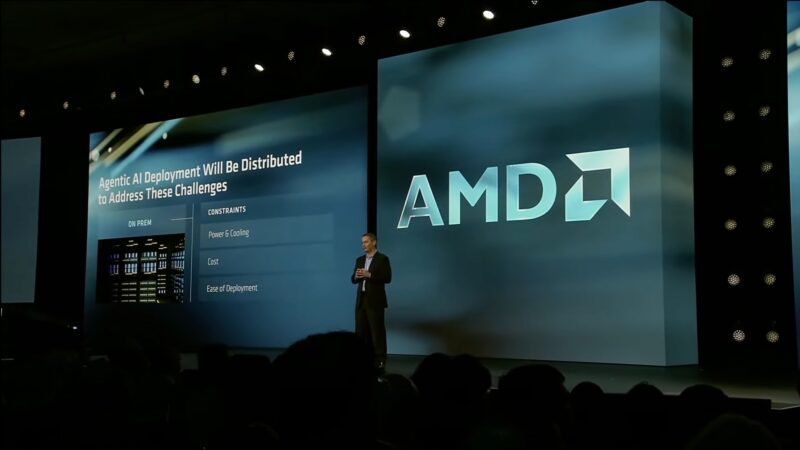
Announcing the launch of the Instinct MI350P. This is AMD’s MI350 card for PCIe slots.
The AMD Instinct MI350P is a HBM PCIe AI Accelerator That Has Been All Over
Recapping the MI350P specs.
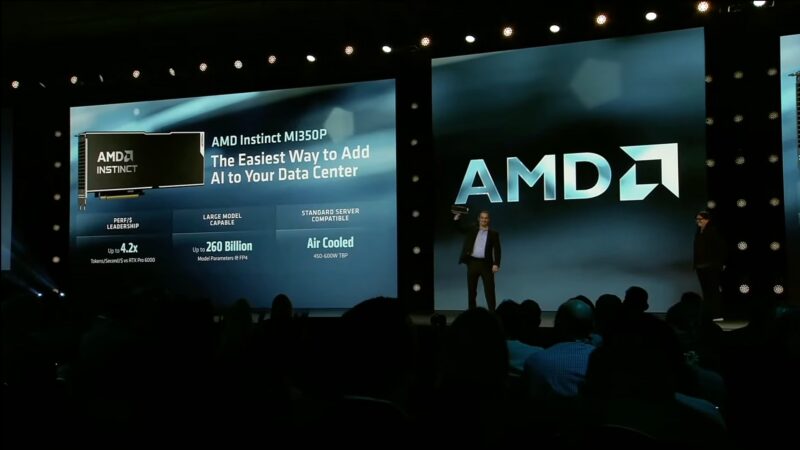
Making performance comparisons to NVIDIA’s Hopper-generation PCIe cards (they don’t have a Blackwell generation PCIe card).
AMD’s earliest customers are their own internal AI team. So they have been putting their own tech into their own data centers first.
AMD focused on two use cases to try out: autonomous threat detection and a personalized AI assistant running on OpenClaw.
Intelligent routing reduced token costs by 43%. “So we believe this is how enterprise AI will be deployed.”
But it will require more than AMD hardware; it takes a whole ecosystem of software. In other words: AMD’s partners.
There is one goal for AMD: helping customers deploy AI where it creates the most value for them.
Now time for another guest spot: AT&T’s Jeremy Legg.
AT&T is burning about a trillion tokens per month.
AT&T isn’t just using it for customer relations and transcription, but also for planning equipment deployment and such.
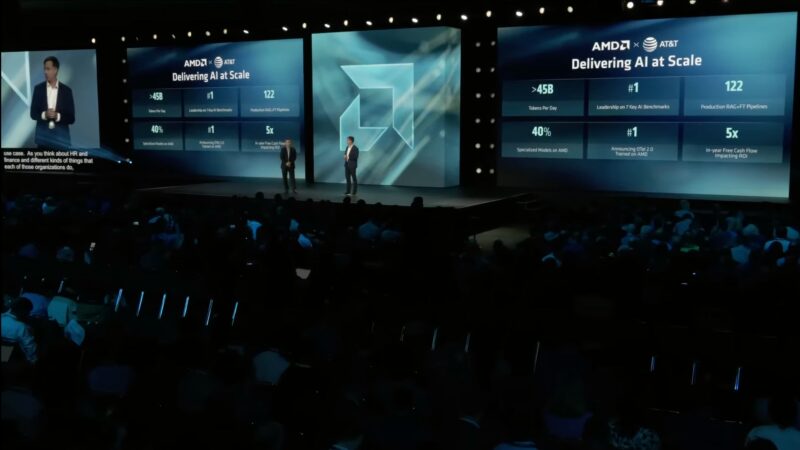
AT&T is a big believer in data sovereignty. Which means not being tied to specific hardware, models, or tools. To that end, AMD’s focus on open systems has been in good alignment with AT&T’s needs. Which has allowed them drive down token costs. It’s allowed them to manage total token spending despite token consumption going up.
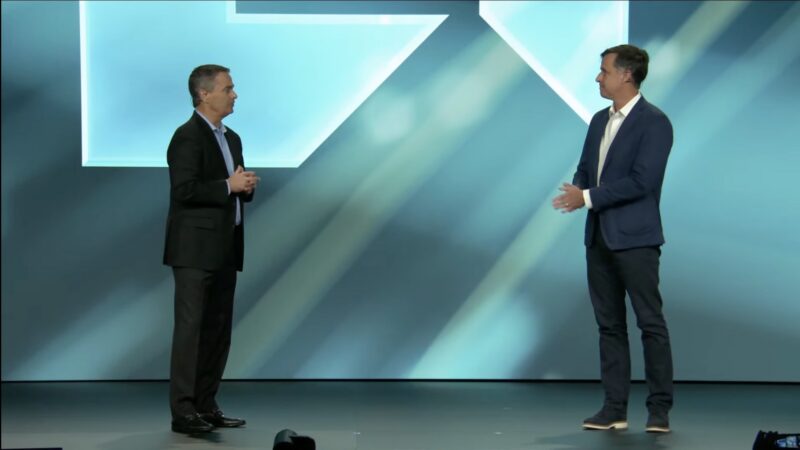
AT&T is announcing the launch of the OTel 2.0 set of models.
And that’s AT&T.
Mcnamara is now recapping AMD’s vision for enterprise computing.
Now switching AMD presenters once more to Jack Huynh, SVP for AMD’s computing and graphics.
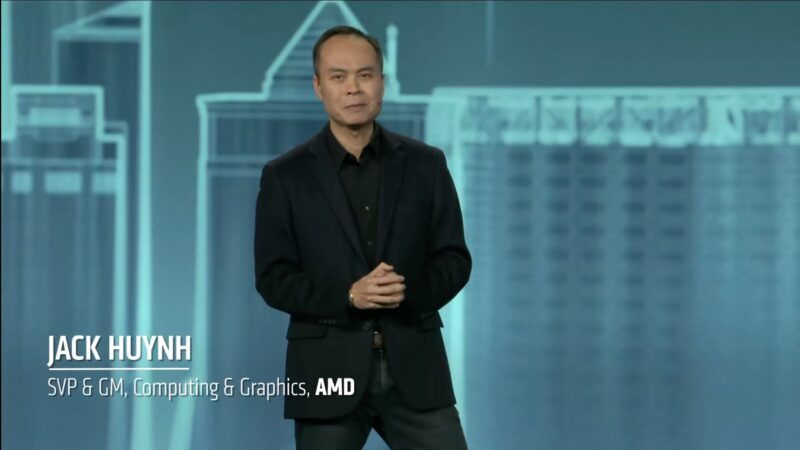
Agents are a powerful tool. But they come at the cost of token consumption. Which means every layer of the computing ecosystem needs to scale.
The PC is already a powerful platform. Now how can they better serve the needs of agentic AI?
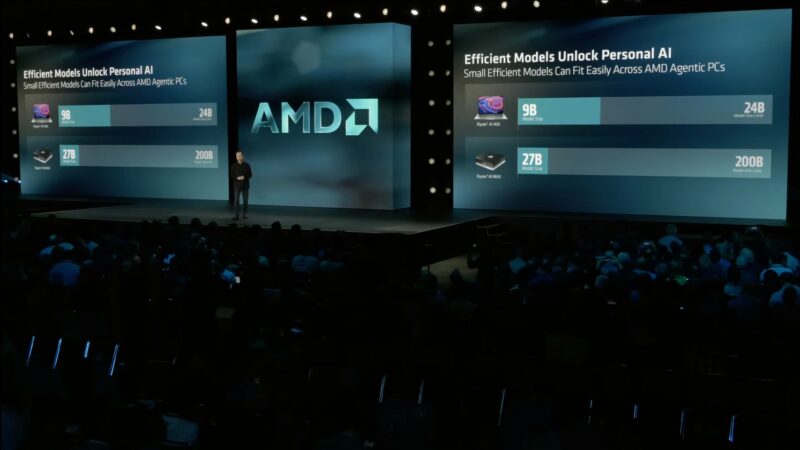
Newer, smaller models are helping to unlock their potential.
In 7 months, QWEN 3.5 has outperformed GPT-OSS with a fraction of the parameters.
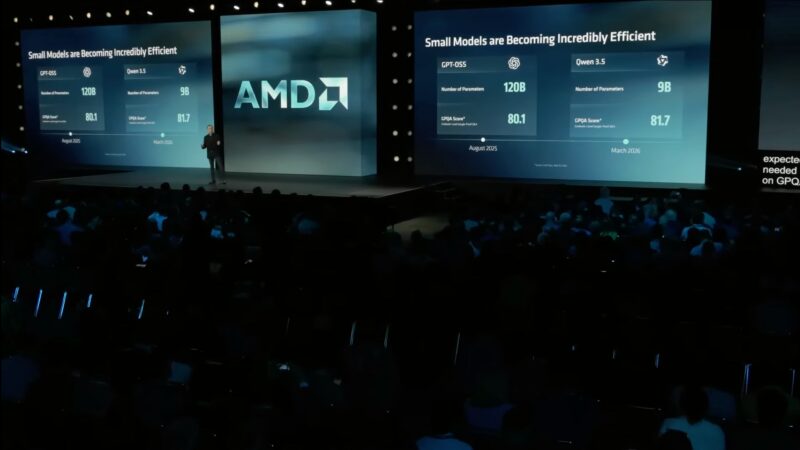
Ryzen AI can already support up to 9B parameters. Ryzen AI Max can support even larger.
Jack is now plugging AMD’s Ryzen Halo AI dev box.
AMD Ryzen AI Halo Developer System Review AMD Goes for Local AI
And AMD’s ROCm toolset supports AMD’s (near) complete client and server hardware stack.
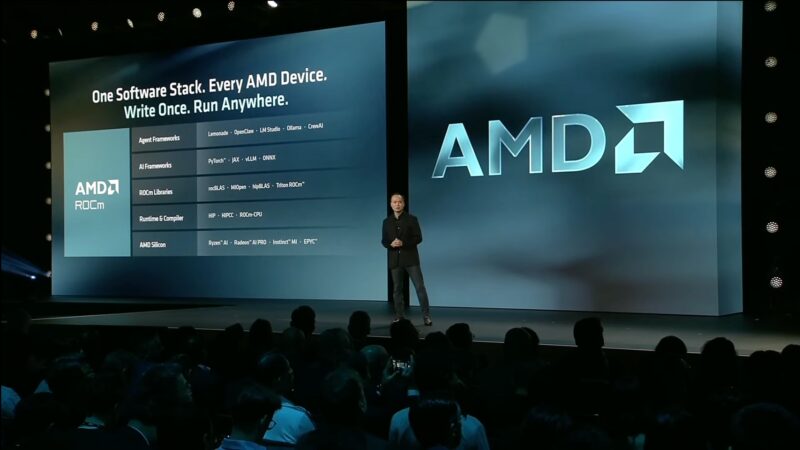
Starting later this year, every Halo box will include a year’s subscription to Hugging Face Pro.
Coming up next: Gorgon Halo. Strix Halo with 192GB of LPDDR5X, 64GB more than Strix.
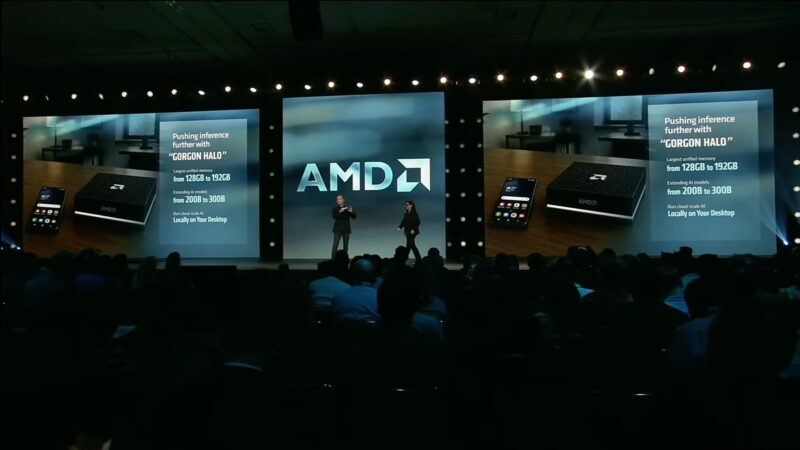
“Personal AI is not a concept. It is a category.”
AMD believes they now have all of the pieces. The models are efficient enough, the hardware is powerful enough.
The next challenge is taking it from dev desks to many users across an enterprise.
Now for another guest spot: Jeetu Patel of Cisco.
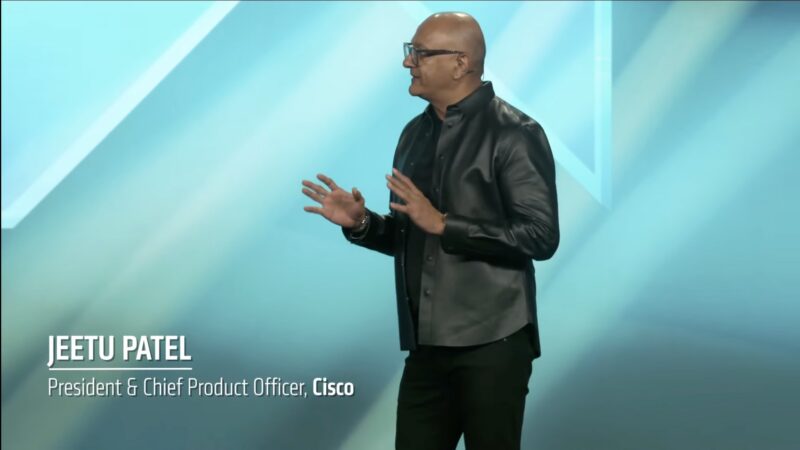
Patel is outlining how inference will be distributed everywhere, and not just something that takes place in a server.
AI is moving closer to employees; compute will need to move closer as well.
But to bring AI to users means that businesses need security. They need network bandwidth. And they need tools to contain the cost/usage of tokens.
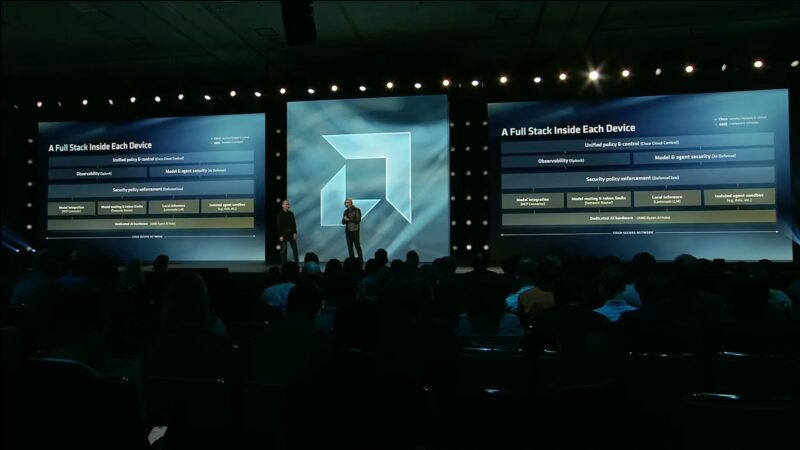
Cisco has developed a full stack of software and tools to provide these abilities.
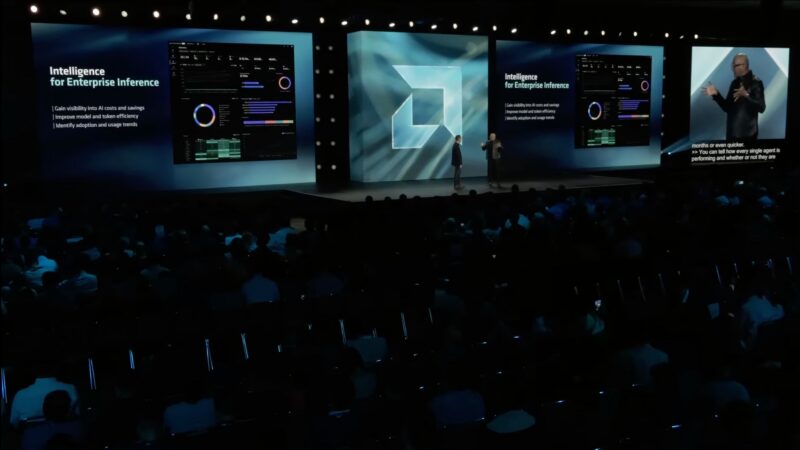
Cisco expects to have general availability of their management tools this fall.
And that’s Cisco.
Now for the next frontier: Physical AI.
Everyone has been pushing physical AI heavily this year: NVIDIA, Intel, Qualcomm, and now AMD.
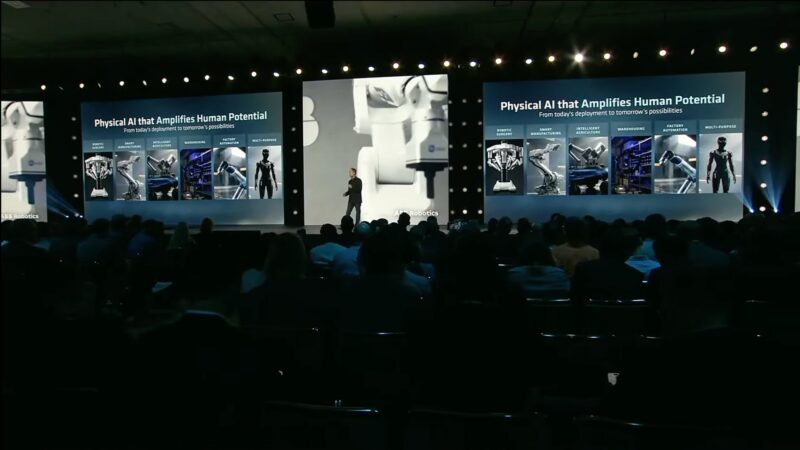
AMD has powered the core capabilities of robotics for over 20 years now (thanks in large part to Xilinx). Now AI models are getting good enough to enable useful robotics.
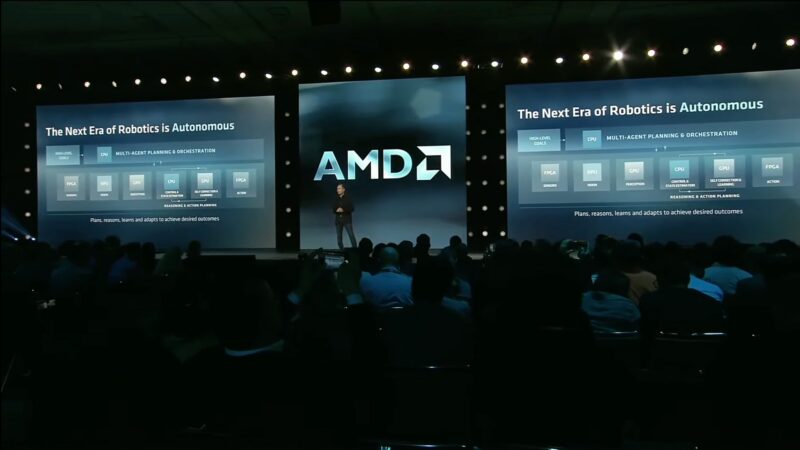
The next era of robotics is autonomous.
Introducing AMD Kria AI System on Module. Powered by the Ryzen AI Embedded X100.
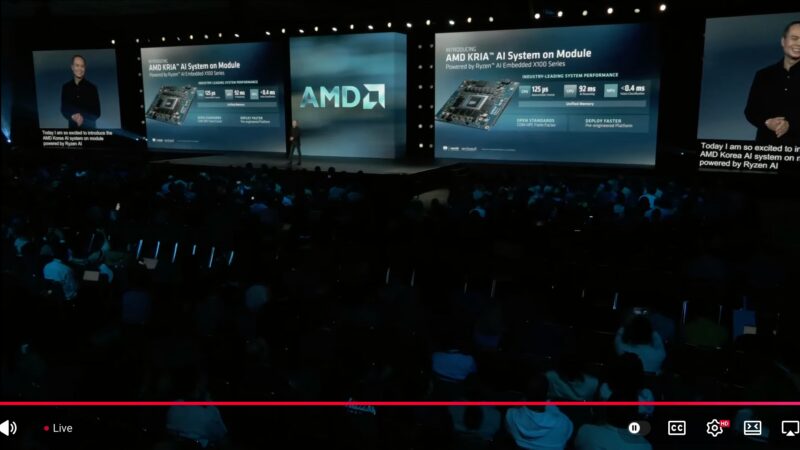
AMD is gunning for NVIDIA’s Jetson Thor.
And going after NVIDIA’s Jetson dev kits with a similar Kria AI dev kit, which has a Kria SOM inside as well as an Ultrascale+ FPGA.
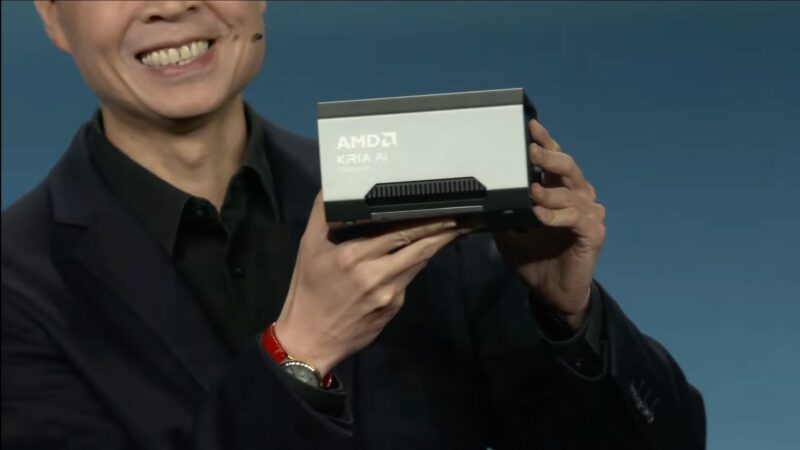
Kria for the brain. Versal for the spine.
The future will be built in the open.
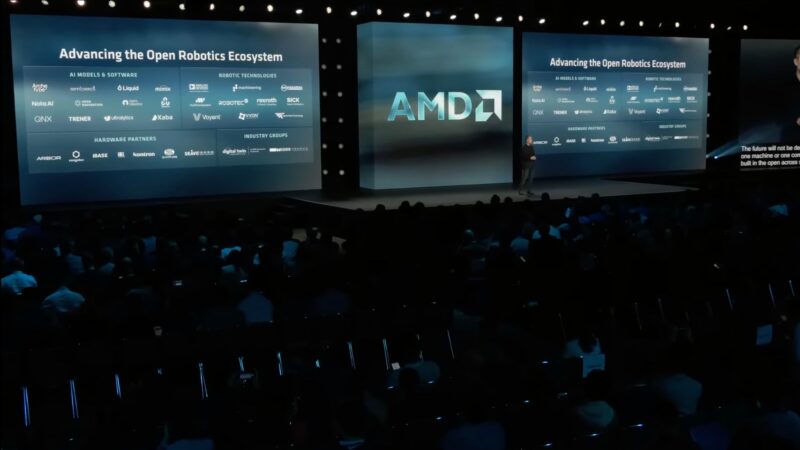
And that’s physical AI.
Now back to Lisa Su to wrap things up.
“This is our strongest portfolio in our history.”
Now for a preview of what AMD is working on next.
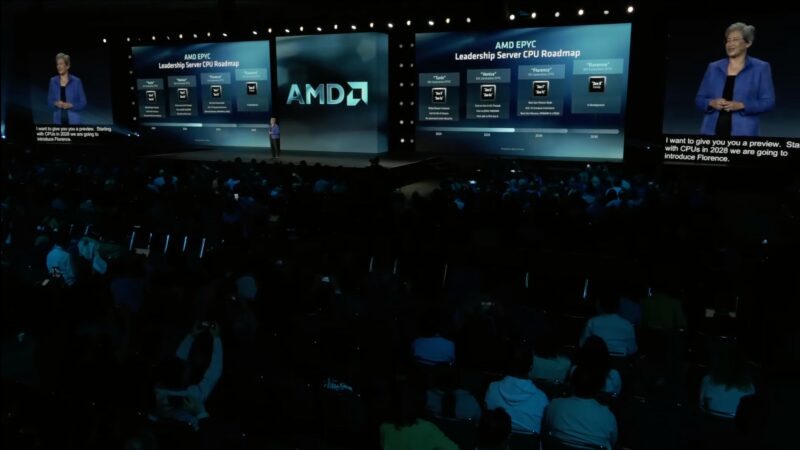
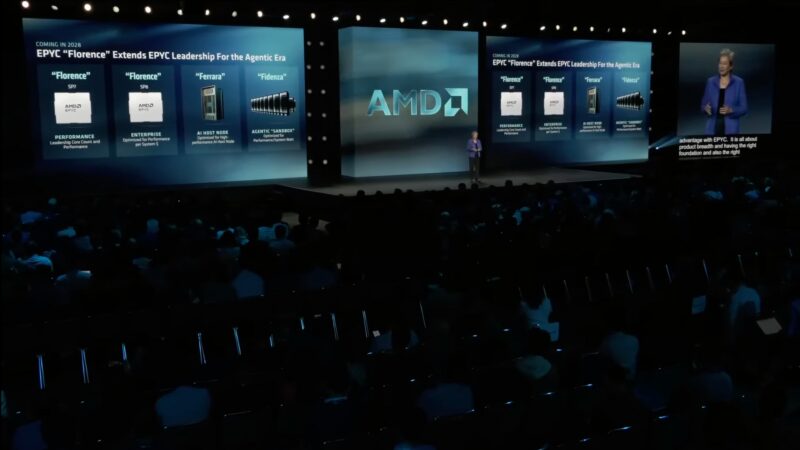
2028 will bring Florence with Zen 7. Supports latest memory technologies. And Rivenna Zen 8 is under development for 2030.
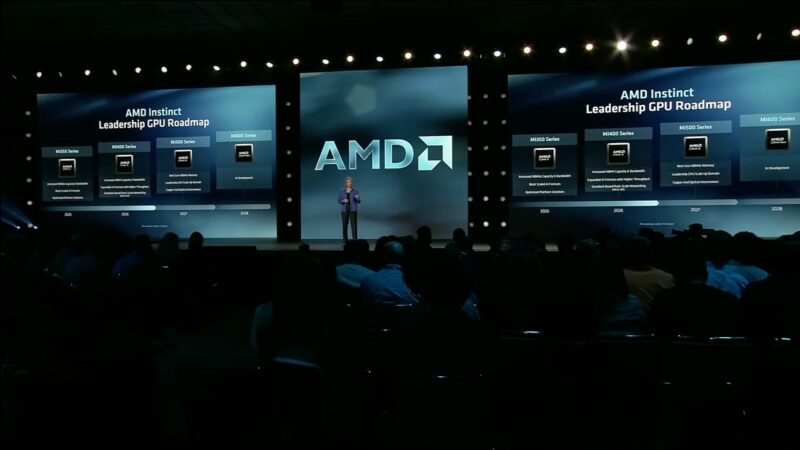
Instinct will have a new gen every single year. MI600 with CDNA Next architecture will arrive in 2028.
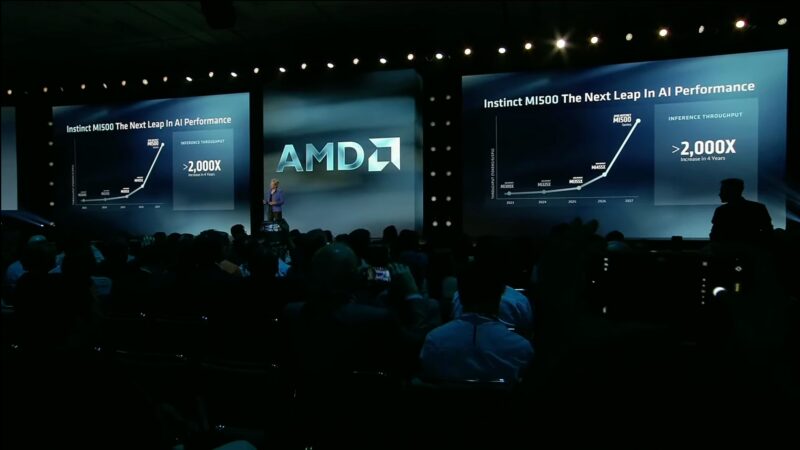
Meanwhile MI500 will deliver the largest generational leap in performance. 2000x performance improvement in just 4 years.
AMD will also deliver a new rackscale system every single year. To give customers a complete and predictable roadmap.
Lisa is also thanking AMD’s many partners who are here and have been involved in their ecosystem.
She could not be more excited to build the future with AMD’s partners and customers.
And that’s a wrap! Now to head off to Lisa’s post-keynote press conference.



Now the wait for consumer Zen6